




The Monsoon's Cleansing Effect
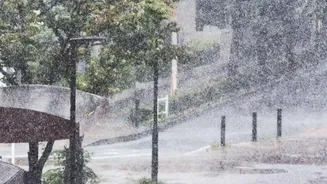
To understand why the air gets so bad, it first helps to understand why it gets so good. During the monsoon months, from roughly June to September, India experiences its cleanest air of the year. The heavy and consistent rainfall acts as a natural scrubber,
washing pollutants and particulate matter out of the atmosphere. Stronger winds during this period also help to disperse any remaining pollutants, preventing them from accumulating in one place. This leads to the clear skies and improved air quality indices (AQI) that provide a welcome, albeit temporary, respite for millions.
The Atmosphere Puts a Lid On
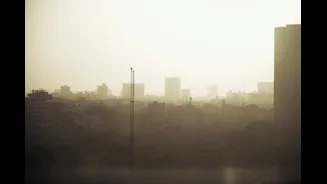
As October arrives, the weather patterns that defined the monsoon begin to reverse. One of the most significant meteorological changes is the onset of temperature inversions, particularly during winter. Normally, air is warmer near the ground and gets cooler with altitude, allowing pollutants to rise and dissipate. During an inversion, this flips: a layer of warmer air settles above a layer of cooler air near the surface. This warm air acts like a lid, trapping the cooler, denser air below and preventing vertical mixing. As a result, all the pollutants emitted at ground level are trapped, leading to a rapid and sustained buildup of toxic air.
The Return of Farm Fires
Coinciding with this atmospheric shift is the post-harvest season in the agricultural belts of North India. After harvesting paddy (rice), farmers in states like Punjab and Haryana have a very short window to clear their fields to sow the next crop, which is typically wheat. The quickest and cheapest method is to burn the leftover crop residue, or stubble. This practice, known as stubble burning, releases enormous plumes of smoke, particulate matter, and harmful gases into the atmosphere. Prevailing northwesterly winds then carry this pollution across the Indo-Gangetic Plain, directly impacting the air quality in cities like Delhi, often hundreds of kilometres away. Studies suggest these farm fires can be responsible for a huge percentage of Delhi's hazardous PM2.5 levels during this period.
Festivals and Urban Pollution
Layered on top of meteorological conditions and agricultural practices are emissions from urban life itself. The post-monsoon period is also a major festive season, most notably including Diwali. The widespread bursting of firecrackers, despite bans and restrictions, releases a massive amount of pollutants like particulate matter and sulphur dioxide in a very short span. This can cause the AQI to spike to 'severe' levels overnight. This acute pollution event compounds the already deteriorating air quality caused by year-round urban sources, including vehicle emissions, industrial output, and dust from construction activities, all of which are trapped by the temperature inversion.
A Geographical Trap
Finally, North India's geography plays a crucial role. The towering Himalayan mountain range to the north acts as a massive physical barrier. When pollutants are pushed across the Indo-Gangetic Plain, they can be blocked by the Himalayas, preventing them from dispersing further. Combined with lower wind speeds in the post-monsoon season and the lid-like effect of temperature inversions, this creates a geographical bowl where pollutants accumulate with nowhere to go. This unique combination of factors is why the region consistently becomes one of the world's most polluted hotspots every year as winter approaches.