


A High-Altitude Dilemma
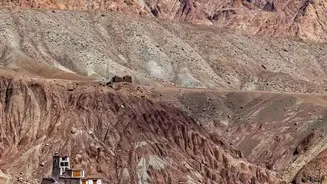
For generations, farmers in Ladakh have depended on a delicate natural rhythm. With annual rainfall averaging just 100mm, agriculture is almost entirely reliant on the meltwater from mountain glaciers to irrigate crops like barley and potatoes. But climate
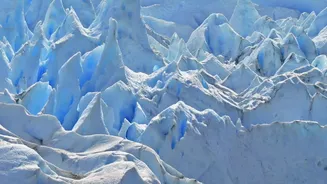
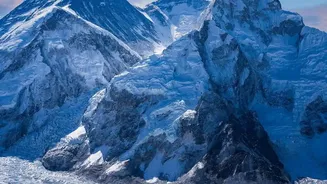
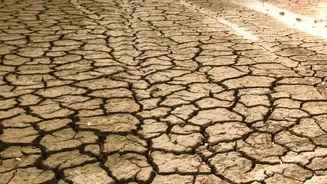
change has thrown this system into crisis. Glaciers are receding and winter snowfall has become more erratic. The primary problem is one of timing: warming temperatures cause the limited snow to melt too early, while the larger glaciers, now at higher altitudes, don't release their life-giving water until mid-June. This creates a dangerous dry period in April and May, precisely when farmers need water to sow their fields, threatening food security and livelihoods across the region.
An Engineer's Icy Vision
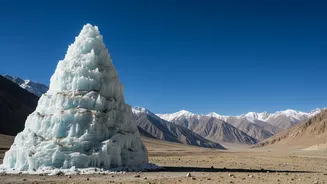
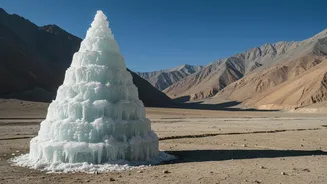
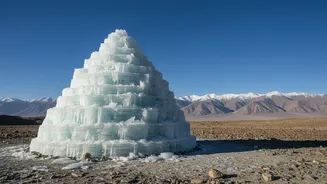
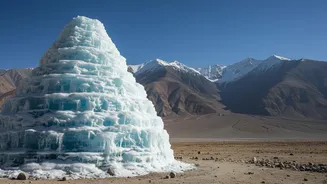
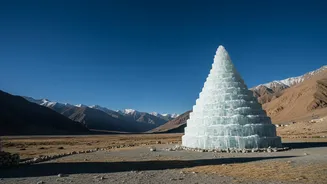
The solution emerged not from a high-tech lab, but from local ingenuity. Ladakhi engineer and innovator Sonam Wangchuk, observing that unused water flowed away down the Indus river during the harsh winter, conceived of a way to capture it. Building on earlier concepts of artificial glaciers, Wangchuk and his team from the Students' Educational and Cultural Movement of Ladakh (SECMOL) developed the 'ice stupa' in 2013. Named for their resemblance to traditional Buddhist monuments, these structures are designed to be a simple, low-cost answer to a complex problem, using basic principles of physics to create vertical, man-made glaciers close to the villages that need them most.
How to Build a Glacier
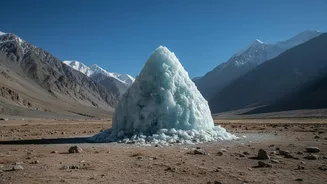
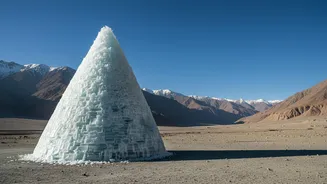
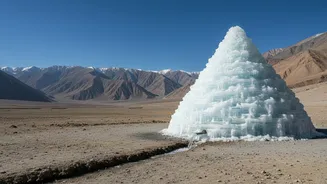
The technology behind ice stupas is brilliantly simple and requires no electric pumps. A pipe is laid to channel water from a stream at a higher elevation during the winter months. Gravity creates natural pressure, forcing the water up through a vertical pipe in the village below. This water is then sprayed into the freezing winter air, which can plummet below -30°C. As the fine mist falls, it freezes almost instantly, gradually forming a massive, cone-shaped mountain of ice. The conical shape is a key innovation; it minimises the surface area exposed to direct sunlight, ensuring the ice melts much slower than a flat, horizontal field of ice would. This allows the stupa to remain frozen well into the warmer spring months.
From Concept to Croplands
The effectiveness of this method is no longer theoretical. The first prototype stupa, built in 2014, stored 150,000 litres of water and lasted until mid-May, providing crucial irrigation for a new plantation. Since then, dozens of stupas have been built across Ladakh, with some capable of storing millions of litres of water. For example, one large stupa held about 7.5 million litres, helping to irrigate fields in four villages. Another project in Tarchit village, storing 23 million litres, has secured water for 1,200 households and over 1,800 acres of cropland for 60-70 days during the critical 120-day crop cycle. This controlled, sequential melting in April and May provides farmers with the water they need, right when they need it, allowing them to plant their crops with confidence.
A Symbol of Hope
Ice stupas are more than just a clever water-storage technique; they are a powerful symbol of community-led climate adaptation. The projects often involve entire villages in their construction and maintenance, fostering a sense of collective ownership. The success in Ladakh has gained global attention, with the concept being explored in other mountain regions facing similar challenges, from the Swiss Alps to the Andes. While they are not a permanent solution to the root cause of melting glaciers, ice stupas represent a vital lifeline. They prove that local, low-cost, and nature-inspired innovations can empower communities to build resilience and secure their future in the face of a rapidly changing environment.