




Welcoming a plant into your home brings a touch of nature indoors, but keeping it looking full and vibrant can be a learning curve. If you've noticed your green companion looking a bit lopsided, there's a simple secret to fixing it.
Why Plants Lean and How to Fix It
Have you ever noticed
your houseplant craning its neck toward the nearest window? This behaviour is perfectly natural and it has a scientific name: phototropism. Plants need sunlight for photosynthesis, the process of creating their own food, so they instinctively grow toward their primary light source. This is controlled by growth hormones called auxins, which accumulate on the shadier side of the stem, causing those cells to grow longer and making the plant bend toward the light. While this is a clever survival tactic, it often results in a lopsided, uneven plant with more leaves on one side than the other. The simple solution is to rotate the pot. By regularly turning your plant, you ensure that all sides receive their fair share of light, encouraging balanced, upright, and fuller growth.
The Quarter-Turn Rule
You don't need a complicated system to get rotation right. The most common and effective method is the quarter-turn rule. Simply give your plant's pot a 90-degree turn in the same direction each time. This gradual adjustment is gentle on the plant and ensures that over the course of four rotations, every side has had its moment in the sun. Some sources suggest a half-turn every few months, but the quarter-turn is easier to manage and provides more consistent results for preventing a lean before it starts. The key is consistency. A regular turning habit helps the plant develop a strong central stem and a well-rounded shape, making it more structurally sound and visually appealing.
Finding Your Rhythm: When to Rotate
The most common question beginners have is how often they should be turning their plants. The easiest way to remember is to link it to a task you're already doing: watering. A popular and effective method is to give the pot a quarter turn every time you water. This turns rotation into a simple, memorable habit. If your watering schedule is less frequent, aim for a turn every week or two. Fast-growing plants may show a lean more quickly and benefit from more frequent rotation, while slow-growers are more forgiving. Ultimately, the perfect frequency can depend on your specific plant and the light conditions in your home. The most important thing is to be consistent. A regular rhythm, whatever you choose, is better than sporadic, infrequent turns.
Do All Plants Need to Be Rotated?
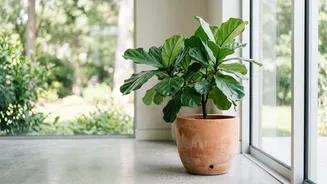
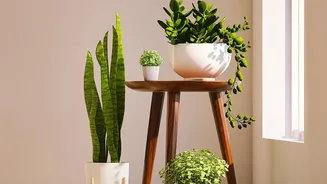
While most foliage plants benefit from regular rotation, there are some exceptions. Upright plants like Fiddle Leaf Figs, Snake Plants, and Rubber Plants are prime candidates for rotation because any lopsidedness becomes very obvious. However, some plants are best left alone. Trailing plants like Pothos or Philodendrons are naturally designed to cascade and grow directionally, so rotating them can disrupt their flow. It's also wise to avoid rotating flowering plants like orchids or Christmas Cacti once they have set buds, as a sudden change in light orientation can stress the plant and cause it to drop its precious blooms. Additionally, if your plant is under a grow light that provides even, directly overhead light, rotation isn't necessary.
Correcting a Lean and Building a Habit
What if your plant already has a significant lean? Don't worry, it's often correctable. Simply turn the plant 180 degrees so the less-developed, shaded side is now facing the light source. Over the next several weeks or months, that side will begin to grow more robustly, and the plant will start to straighten itself out. To make rotating a lasting habit, try setting a weekly reminder on your phone or leaving a small, discreet mark on one side of the pot to help you keep track of your turns. Integrating this quick task into your regular plant care checkup—when you're already checking for pests, dust, or water needs—is an efficient way to ensure it gets done.