
Visitors from a Distant Star
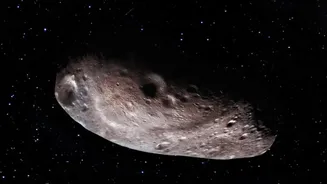
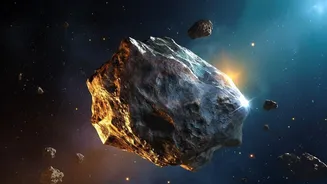
Everything we typically see in the night sky—planets, asteroids, and local comets—originated from the same cloud of gas and dust that formed our Sun about 4.5 billion years ago. They are family. Interstellar objects, however, are true outsiders. They are comets or asteroids that were
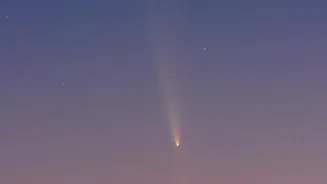
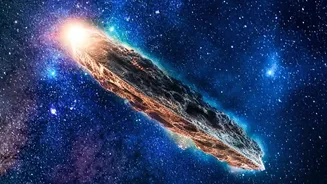
formed around another star, ejected from their home system, and have wandered through the void for potentially billions of years before passing through our solar system. Their trajectories are unique; instead of orbiting our Sun, they are moving so fast that they will inevitably fly past it and disappear back into deep space forever. The first such object, 1I/‘Oumuamua, was detected in 2017, followed by 2I/Borisov in 2019. These initial encounters have given scientists a tantalising taste of what we can learn from these cosmic messengers.
A Sample from Another World
The most profound value of an interstellar comet is that it is, quite literally, a free sample from another planetary system delivered to our doorstep. Astronomers study how planets form by looking at the leftovers: comets and asteroids. These objects are like time capsules, preserving the raw ingredients from which planets are built. By studying a comet from our own Oort cloud, we learn about the early days of our solar system. By studying an interstellar comet, scientists can analyse the chemical building blocks of planets that formed around a completely different star, possibly one much older than our own Sun. This provides a direct way to compare our cosmic origins with those of other systems and see if the chemistry for life-bearing planets is common throughout the galaxy.
Testing Our Theories of Planet Formation
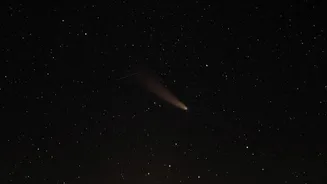
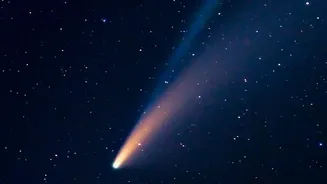
The first two interstellar visitors were strikingly different. ‘Oumuamua was rocky and asteroid-like, while Borisov resembled the comets from our own solar system. This diversity is exciting for scientists because it suggests that planetary systems elsewhere may form under a wide range of conditions. The next interstellar object will provide another crucial data point. By using tools like the James Webb Space Telescope, scientists can perform spectroscopy, breaking down the light from the comet’s coma (the cloud of gas and dust around it) to determine its composition. Does it contain more carbon monoxide than water? Does it have unusual isotopes or minerals not common in our system? The answers to these questions will help refine and challenge our models of how planets come to be.
The Hunt for the Next Visitor
While a specific comet named 3I/ATLAS is hypothetical, the designation '3I' awaits the third confirmed interstellar object. Astronomers are actively preparing for its eventual discovery. Surveys like the Asteroid Terrestrial-impact Last Alert System (ATLAS) and the upcoming Vera Rubin Observatory are designed to scan the sky with unprecedented speed and sensitivity, increasing the chances of spotting these faint, fast-moving objects. The goal is to find the next visitor early enough to study it extensively as it approaches the Sun. Some scientists are even developing rapid-response mission concepts, like the European Space Agency’s Comet Interceptor, which would wait in space for an interstellar target and fly by for a close-up look—a truly groundbreaking opportunity.