


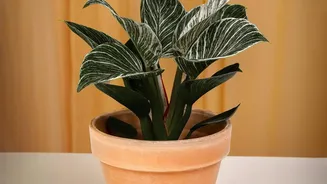
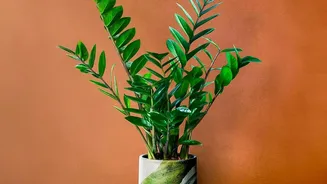
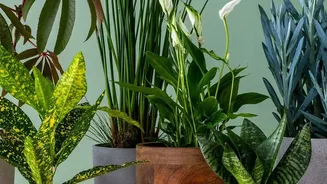
Peace Lily: The Elegant Moisture Absorber
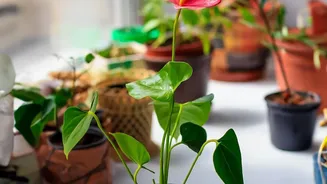
The Peace Lily is more than just a pretty plant with elegant white blooms; it's a workhorse for indoor air quality. Its large, broad leaves are proficient at absorbing moisture from the air through a process called transpiration. Native to tropical rainforests,
it thrives in the exact humid conditions that plague our homes during the monsoon. This makes it perfect for bathrooms and kitchens. Beyond reducing humidity, it helps filter common airborne toxins and can reduce mould spores, making your home healthier and smelling fresher. For renters, it's an ideal choice as it adapts well to low-light conditions, a common feature in many city apartments.
Snake Plant: The Hardy Dehumidifier
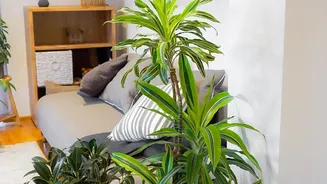
Renowned for being almost indestructible, the Snake Plant is a renter's best friend. This hardy succulent is excellent at managing indoor humidity. While many plants release moisture, the snake plant can help regulate it, thriving in humid conditions and requiring very little care. Its tall, architectural leaves make a stylish statement in any room. It's also a powerhouse air purifier that uniquely releases oxygen at night, contributing to better air quality while you sleep. If you're new to houseplants or have a busy schedule, the Snake Plant offers maximum benefit for minimal effort.
Boston Fern: The Lush Humidity Lover
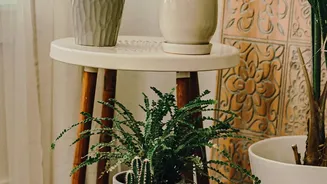
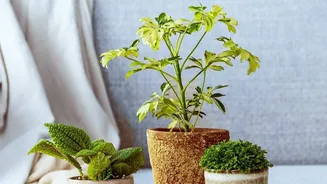
With its dense, feathery fronds, the Boston Fern is a classic beauty that actively enjoys moist environments. These ferns are excellent at naturally regulating humidity, drawing moisture from the surrounding air through their leaves. They are particularly well-suited to the consistently high humidity found on shaded balconies or in bathrooms with some natural light. While they require a bit more attention to keep their soil consistently moist, their ability to create a lush, green oasis while combatting dampness makes them a worthwhile addition to any monsoon-weary home. Grouping them with other plants can create a microclimate that boosts their effectiveness.
Spider Plant: The Easy-Going Air Purifier
The Spider Plant is celebrated for its resilience and air-purifying capabilities. It thrives in humid environments, making it another great contender for moisture control in places like kitchens and bathrooms. Its arching leaves help absorb excess moisture from the air, contributing to a more comfortable indoor atmosphere. Spider Plants are incredibly easy to care for and propagate—their little plantlets can be repotted to expand your green collection. They are also known to be effective at removing indoor air pollutants, ensuring the air you breathe is cleaner.
English Ivy: The Versatile Climber
Perfect for renters with limited floor space, English Ivy is a versatile trailing plant that can be placed in hanging baskets or on high shelves. It is highly effective at absorbing airborne moisture, making it an excellent choice for damp and humid rooms. Like the Peace Lily, it can also help reduce the presence of airborne mould particles that thrive in damp conditions. English Ivy prefers bright, indirect light and adds a touch of classic charm while working silently to make your living space less sticky and more pleasant during the rainy season.
Clay Dehumidifiers: The Eco-Friendly Solution
Beyond plants, there's another simple, non-electric solution: the clay dehumidifier. These are typically made from natural terracotta or bentonite clay, materials known for their porous structure. They work through adsorption, attracting and trapping water molecules from the air within their tiny pores. You can find them as small pots, bricks, or decorative objects. While they won't handle severe dampness like an electric unit, they are perfect for small, enclosed spaces like wardrobes, cabinets, or small bathrooms where mustiness can build up. They are cost-effective, completely silent, eco-friendly, and often reusable—simply dry them out in the sun or a warm oven to 'recharge' their moisture-absorbing capabilities.