




The Essential Ingredients for Life
Before we can find life, scientists must first look for its fundamental components. Life as we know it is carbon-based, relying on complex organic molecules. The search focuses on finding these 'prebiotic' compounds—specifically, things like amino acids,
which form proteins, and nucleobases, which are the core components of DNA and RNA. These aren't life itself, but their presence would suggest that a world has, or once had, the right chemical starter kit. Scientists refer to the essential elements as CHNOPS: carbon, hydrogen, nitrogen, oxygen, phosphorus, and sulfur. Finding molecules containing these elements is a crucial first step. While full DNA and RNA haven't been found in space, their components have, giving researchers a clear target.
Prime Hunting Grounds in Our Solar System
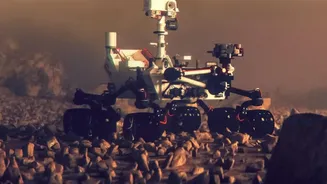
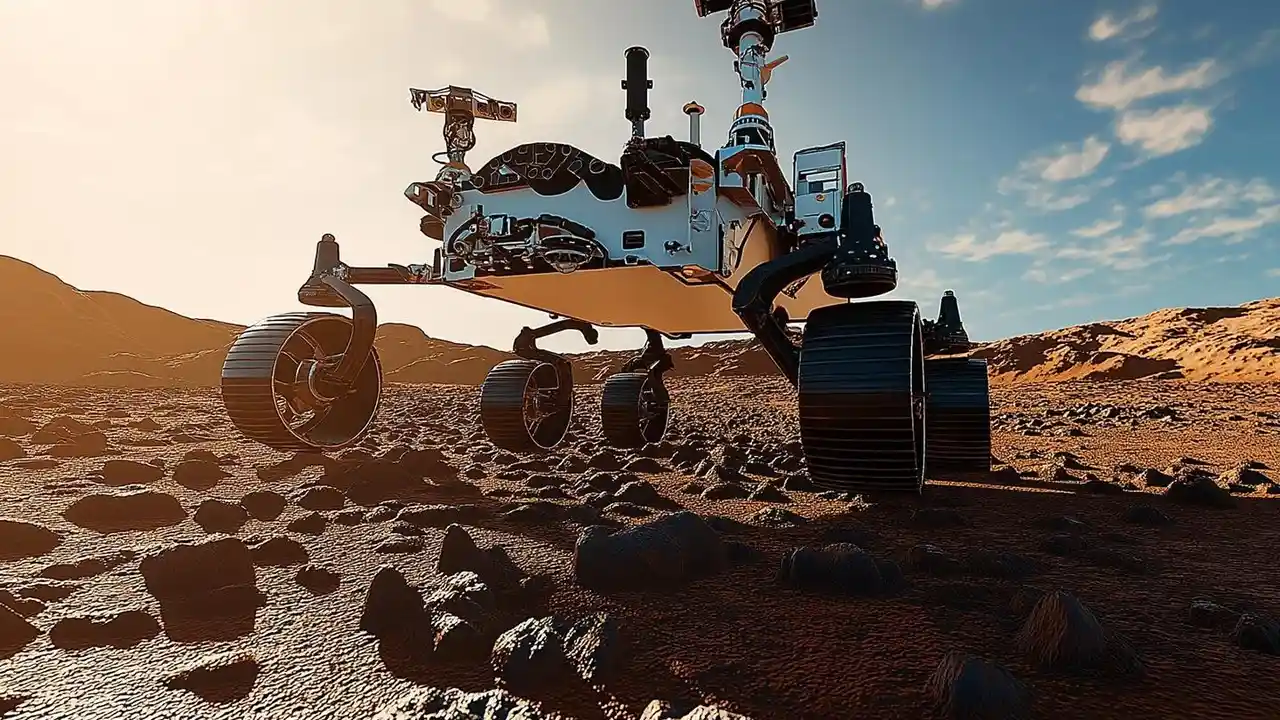
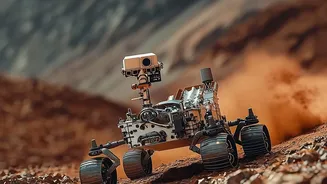
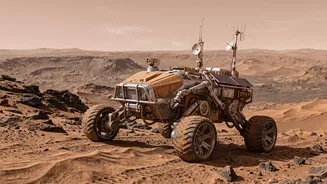
Scientists are targeting several key locations where conditions might be right for preserving or even forming these building blocks. Mars is a top priority; evidence shows it once had abundant surface water, making it a prime candidate for having hosted life. Rovers like Curiosity and Perseverance are exploring ancient lakebeds and river deltas for this very reason. Beyond Mars, the focus shifts to the icy moons of Jupiter and Saturn. Europa, a moon of Jupiter, is believed to have a vast liquid water ocean beneath its frozen shell. Saturn's moon Titan presents another fascinating possibility; it has a thick, nitrogen-rich atmosphere and lakes of liquid methane, offering a glimpse into what a very early, pre-life Earth might have looked like. Finally, asteroids and comets are like cosmic time capsules, holding pristine materials from the early solar system.
The Astrobiologist’s High-Tech Toolkit
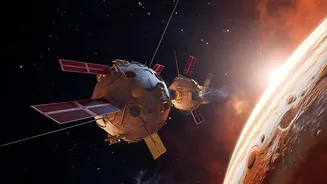
To find these molecules, missions are equipped with miniaturised, robust chemistry labs. The primary tools are spectrometers, which analyse how light and other particles interact with samples to identify their chemical composition. Instruments like the Sample Analysis at Mars (SAM) on the Curiosity rover can heat soil samples to release organic molecules, which are then identified by a mass spectrometer. This involves vaporising the compounds and identifying them by their unique mass. Future missions are even more advanced. The Rosalind Franklin rover will carry the Mars Organic Molecule Analyser (MOMA), which uses a laser to gently lift molecules from a sample, preventing them from being destroyed by heating—a common issue with older methods. For missions to the outer planets, the instruments are designed for remote analysis. The Europa Clipper, for example, will use spectrometers to analyse particles in any water plumes that might erupt from the moon's surface, tasting its ocean without ever needing to land.
Recent Finds and Major Breakthroughs
This high-tech search is yielding remarkable results. In recent years, NASA's Curiosity rover detected the most diverse collection of organic molecules ever found on Mars, including some never seen on the Red Planet before. These discoveries confirmed that the chemical precursors for life can be preserved in Martian rocks for billions of years. Perhaps even more exciting are the findings from asteroid sample-return missions. Japan's Hayabusa2 mission to asteroid Ryugu and NASA's OSIRIS-REx mission to asteroid Bennu both brought back material containing a variety of organic molecules. The samples from Bennu remarkably contained all five of the nucleobases needed for DNA and RNA, along with numerous amino acids. This proves that the building blocks of life are not unique to Earth and can form in space and be delivered to planets via asteroid impacts.
The Next Frontier of Discovery
The search is set to accelerate. The Europa Clipper mission, which launched in late 2024, will conduct dozens of flybys of Jupiter's icy moon to characterise its ocean and search for signs of habitability. Looking further ahead, the Dragonfly mission, scheduled to launch in 2028, will send a nuclear-powered, car-sized drone to Saturn's moon Titan. This rotorcraft will fly between dozens of locations on Titan's surface, from its organic-rich dunes to the floor of an impact crater where liquid water may have mixed with complex organics in the past. Dragonfly's goal is to study how far prebiotic chemistry has progressed on this alien world, which could revolutionise our understanding of how life may arise.