

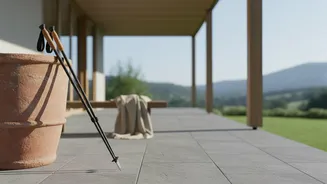
More Than Just Walking With Sticks
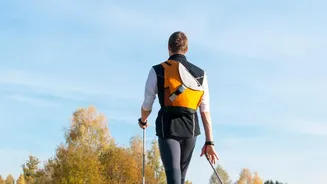
Originating in Finland as off-season training for cross-country skiers, Nordic walking has evolved into a popular global fitness activity. It involves walking with specially designed poles, using a technique that engages the upper body to propel you forward.
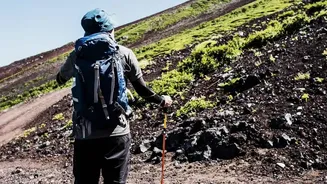
This isn't the same as using trekking poles for stability on a hike. With Nordic walking, the poles are an active part of the workout, purposefully used to engage muscles in your arms, shoulders, back, and core, turning a walk into a comprehensive, low-impact exercise.
The Full-Body, Low-Impact Advantage
The primary appeal of Nordic walking is its efficiency. While regular walking primarily uses muscles in the lower half of the body, Nordic walking engages up to 90% of your body's muscles. This increased muscle activation means you burn significantly more calories—up to 46% more than walking at the same pace without poles, according to some studies. At the same time, it is remarkably gentle on the body. The poles help distribute your weight, reducing the stress on knees, hips, and other joints. This makes it an ideal form of exercise for people of all fitness levels, including older adults or those with joint concerns who find activities like running too stressful.
Why Gradual Training is the Priority
While the activity is accessible, the key to long-term success is a gradual approach. The headline's emphasis on "practical priority" is crucial. Jumping into long, intense sessions without mastering the technique can lead to bad habits or minor strains. The focus for beginners should be on form over speed or distance. Start with shorter sessions of 20 to 30 minutes, two or three times a week. This allows your body to adapt to the new movement patterns and build a solid foundation. As you become more comfortable with the rhythm and coordination, you can gradually increase the duration and frequency of your walks, ensuring the activity remains a sustainable and enjoyable part of your routine.
Your First Steps: A Simple Start
Getting started is straightforward. The initial focus should be on mastering the technique, which involves swinging your arms from the shoulder (not the elbow) and planting the poles behind you at an angle. A simple beginner's plan might involve walking for 20 minutes three times a week, concentrating only on getting the arm swing and stride to match. In the second week, you could increase the walk to 25 minutes and begin applying more deliberate pressure through the poles to propel yourself forward. The aim is consistency. By slowly building up, you'll find your fitness, posture, and coordination improve naturally without the risk of burnout or injury.
Gearing Up Without The Intimidation
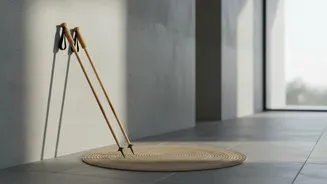
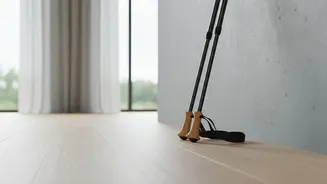
The only essential, specialized equipment for Nordic walking is the poles. It's important to get poles specifically designed for Nordic walking, not trekking poles. Nordic walking poles come with a unique glove-like strap system that allows you to execute the proper push-off technique. Many instructors recommend starting with fixed-length poles, which are often lighter and stronger, though adjustable poles can be useful for travel. Beyond the poles, you don't need much. Comfortable, flexible walking shoes and weather-appropriate, breathable clothing that allows for free arm movement are all that's required to begin.