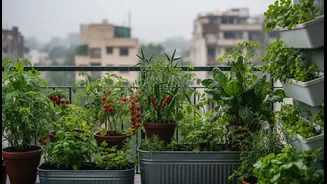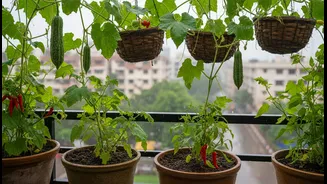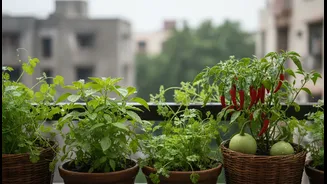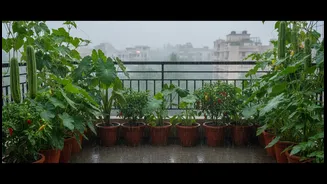




Why the Monsoon is a Gardener's Best Friend
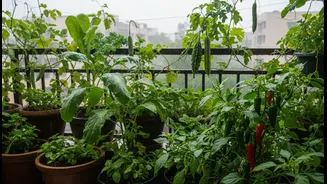
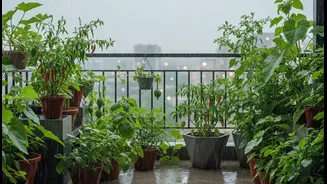
Many people think heavy rains are a problem for gardening, but the monsoon season is actually a golden opportunity. The naturally moist soil, higher humidity, and moderate temperatures create the perfect environment for many vegetable seeds to sprout
and grow quickly. For urban gardeners with limited space, the frequent natural watering reduces the daily chore of irrigation. The key is not to fight the rain, but to work with it. The challenge is managing the excess water, which can be easily solved with the right setup. With a little planning, the monsoon can become the most productive season for your balcony plot, rewarding you with a fresh, organic harvest.
Top Edible Plants for a Monsoon Balcony
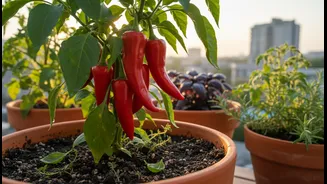
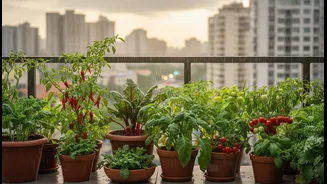
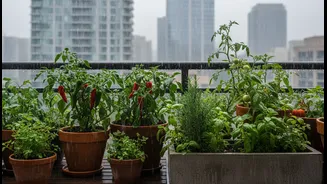
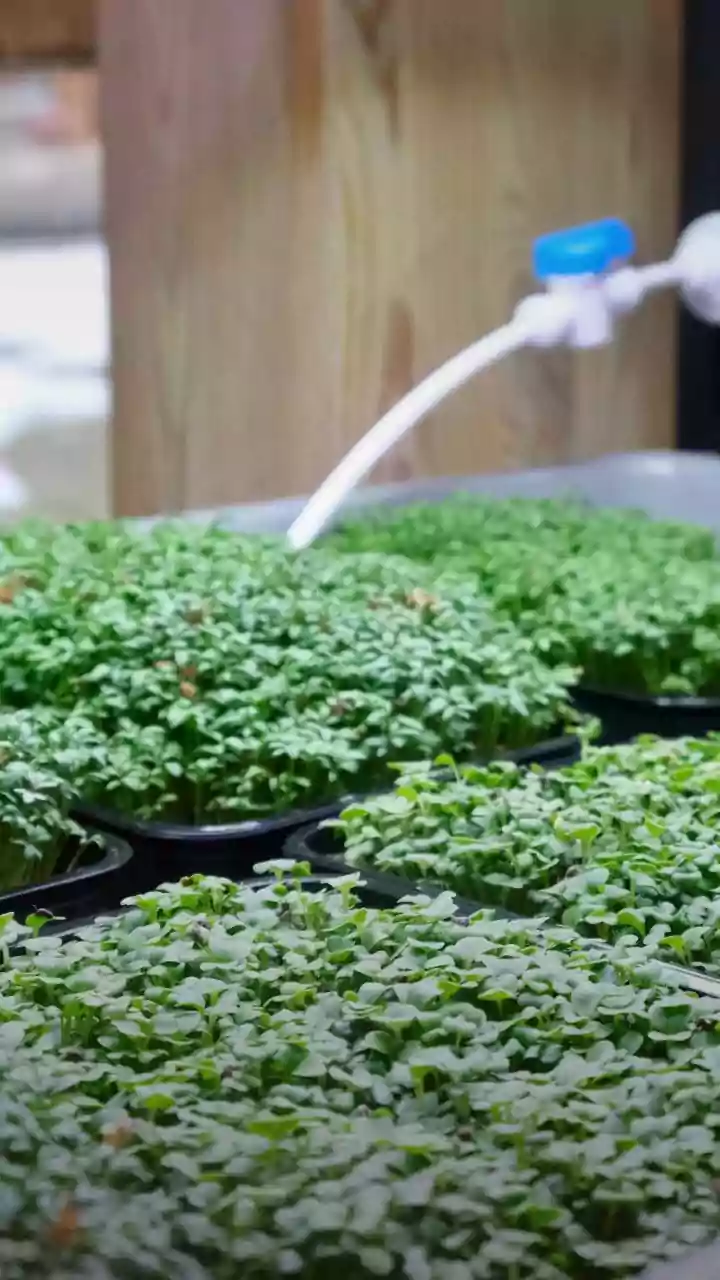
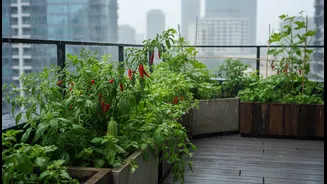
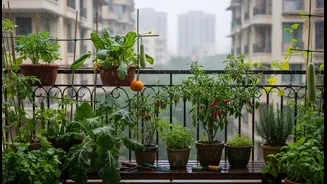
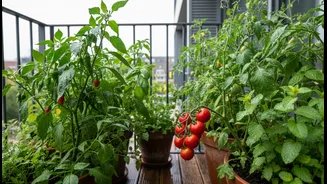
Choosing the right plants is crucial for success. You want varieties that thrive in humidity and can produce well in pots. Leafy greens are a great start; spinach (palak) and fenugreek (methi) grow rapidly in the cooler monsoon weather and can be harvested multiple times. Herbs like coriander (dhania) and mint also love the humid climate. For vegetables, consider compact varieties of brinjal (eggplant) and chillies, which do surprisingly well in containers. Okra (bhindi) is another fantastic option that flourishes in warm, humid conditions. If you have space for climbers, beans, and gourds like bitter gourd (karela) can be trained up a trellis, making efficient use of vertical space.
The Perfect Setup: Pots and Drainage
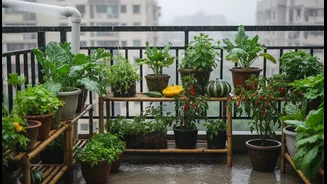
The single most important factor for a monsoon garden is drainage. Waterlogged soil will lead to root rot and kill your plants. Ensure every pot, whether it's a traditional terracotta planter or a recycled container, has at least one drainage hole at the bottom. It's a great practice to elevate your pots slightly using bricks or pot stands to allow excess water to escape freely. When it comes to size, choose containers appropriate for the plant. Leafy greens can do well in shallower trays about 6-8 inches deep, while root vegetables like radishes or carrots need deeper pots. Brinjal and tomato plants will require larger containers, around 12-15 inches in diameter, to support their growth.
Getting the Soil Right
Garden soil on its own is too heavy for containers and can become compacted during heavy rains. The ideal potting mix for the monsoon is light and well-draining. You can create your own excellent mix by combining garden soil, compost, and a material that improves aeration and drainage, such as coco peat or sand. A good recipe is two parts garden soil, one part compost, and one part coco peat. Coco peat is especially useful as it retains moisture without becoming waterlogged. Adding a handful of neem cake (neem khali) to your mix can provide nutrients and help deter soil-borne pests and fungi.
Monsoon Care and Pest Management
During the monsoon, you'll need to adjust your watering schedule. Water only when the top inch of soil feels dry; constant rain might mean you don't have to water at all for days. The high humidity also makes plants susceptible to fungal infections. To prevent this, ensure good air circulation by not overcrowding your plants. Pruning lower leaves and removing any yellowing or dead foliage can also help. Pests like aphids, slugs, and caterpillars are common. A simple, organic way to manage them is by spraying a solution of neem oil mixed with water and a few drops of liquid soap. This acts as a natural repellent without harming your plants or the environment. For slugs and snails, which are active in damp conditions, you can hand-pick them or use barriers like crushed eggshells around your pots.