







The Threshold of a New Space Era
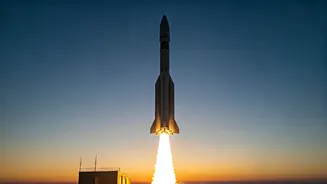
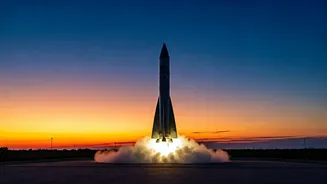
In a sprawling facility in Hyderabad, a team of engineers is making final preparations for a launch that could redefine India's place in the cosmos. Skyroot Aerospace has announced a launch window between July 12 and August 4, 2026, for the maiden flight
of its Vikram-1 rocket. This mission, named 'Aagaman' (Sanskrit for 'arrival'), isn't just another launch; it's a quest to make history. If successful, Skyroot will become the first private Indian company to design, build, and launch its own rocket into Earth's orbit, a feat that has so far been the exclusive domain of national space agencies. The seven-storey-tall rocket is set to lift off from the Satish Dhawan Space Centre in Sriharikota, carrying payloads for both domestic and international clients on this partially commercial test flight.
From ISRO Scientists to Startup Pioneers
The story of Skyroot is a story of ambition and expertise. The company was founded in 2018 by Pawan Kumar Chandana and Naga Bharath Daka, two former scientists from the Indian Space Research Organisation (ISRO). Chandana was a key contributor to ISRO's powerful GSLV Mk-III rocket, while Daka specialised in avionics and flight computers. They left the security of the national space agency to chase a bold dream: building rockets privately to serve the burgeoning global market for small satellite launches. Starting with a small team, they leveraged their experience to create a company that has quickly become a leader in India's 'New Space' movement, attracting significant investment and growing to a team of over 1,000.
Vikram: A Rocket for the Modern Age
Named in honour of Dr. Vikram Sarabhai, the father of India's space program, Skyroot's launch vehicles are built for efficiency and speed. The company made headlines on November 18, 2022, with the successful launch of Vikram-S, a suborbital rocket that reached an altitude of 89.5 km. That mission, 'Prarambh' ('the beginning'), was a crucial proof of concept, validating their core technologies. Now, the focus is on Vikram-1, a much more powerful, multi-stage rocket designed to deliver satellites weighing up to 350 kg into low Earth orbit. It features an all-carbon-fibre structure and innovative 3D-printed engines, technologies aimed at reducing manufacturing time and launch costs dramatically.
Why This Launch Matters for India
Skyroot's mission is unfolding at a pivotal moment. In 2020, the Indian government opened the space sector to private enterprise, creating a regulatory body, IN-SPACe, to facilitate and authorise private launches. This policy shift was designed to encourage innovation and capture a larger share of the global space economy, which was valued at over $8 billion for India in 2023. A successful orbital flight by Skyroot would be the most significant validation of this policy yet. It would signal that India is not just a user of space technology but a hub for its commercial development, capable of competing with global players like SpaceX. As India's first space-tech unicorn, valued at over $1.1 billion after its latest funding round, Skyroot is already leading the way.