

What Am I Looking For?
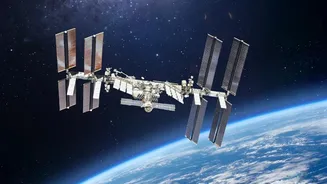
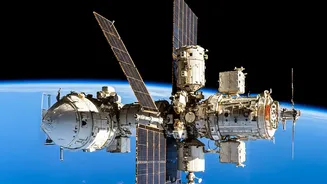
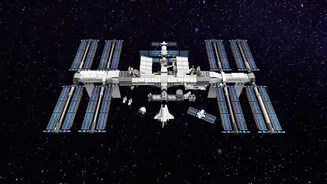
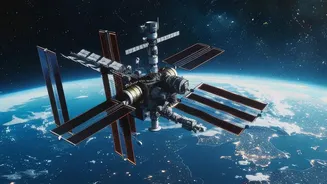
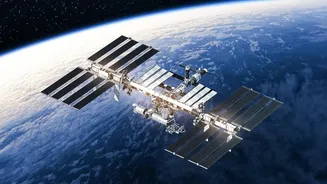
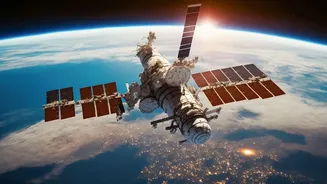
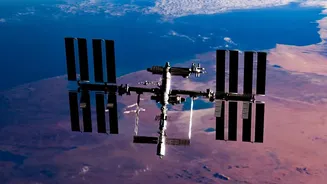
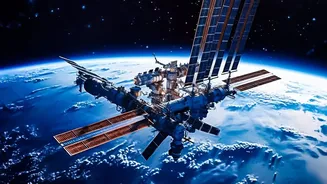
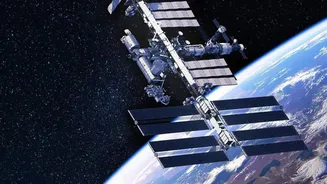
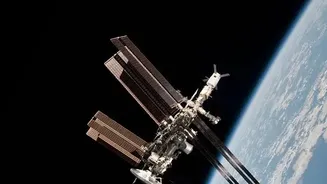
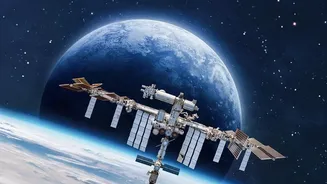
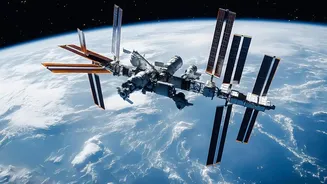
The International Space Station (ISS) is a large spacecraft orbiting about 420 kilometres above Earth. To the naked eye, it doesn't look like a station, but like a very bright, fast-moving star. Unlike an aeroplane, it doesn't have blinking lights and
moves in a steady, silent arc across the sky. It's often the third brightest object in the night sky after the Sun and the Moon, making it visible even from light-polluted urban areas. It travels at nearly 28,000 km/h, completing an orbit of the Earth roughly every 90 minutes.
Finding the Perfect Time to Watch
Timing is everything. The ISS is only visible when it's dark where you are, but the station itself is still illuminated by the sun. This means the best viewing opportunities happen in the hours just before sunrise or after sunset. The easiest way to find precise timings for your city is to use NASA’s official 'Spot The Station' service. You can visit their website or download the app. Simply enter your city—be it Delhi, Mumbai, Bengaluru, or a smaller town—and it will provide a list of upcoming sighting opportunities, including the exact time, duration of visibility, and the path it will take across the sky.
Your Step-by-Step Viewing Guide
Once you have your sighting time, the process is simple. First, download a reliable tracker app like NASA's Spot The Station, ISS Detector, or Heavens-Above. These apps not only give you alerts but can use your phone's compass to show you exactly where to look. On the day of the pass, head outside about five minutes early to let your eyes adjust to the dark. The viewing data will tell you where the station will first appear (e.g., '10° above SW') and where it will disappear. Then, just watch that part of the sky. A bright, steady point of light will emerge and glide silently across the heavens for several minutes before fading as it enters Earth's shadow.
Essential Tips for City Skywatchers
Viewing from a bustling city presents the challenge of light pollution. To improve your chances, find a location with a clear, open view of the sky, away from direct streetlights or bright building lights. A rooftop, park, or balcony is often ideal. Give your eyes at least 15-20 minutes to adapt to the darkness; this will help you see fainter objects. Using existing structures like walls or trees to block nearby lights can make a significant difference. Even though the ISS is very bright, reducing ambient light will make the experience much more dramatic and satisfying.
Trying to Capture the Moment
Want to try photographing the ISS? It's possible even without professional gear. For a smartphone, you can use a long-exposure app and a small tripod to capture the streak of light as it crosses the sky. For a DSLR camera, the process is similar to shooting star trails. Mount your camera on a sturdy tripod and use a wide-angle lens. Set your camera to manual mode with a wide aperture (like f/2.8 or f/4), an ISO of around 400-800, and a shutter speed of 10-20 seconds. Take continuous shots as the station passes overhead. You can later stack these images to create a single, beautiful light trail, a permanent record of your sighting.