





Breaking the 'All or Nothing' Cycle
Many people approach fitness with an 'all or nothing' mindset. They believe a workout only counts if it’s an hour long, gruelling, and leaves them exhausted. While intense exercise has its place, this mentality often leads to burnout and inconsistency.
When life gets busy, a one-hour gym session is the first thing to be sacrificed. This can create a cycle of starting and stopping, preventing any real progress. Shorter workouts dismantle this barrier. Committing to just 10 or 15 minutes feels manageable on even the busiest days, making it easier to show up consistently. This approach is far more beneficial than sporadic, intense sessions because it fosters a sustainable habit.
Why a Strong Core Is Non-Negotiable
When people hear 'core workout', they often think of six-pack abs. But the benefits of a strong core go far beyond aesthetics. Your core muscles—which include your abs, hips, lower back, and pelvis—are the central link connecting your upper and lower body. They are crucial for stability and balance in almost every movement you make, from carrying groceries to playing with your children. A strong core improves your posture, reduces the risk of lower back pain and injury, and enhances your performance in other physical activities. By providing a stable base, a robust core allows your arms and legs to function more powerfully and efficiently.
The Compounding Power of 10 Minutes
The magic of a short routine lies in the power of compounding. Small, regular efforts accumulate over time to produce significant, lasting results. Each 10-minute session is like a small deposit into your health account. It might not feel like much on any given day, but over weeks and months, these deposits grow into substantial gains in strength and endurance. From a psychological perspective, starting small is the most effective way to build a new habit. A short, achievable routine provides a sense of accomplishment without feeling overwhelming. This positive reinforcement rewires the brain, making the behavior more automatic over time. Research shows that it’s this consistency that allows the body to adapt, grow stronger, and avoid injury.
Your 10-Minute Foundational Core Circuit
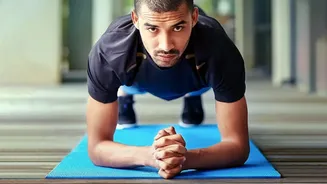
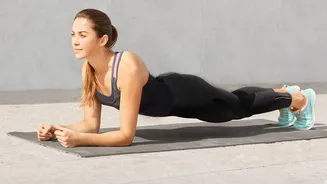
You don't need any equipment to build a strong core. The key is to focus on good form. Try this simple, effective circuit. Perform each exercise for 45 seconds, followed by 15 seconds of rest before moving to the next. Complete two full rounds. 1. Plank: Hold a straight line from your head to your heels, engaging your stomach muscles. Avoid letting your hips sag or rise too high. 2. Bridge: Lie on your back with your knees bent and feet flat on the floor. Lift your hips until your body forms a straight line from your shoulders to your knees. Squeeze your glutes at the top. 3. Bird-Dog: Start on all fours. Extend your right arm straight forward and your left leg straight back, keeping your back flat. Return to the start and alternate sides. 4. Dead Bug: Lie on your back with your arms extended toward the ceiling and your knees bent at a 90-degree angle over your hips. Slowly lower your right arm and left leg toward the floor. Return to the start and repeat on the other side.
How to Make Your Routine Stick
Building a lasting habit is about creating a routine that is difficult to break. Behavioral science points to the power of cues. A 'cue' is a trigger that prompts you to do your workout automatically. This could be your alarm clock in the morning, the end of your workday, or even just putting on your workout clothes. To make the habit stick, try 'habit stacking': link your new 10-minute core routine to an existing daily habit, such as right before your morning shower or immediately after you finish brushing your teeth. Research shows that exercising at a consistent time of day helps build a stronger habit. Remember, the goal isn't perfection; it's consistency. Even on days when you lack motivation, just showing up for your short routine reinforces the habit and keeps your momentum going.