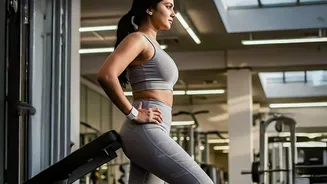




Known for her strength and fitness, Sonam Bajwa's workout ethic is an inspiration. But you don't need to be a star to train like one. Here’s how to build a powerful leg day routine with smart, gradual progressions for any fitness level.
The Philosophy: Functional Strength First
Sonam Bajwa's approach
to fitness prioritizes functional strength over aesthetics alone. Her demanding schedule requires a body that is strong, stable, and resilient. Leg days are a cornerstone of this philosophy. Strong legs, which house the body's largest muscle groups, are crucial for everything from walking and climbing stairs to maintaining good posture. The goal is to build a capable body through consistent, intelligent training. This means focusing on proper form and progressing at a pace that is right for you, a principle that applies to everyone, regardless of their current fitness level.
Beginner Level: Master the Movements
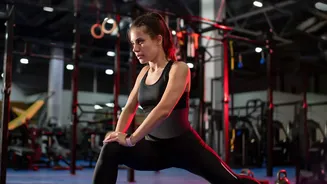
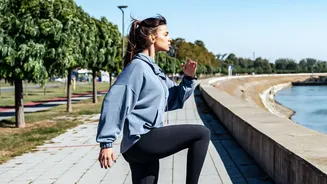
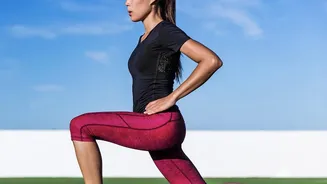
If you are new to strength training, the most important goal is to master the fundamental movements with your own bodyweight. This builds a strong foundation and mind-muscle connection, which is crucial for preventing injury. Focus on control, not speed or weight. Start with exercises like bodyweight squats, focusing on keeping your chest up and sitting back into your hips. Add basic lunges, ensuring your front knee stays aligned with your ankle, and step-ups on a low box or stair to build single-leg strength and stability. Once you can comfortably complete 3 sets of 12-15 repetitions with good form, you're ready to add a new challenge.
Intermediate Level: Add Resistance and Complexity
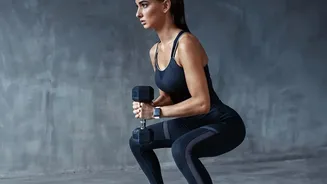
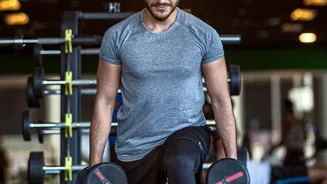
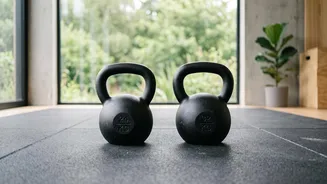
The intermediate stage is all about progressive overload, which means gradually increasing the challenge. The simplest way to do this is by adding light weights. A goblet squat, holding a single dumbbell or kettlebell at your chest, is an excellent progression from a bodyweight squat. It reinforces an upright posture while adding resistance. You can also progress your lunges by holding dumbbells in each hand (walking lunges) or trying Bulgarian split squats, where your back foot is elevated on a bench. These exercises not only build more strength in the quads, hamstrings, and glutes but also challenge your balance and core stability more intensely. Focus on increasing weight slowly over several weeks.
Advanced Level: Build Power and Peak Strength
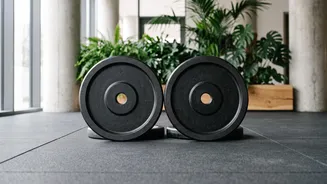
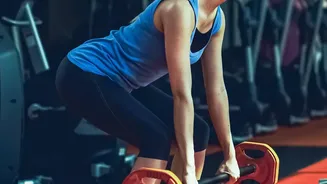
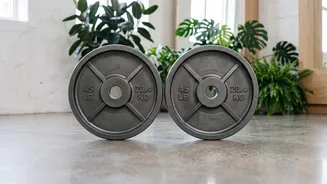
For the advanced lifter, progression involves increasing load and incorporating more complex or explosive movements. This is where barbell exercises like back squats and front squats come in, allowing for heavier loads to build maximum strength in the quads and glutes. Another staple is the Romanian Deadlift (RDL), which is phenomenal for hamstring and glute development. To build explosive power, you can add plyometric exercises like box jumps or jump squats. These high-impact movements should only be attempted after a solid strength base is established. At this level, proper form is non_negotiable to handle heavy loads safely and effectively.
Inspired by Sonam: Key Exercises
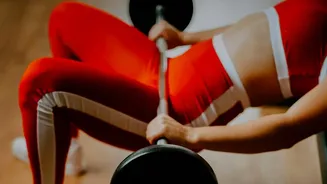
Sonam Bajwa's workouts often feature foundational strength_building exercises. She has shared glimpses of her training that include squats and lunges with weights, which are key for building a strong lower body. Another powerful exercise seen in advanced routines is the hip thrust. While a glute bridge is a great starting point for beginners, the hip thrust allows for heavier loading to seriously target and strengthen the glutes. These exercises are effective because they are compound movements, meaning they work multiple muscle groups at once, which is efficient for building overall strength and function, just as her fitness philosophy suggests.
Don't Forget to Warm Up and Cool Down
No matter your fitness level, never skip a warm_up. Mobilizing your joints, especially your hips and ankles, is crucial before a leg workout. Think of it as preparing your body for the work ahead. Dr. Swapnil Zambare emphasizes that proper warm_ups and mobility exercises are key to protecting your joints. After your workout, take five to ten minutes to cool down with some static stretching. Focus on your quads, hamstrings, glutes, and hip flexors. This aids in recovery and helps maintain flexibility. Listening to your body is vital; if you feel sharp or persistent pain, it's a sign to stop and assess rather than push through.