



The Sun’s Unpredictable Temper
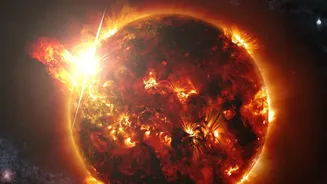
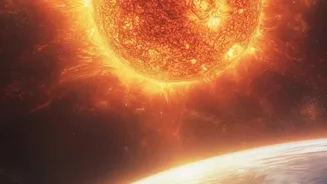
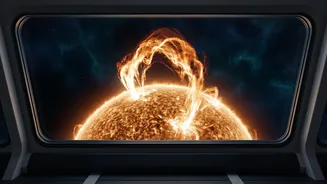
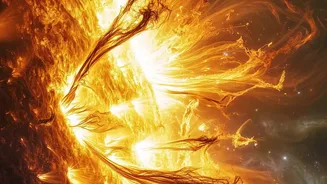
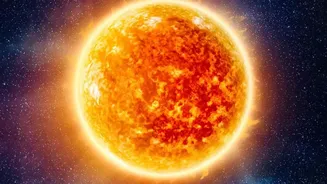
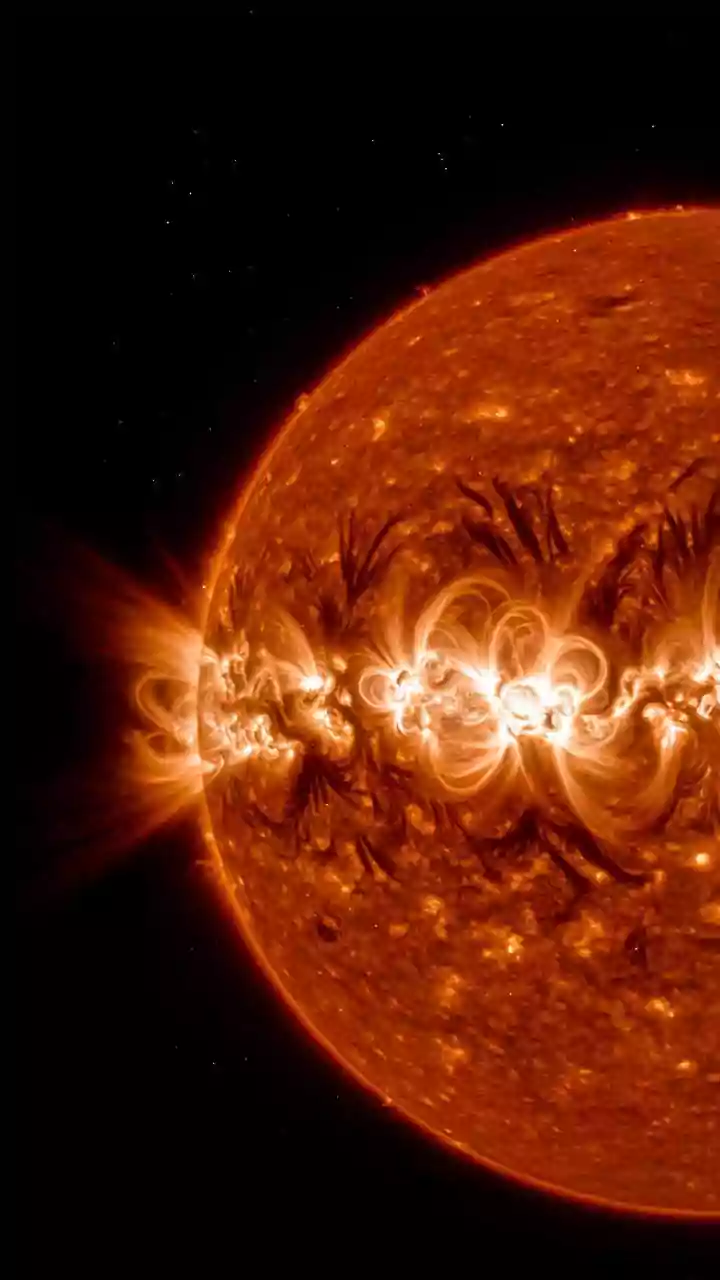
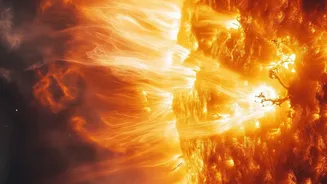
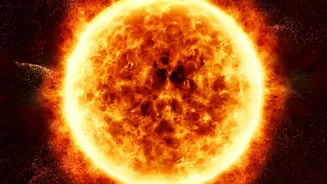
Our star is not the calm, steady orb it appears to be. It constantly ejects a stream of charged particles called the solar wind. More violently, it can unleash solar flares and coronal mass ejections (CMEs), which are gigantic explosions of energy and plasma.
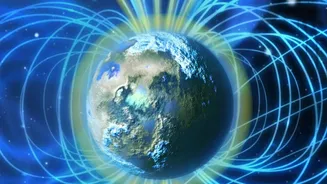
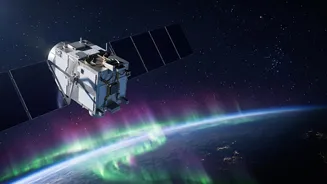
If a powerful CME is aimed at Earth, it can interact with our planet's magnetic field to create a geomagnetic storm. While these storms produce beautiful auroras, they can also induce damaging electrical currents in our infrastructure. A severe event could overheat and destroy transformers in power grids, damage or de-orbit the satellites that run GPS and communications, and disrupt global supply chains and financial systems for weeks or even months.
The Limits of Looking Ahead
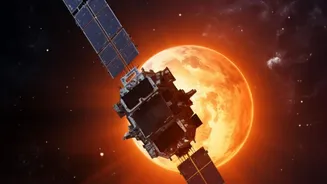
Traditionally, space weather forecasting has involved observing the Sun for tell-tale signs like sunspots and then using physics-based models to predict what might happen next. However, this method has significant limitations. The physics of the Sun are incredibly complex and not fully understood, making the models imperfect. Furthermore, our best observatories, like satellites positioned at a point in space called L1, can only provide about 30 to 60 minutes of warning before a CME hits Earth. This isn't nearly enough time to take meaningful protective measures for large-scale infrastructure, leaving us perpetually on the back foot in a cosmic race against time.
AI Enters the Solar Arena
This is where artificial intelligence, specifically machine learning, comes in. Scientists are now training AI models on decades of solar data, teaching them to recognize the subtle patterns that precede a solar eruption. An AI can sift through immense volumes of satellite imagery and magnetic field data far faster than any human, spotting connections that traditional models might miss. Projects like NASA's DAGGER (Deep Learning Geomagnetic Perturbation) model are already showing promise. By analyzing real-time solar wind data, DAGGER can predict the location and severity of geomagnetic disturbances on Earth with about 30 minutes of warning, offering a speed and precision that was previously out of reach.
A Flood of Data, A Lack of Certainty
Despite its promise, applying AI to solar forecasting presents a unique set of challenges. One major issue is the 'black box' problem; many deep learning models are so complex that even their creators don't fully understand how they arrive at a prediction. This makes it hard to trust the output, especially when the cost of a false alarm (like shutting down a power grid) is high. Another, more fundamental problem is the data itself. Catastrophic solar storms, like the 1859 Carrington Event, are incredibly rare. This means there are very few examples of these 'black swan' events in the historical data for an AI to train on. An AI model is only as good as its training data, and if it has never seen an extreme event, it may fail to predict the one we fear most.
The Next Generation of Forecasters
The future of solar storm forecasting likely lies in a hybrid approach, where AI acts as a powerful assistant to human experts. AI can serve as an early warning system, flagging regions of the Sun that show potential for an eruption hours before it becomes obvious. For instance, some models are learning to detect faint acoustic signals and magnetic field changes that precede the formation of an active region. This gives scientists more time to focus their attention and deploy more detailed physics-based models. The goal is not to replace human forecasters, but to augment their abilities, combining the pattern-recognition power of AI with the contextual understanding and expertise of scientists. This collaborative approach is our best hope for improving lead times and building a more resilient planet.