








The End of Late-Night Planning?
Lesson planning is the backbone of effective teaching, but it is a notoriously time-consuming process. From aligning with curriculum standards to creating engaging activities and tailoring materials for different learning levels, the administrative burden
on teachers is immense. This workload is a primary reason many Indian educators are turning to AI. Recent data shows a significant uptake, with some surveys indicating that over 60% of teachers in India are now using AI tools specifically for lesson planning. The promise is simple: to automate repetitive tasks and free up educators to focus on the more human elements of teaching, like connecting with students.
How AI Becomes a Teacher's Assistant
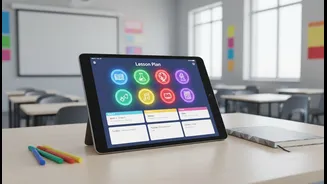
So how does it work in practice? Teachers can input a few simple parameters—like subject, grade, and topic—and an AI tool can generate a structured lesson plan in minutes. These aren't just generic outlines. The generated plans can include learning objectives, activity ideas, discussion prompts, and even suggestions for assessment. For instance, a teacher preparing a Class 6 science lesson on ecosystems can get an instant draft, complete with questions and potential worksheets. Some tools are even built to align with specific Indian curriculum standards like CBSE and ICSE, making them highly relevant for local classrooms.
Tools of the Digital Staffroom
A new ecosystem of AI tools is rapidly becoming a staple for educators. General-purpose platforms like ChatGPT are widely used for their flexibility in brainstorming and drafting materials. However, a host of education-specific tools are gaining prominence. Platforms like MagicSchool.ai, Eduaide.ai, and Curipod offer a wide array of features designed explicitly for teachers, from creating interactive lessons to generating rubrics. In India, tools that support multilingual content and are mobile-friendly are particularly valuable, with some platforms like Khanmigo offering dedicated NCERT-aligned courses. Tools such as Diffit specialize in adapting any text to different reading levels, a task that is manually intensive but crucial for diverse classrooms.
Beyond Efficiency to Personalised Learning
The most profound impact of AI in lesson planning may lie in its ability to facilitate differentiated instruction—tailoring education to meet individual student needs. This is a long-held goal in education that has been difficult to achieve at scale due to time constraints. AI tools can create multiple versions of a single lesson almost instantly, adjusting for reading levels, learning styles, and even student interests. This allows teachers to provide accessible content for students who are struggling and more challenging material for those who are ahead, ensuring every student can learn at their own pace.
A Necessary Note of Caution
Despite the benefits, the adoption of AI in classrooms is not without concerns. A significant issue is the accuracy and potential for bias in AI-generated content. Since AI models are trained on existing data, they can perpetuate historical stereotypes or inaccuracies. Educators must treat AI-generated plans as a first draft, always applying their professional judgment to review and correct the material. Other challenges include ensuring student data privacy, the risk of teachers becoming over-reliant on the technology, and the digital divide that may leave schools with fewer resources behind.
The Irreplaceable Human Element
Ultimately, educators and experts agree that AI is a tool to support teachers, not replace them. The goal is to enhance, not automate, the art of teaching. While AI can draft a lesson plan, it cannot understand the unique dynamics of a classroom, build a relationship with a student, or provide the empathy and encouragement that are core to learning. A study of a pilot program in Karnataka, called Shiksha copilot, showed that AI was most effective when it collaborated with teachers, helping them reduce stress and administrative load so they could focus on better pedagogy. The teacher's role is evolving from a content provider to a facilitator of learning, with AI as a powerful behind-the-scenes assistant.