


Understanding the New Entry Rules
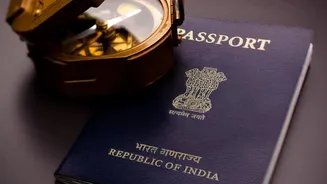
The new visa-free regime is conditional. According to an official announcement from the Embassy of India in Tashkent, Indian citizens can stay in Uzbekistan for up to 30 days without a visa, provided they meet specific criteria. The primary condition is that
the traveller must hold a valid, multiple-entry visa for one of several countries, including the USA, UK, Schengen Area member states, Australia, Canada, Japan, New Zealand, or the Republic of Korea. Additionally, travellers must have a confirmed return air ticket or an onward ticket to a third country. For Indian citizens who do not meet these specific conditions, the standard visa application process, such as the e-visa, remains in place. This new rule, effective from September 1, 2026, primarily benefits frequent international travellers looking to add Uzbekistan to their itinerary without the hassle of a separate visa application.
Why a Month in Uzbekistan?
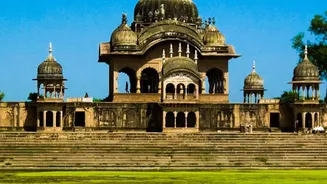
Thirty days is the perfect amount of time to truly immerse yourself in a country where empires clashed and cultures blended for centuries. Uzbekistan offers a direct historical line for Indian travellers, with deep connections to the Mughal empire. Babur, the first Mughal emperor, was born in the Fergana Valley, and the stunning Timurid architecture of Samarkand is a direct ancestor to the magnificent tombs and palaces found in Delhi and Agra. Beyond the shared history, Uzbekistan is a land of immense hospitality, vibrant bazaars, and starkly beautiful landscapes. A month allows you to travel beyond the main tourist trail, linger in ancient cities, explore natural parks, and perhaps even spend a night in a traditional yurt camp in the desert.
The Unmissable Silk Road Trio
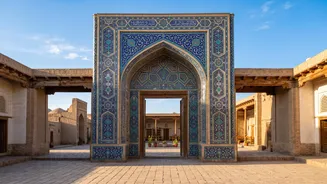
Most journeys through Uzbekistan focus on three legendary cities. Start with Samarkand, home to the monumental Registan Square, a breathtaking assembly of three grand madrasahs. The city also boasts the Gur-e-Amir, Timur's mausoleum, and the incredible Shah-i-Zinda necropolis, an avenue of dazzling blue-tiled tombs. Next, travel to Bukhara, whose historic centre is a UNESCO World Heritage site that feels like a living museum. Wander through its labyrinthine alleys, admire the towering Kalon Minaret, and relax in a traditional tea house. Finally, head to Khiva, a perfectly preserved walled city (Ichan Kala) that transports you back in time. Walking its mud-brick walls at sunset is an unforgettable experience.
Exploring Beyond the Classics
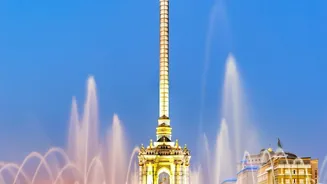
With a full month, your itinerary can expand significantly. Spend a few days in the modern capital, Tashkent, exploring its grand metro stations, each a work of art, and the bustling Chorsu Bazaar under its giant green dome. From there, venture into the Fergana Valley, the country's fertile heartland, known for its master potters in Rishton and silk weavers in Margilan. For a change of scenery, head to the Chimgan Mountains for hiking or, in winter, skiing at the Amirsoy resort. A trip to the Kyzylkum Desert for a night in a yurt camp near Aydarkul Lake offers a glimpse into the region's nomadic traditions and a stunning night sky. For the truly adventurous, a long journey to Nukus in the semi-autonomous republic of Karakalpakstan reveals the haunting ship graveyard of the retreating Aral Sea and the world-renowned Savitsky Museum of Art.
Practical Tips for Your Trip
Getting around is surprisingly efficient thanks to the 'Afrosiyob' high-speed train connecting Tashkent, Samarkand, and Bukhara. For other routes, shared taxis are a common and affordable option. While card acceptance is growing in major cities, it is wise to carry enough cash (Uzbekistani Som) for purchases in smaller towns and markets. The best times to visit are during the spring (April-May) and autumn (September-October) when the weather is pleasant for sightseeing. Local cuisine is a highlight, with plov (a rice pilaf dish) being the national obsession; be sure to visit a dedicated Plov Centre in Tashkent. While Uzbek is the official language, Russian is widely spoken, and English is becoming more common in tourist hubs.