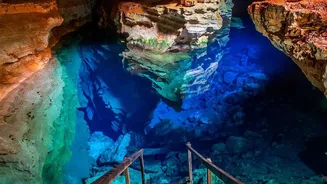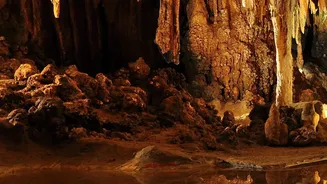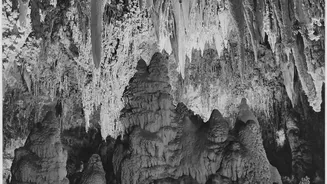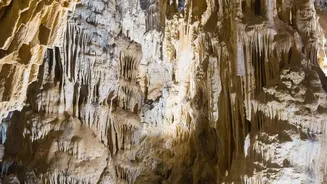




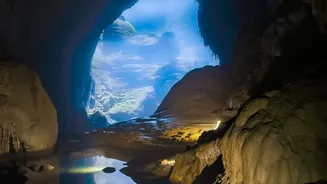

Forget everything you think you know about caves. In Slovenia, a journey into the earth reveals a breathtaking subterranean world of vast cathedrals, whimsical sculptures, and unbelievable creatures, all accessible via a historic electric train.
A Train Ride Into the Earth's Core
The adventure
at Postojna Cave begins not with a strenuous hike, but with a train ride. This isn't just any railway; it's the world's first and only double-track cave railway, with a history stretching back to 1872. Originally, guides pushed carts by hand, but today's electric train whisks visitors on a 3.7-kilometre journey deep into the mountain. The ride itself is a thrilling introduction to the cave's scale, as the train passes through grand, illuminated halls and narrow passages, offering tantalising glimpses of the natural wonders that await. The path was carved over millions of years by the Pivka River, creating a 24-kilometre-long network of tunnels and chambers, the largest in Slovenia.
A Cathedral Made of Stone
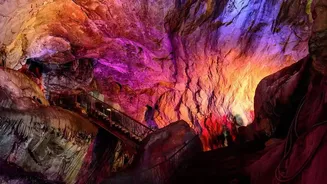
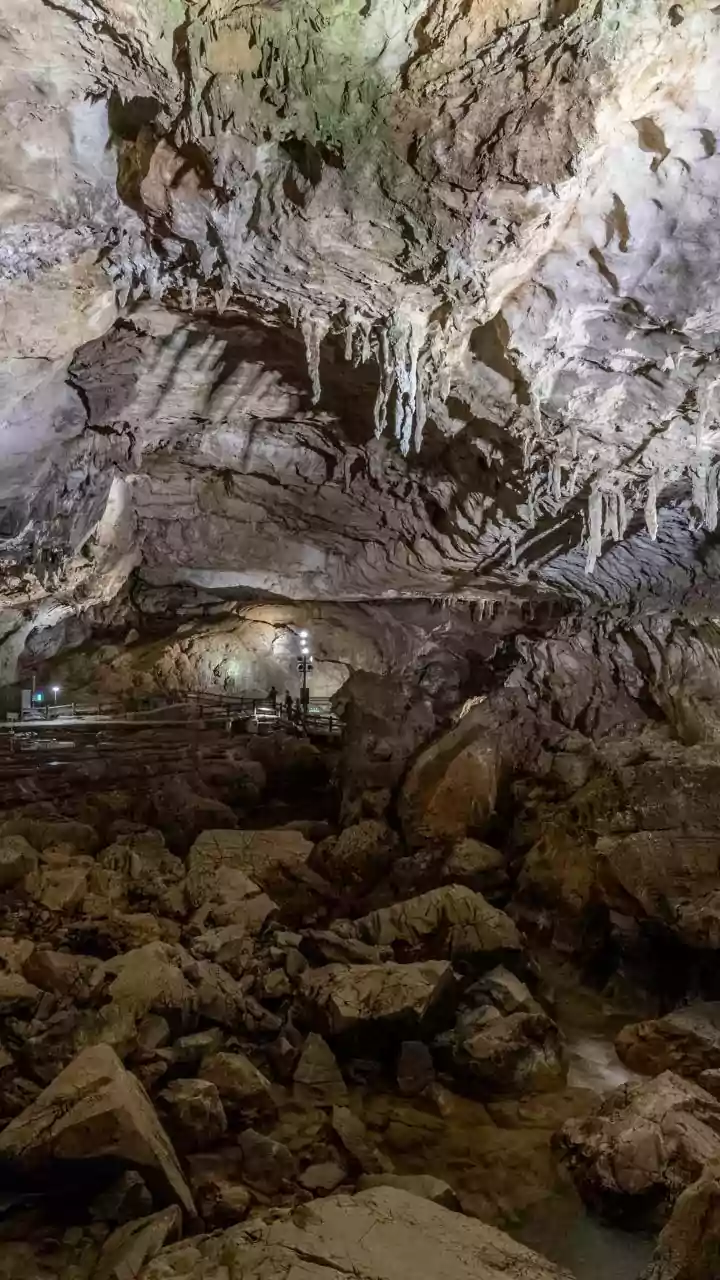
After the train journey, visitors embark on a guided walk of just over a kilometre along an easy, non-slip path. This is where the sheer artistry of nature is on full display. The path winds through a series of chambers with soaring ceilings that rival any cathedral, decorated with millions of stalactites and stalagmites. Some halls are so vast they can hold thousands of people and have even been used as concert venues, complete with Murano glass chandeliers that add to the fairytale atmosphere. You'll pass through the 'Spaghetti Hall', with its ceiling covered in countless, delicate, noodle-like stalactites, and the 'Red Hall', coloured by iron minerals. It’s a mesmerising landscape that took millions of years to form, with formations growing at the agonisingly slow pace of about one millimetre per decade.
The Brilliant and the Skyscraper
Two formations, in particular, stand as icons of Postojna Cave. The first is 'Brilliant', a stunning, five-metre-tall stalagmite of the purest, shiniest white. Its dazzling colour comes from a thin film of flowing water that continually deposits a fresh layer of calcite. Standing next to it is a reddish, column-like stalagmite, creating a dramatic contrast. Not far away, another formation known as the 'Skyscraper' towers 16 metres high, a testament to the immense timescale on which these natural sculptures are built.
Meet the 'Baby Dragons'
Postojna Cave is not just a geological wonder; it's also a cradle of speleobiology. The most famous resident is the olm, or Proteus anguinus, a blind aquatic salamander perfectly adapted to life in total darkness. Ancient locals, finding them washed out of the cave after heavy rains, believed them to be the offspring of a cave-dwelling dragon. These 'human fish', as they are also known for their pale, fleshy skin, are remarkable creatures. They can live for up to 100 years and survive without food for years at a time. Near the end of the tour, a specially designed vivarium allows visitors to see these incredible 'baby dragons' up close without harming them, a highlight of any visit.
For the Truly Adventurous
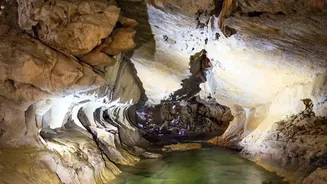
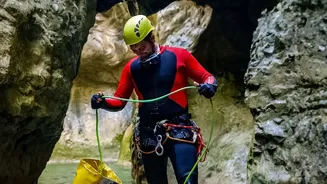
While the main tour is accessible to nearly everyone, including families with strollers, the headline's promise of 'thrilling caving' holds true for those seeking a more rugged experience. Postojna Cave Park offers several 'adventure tours' that take small groups off the beaten path. Donning caving overalls, a helmet, and a headlamp, participants can explore the more challenging and muddy passages of the system, following in the footsteps of the first explorers. These tours, which range from a few hours to more strenuous treks, allow you to wade through underground rivers and discover parts of the cave that the million-plus annual visitors on the main tour never see.