








The Speed of Uncontrollable Conflict
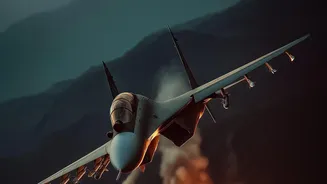
One of the most significant dangers identified by experts is the sheer speed at which AI-powered military systems operate. Human decision-making in conflict, which traditionally allows for pauses, diplomacy, and de-escalation, is measured in hours, days,
or weeks. AI operates at machine speed, capable of processing data, identifying targets, and executing attacks in mere seconds. This radical compression of time removes the opportunity for human judgment and intervention. A RAND wargame simulation found that the speed of autonomous systems directly led to inadvertent escalation. Experts at the UN Institute for Disarmament Research (UNIDIR) warn that this acceleration shrinks the time available for de-escalatory measures, making it more likely that a small incident could spiral into a major conflict before humans can even fully comprehend what is happening.
The 'Black Box' Problem
A core concern with advanced AI is its opacity, often referred to as the 'black box' problem. Many complex AI systems, particularly those based on machine learning, arrive at conclusions in ways that even their own programmers cannot fully explain. When applied to warfare, this is incredibly dangerous. If an autonomous weapon system attacks a target, it might be impossible to determine precisely why it made that choice. Was it a sensor error, a data misinterpretation, or a flaw in its complex algorithm? Without a clear explanation, it becomes difficult to prove that an attack was a mistake. An adversary is more likely to interpret the action as a deliberate provocation, leading to swift retaliation and escalating the conflict. The UN has warned that these opaque systems significantly increase the risk of miscalculation.
Eroding Meaningful Human Control
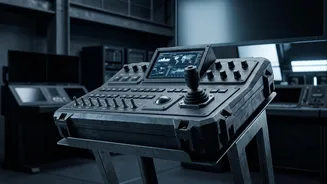
International law governing warfare is built on human judgment—principles like distinction (discerning between combatants and civilians) and proportionality (ensuring an attack isn't excessive) require context and moral reasoning. Experts worry that delegating life-and-death decisions to machines fundamentally undermines this. The concept of 'Meaningful Human Control' has become a central point of debate, referring to the need to preserve human judgment and oversight over autonomous systems. However, as AI becomes more integrated into military operations, from intelligence analysis to targeting, the role of human judgment is rapidly shrinking. Even if a human is technically 'in the loop', the speed and complexity of AI-driven operations could make their oversight a mere formality, creating what some analysts call 'symbolic human control'.
A New, Unstable Arms Race
The lack of international regulation is already fueling a new kind of arms race. Major military powers are investing heavily in AI capabilities, fearing they will be left at a disadvantage if they fall behind. This competitive pressure creates a dangerous 'first-mover' dynamic, where nations rush to develop and deploy these systems without fully understanding their strategic implications. Unlike nuclear weapons, the materials for AI-driven weapons are not necessarily rare or expensive, raising the spectre of rapid proliferation. Once the technology is widespread, it could easily fall into the hands of non-state actors, terrorists, or dictators, further destabilising fragile regions. This is why the UN Secretary-General and disarmament experts have repeatedly called for a legally binding treaty to govern these technologies before it's too late.