








Why We Love a Good 'Odd Couple' Story
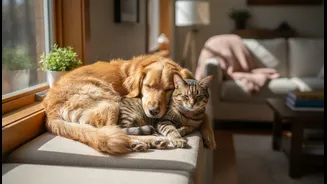
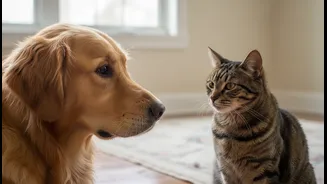
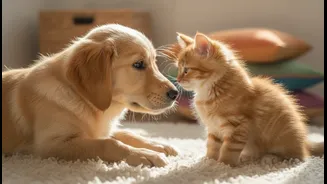
From viral videos of a Golden Retriever cuddling a tiny kitten to photos of a cat patiently tolerating a playful puppy, interspecies friendships are irresistible. For pet owners and wellbeing seekers, these stories tap into a deep-seated desire for harmony
and connection. Watching them has been shown to reduce stress and improve mood. This attraction is partly due to anthropomorphism: our tendency to give animals human traits and emotions. We see a dog putting a paw on a cat and think of it as a hug. We interpret a cat's slow blink as a 'kitty kiss'. While this helps us feel connected, it can also cause us to miss crucial information. The 'story' we create in our minds isn't always what the animals are actually experiencing.
Learning Their Language: Key Signals We Miss
Dogs and cats communicate primarily through body language, and their signals can be wildly different, and even contradictory. A wagging tail is a classic example. In a dog, a loose, relaxed wag is usually a happy sign, but a high, stiff wag can signal arousal or frustration. For a cat, a friendly greeting is a high, upright tail, whereas a forcefully swishing tail almost always signals irritation. Other subtle signs of stress are often misinterpreted as well. A dog yawning when it isn't tired, licking its lips, or turning its head away is often communicating discomfort, not disobedience. Similarly, a cat with flattened 'airplane ears' or a twitching tail is not relaxed; it is feeling stressed or threatened. Mistaking these signals can lead to unfortunate interactions and erode the trust between pets and their people.
Viral Moments vs. Animal Reality
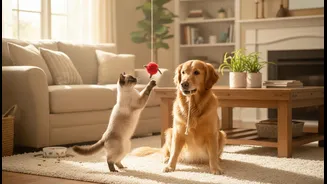
Let's re-examine some common viral video tropes through this new lens. That video of a dog repeatedly nudging a cat to play? The dog might see it as a play invitation, but the cat, frozen in place with wide eyes and a twitching tail, is likely feeling cornered and terrified. The 'patient' cat enduring a puppy's boisterous antics might actually be showing signs of 'learned helplessness', having given up on trying to escape. A dog that rolls onto its back might be showing submission to appease a perceived threat, not asking for a belly rub in that context. A cat purring doesn't always mean contentment; cats also purr when they are in pain or distress as a self-soothing mechanism. Being a smart viewer means asking: does the animal have an escape route? Are the interactions truly reciprocal, or is one animal just tolerating the other? Looking for signs of stress, rather than just the 'aww' factor, is key.
What a Healthy Interaction Actually Looks Like
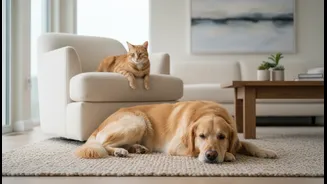
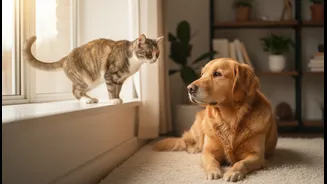
True friendship between a cat and a dog is certainly possible, and when it happens, it is genuinely heartwarming. A positive relationship isn't built on forced cuddles but on mutual respect. Healthy signs include calm coexistence, where both animals can relax in the same room without tension. They might engage in gentle, interactive play, where both participants seem happy and can easily disengage. Often, they will give each other space, sniffing and then moving on. When introducing pets, the goal should always be slow and gradual, allowing them to get used to each other's scent and presence from a safe distance before any face-to-face meetings. Providing a cat with vertical spaces and hiding spots where the dog can't reach is essential for its sense of security. A peaceful home is one where every pet feels safe.
Smarter Viewing for Better Wellbeing
Why does this matter for your wellbeing? Because understanding your pet’s true feelings reduces anxiety—for both of you. When you can accurately read their signals, you can intervene before a situation escalates, preventing fights and injuries. This builds a deeper, more authentic bond based on trust and communication, not on a story you've projected onto them. This mindful approach to pet ownership shifts the dynamic from one of simple ownership to one of true companionship. You become your pet's advocate, able to ensure their needs are met. This sense of competence and the resulting harmonious household directly contribute to a greater sense of peace and wellbeing for you. By learning their language, you don't just become a better pet owner; you cultivate a more compassionate and observant mindset in your own life.