




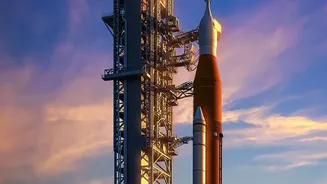
Gaganyaan: India's Human Spaceflight Dream
First announced in 2018, the Gaganyaan programme is ISRO's ambitious endeavor to send a crew of three astronauts into a Low Earth Orbit of about 400 kilometres. The mission plan involves a flight duration of up to three days, after which the crew will
safely return to Earth with a splashdown in the Indian Ocean. Successfully executing this will make India only the fourth country in the world—after the United States, Russia, and China—to have an independent human spaceflight capability. The programme isn't just about a single flight; it's about establishing a foundation for a long-term Indian human space exploration program, potentially leading to a space station and even deeper space missions in the future.
The Life-Saving Importance of Abort Tests
Before putting astronauts on top of a powerful rocket, ISRO must ensure their safety is paramount. This is where the Crew Escape System (CES) comes in. Think of it as the ultimate ejection seat, but for an entire spacecraft. The CES is designed to rapidly pull the crew module—the capsule where the astronauts will be—away from the launch vehicle in case of a catastrophic failure on the launch pad or during the initial ascent. This system uses a series of powerful, quick-acting solid motors to jettison the crew to a safe distance, allowing them to parachute back to the ground. Proving this system works perfectly under various failure scenarios is a non-negotiable step before any human is cleared to fly.
Decoding the Test Vehicle Abort Mission Success
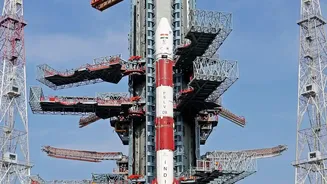
ISRO has been conducting a series of complex abort tests to validate the Crew Escape System. One of the most significant was the Test Vehicle Demonstration Mission (TV-D1). During this test, a specially designed rocket lifted off, and an anomaly was deliberately simulated mid-flight at an altitude of about 17 kilometres while travelling at supersonic speed. The Crew Escape System was triggered, which then successfully separated the crew module from the rocket. The module followed its prescribed descent, deployed its parachutes, and made a soft splashdown in the Bay of Bengal, where it was recovered by the Indian Navy. This flawless demonstration proved that the escape system can perform as intended under challenging in-flight conditions, a major confidence booster for the entire program.
How This Greenlights the Gaganyaan Timeline
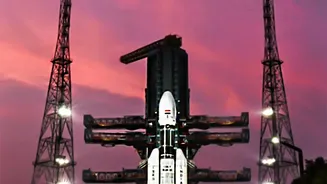
Every successful test is a green light for the next phase of the mission. The achievements in abort testing, including both pad aborts and in-flight aborts, are critical milestones that significantly de-risk the program. With the performance of the escape system validated, ISRO can now proceed with greater confidence towards the next major steps: uncrewed missions. The first uncrewed flight, designated G1, is planned to be launched on the human-rated LVM3 rocket. This mission will be a full dress rehearsal without astronauts, testing everything from launch to orbit and re-entry. Recent government updates have confirmed that preparations for this uncrewed mission are progressing steadily, with critical hardware and facilities now in an advanced stage of readiness.
The Road Ahead: Next Milestones to Watch
While the abort tests are a monumental achievement, the journey to the first crewed launch is still methodical and layered. Following the successful TV-D1 test, ISRO is already preparing for the next test vehicle mission, TV-D2. The program plans for at least one more major uncrewed test flight after the initial G1 mission to ensure all systems are perfectly reliable. Concurrently, the four selected astronaut-designates are continuing their mission-specific training in Bengaluru. While timelines have shifted since the original 2022 target, the first uncrewed mission is anticipated in 2026, with the first historic crewed launch, H1, now slated for 2027 or 2028. Each step is meticulously planned to ensure that when Indian astronauts finally ride into orbit, they do so with the highest possible degree of safety.