



A New Era of High-Frequency Launches
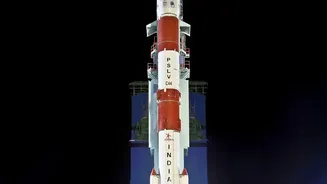
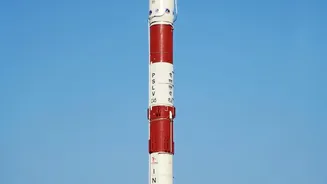
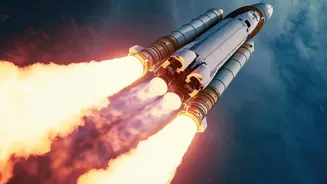
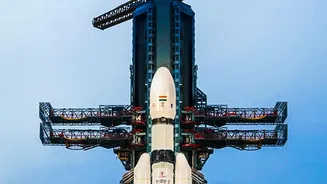
Gone are the days when a single ISRO launch was an isolated event. The plan to execute seven missions within a single financial year signals a major leap in operational capability. ISRO Chairman V Narayanan has confirmed this ambitious target, which reflects
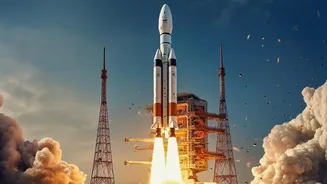
a strategic shift from singular, high-profile missions to a sustained, high-frequency launch cadence. This accelerated pace demonstrates the maturity of India’s launch infrastructure, from rocket production to mission management. It allows ISRO to simultaneously pursue scientific research, commercial contracts, and national security objectives, transforming the organisation into a more dynamic and responsive space agency. The plan includes a diverse manifest, covering everything from the precursors to human spaceflight to vital Earth observation satellites.
Paving the Way for Gaganyaan
At the heart of this year's roadmap is the Gaganyaan programme, India's quest to send its own astronauts into orbit. A critical part of the seven-mission plan is the first uncrewed test flight, G1, scheduled for later in 2026. This mission is arguably one of the most important for ISRO this year. Its purpose is to test the orbital module, life support systems, and re-entry and recovery operations under real-world conditions before any human is aboard. This will be followed by another uncrewed flight, G2, which will carry the humanoid robot Vyommitra to further validate the systems. Successfully completing these gateway missions is non-negotiable for ensuring the safety of the astronauts on the eventual crewed flight, which is targeted for 2027. This methodical, safety-first approach is the bedrock of the human spaceflight programme.
Our Planet and Our Solar System
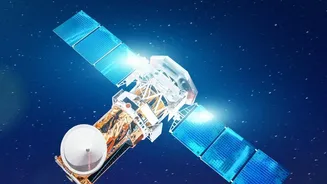
While Gaganyaan captures the headlines, the fiscal roadmap is also packed with missions vital for science and planetary monitoring. A major achievement being leveraged this year is the NASA-ISRO Synthetic Aperture Radar (NISAR) mission. Although launched in 2025, the satellite is now fully operational, with its data on Earth's changing ecosystems, ice masses, and land surfaces becoming publicly available. The roadmap also includes launches for Earth observation satellites like EOS-05, which will provide near real-time imagery crucial for disaster management and resource monitoring. Beyond Earth's orbit, the long-term vision is even more inspiring. Plans are solidifying for Shukrayaan-1, India's first mission to Venus, set for a 2028 launch to study the planet's hostile atmosphere. These missions underscore a dual strategy: using space to better understand and manage our own planet while also reaching for our celestial neighbours.
Next-Gen Ambitions: A Rover on Mars
Looking further ahead, ISRO is designing its most ambitious interplanetary mission yet: Mangalyaan-2. Building on the stunning success of the first Mars Orbiter Mission, this follow-up won't just orbit the Red Planet. Current plans point towards a far more complex undertaking involving a lander, a rover to explore the surface, and even a helicopter to study the Martian atmosphere, similar to NASA's Ingenuity. This represents a monumental technological leap, aiming to make India only the third nation to successfully land a spacecraft on Mars. While a firm launch date is still in development, the project shows the sheer scale of ISRO's ambition. Missions like Mangalyaan-2 and Chandrayaan-4, a proposed lunar sample-return mission, are no longer just dreams; they are the tangible next steps in India’s journey as a space-faring superpower.