




Welcome to Mars, in Texas
At NASA's Johnson Space Center in Houston, a unique habitat called Mars Dune Alpha is home to four volunteers for 378 days at a time. This isn't a game; it's a critical part of NASA's CHAPEA (Crew Health and Performance Exploration Analog) missions. These
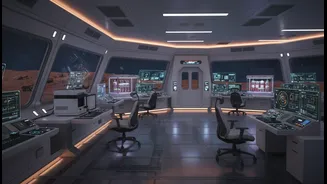
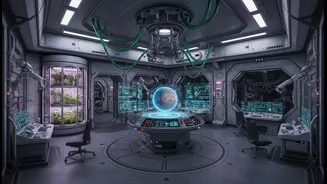
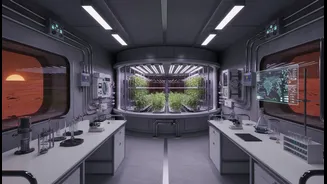
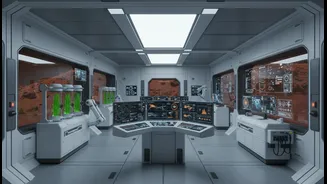
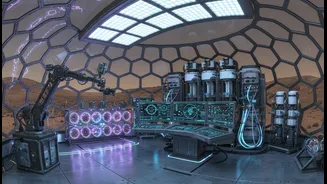
Earth-based simulations, or analog missions, are designed to replicate the immense challenges of living on Mars before astronauts ever leave the planet. The habitat is a 1,700-square-foot, 3D-printed structure containing private crew quarters, a kitchen, and areas for science, recreation, and growing crops. By conducting these dress rehearsals on Earth, scientists can gather crucial data at a much lower cost and risk.
A Day in the Simulated Martian Life
Life inside the dome is a rigorous schedule of tasks designed to mimic a real Mars mission. Crew members conduct simulated 'Marswalks' in an adjoining sandy enclosure, using virtual reality to complete objectives. Their days are filled with habitat maintenance, scientific experiments, operating robotic arms, and regular exercise to combat the theoretical effects of lower gravity. They grow their own vegetables, like tomatoes and peppers, to supplement a diet of freeze-dried meals. A key feature is the 22-minute communication delay with 'Earth' (the mission controllers outside), forcing the crew to be self-reliant and solve problems on their own. This delay is one of the most significant psychological hurdles for a real Mars mission.
The Psychological Gauntlet
While the physical tasks are demanding, the primary purpose of CHAPEA is to study the human element. How do four people cope with extreme isolation, confinement, and the same faces for over a year? Scientists monitor the crew for signs of depression, fatigue, sleep difficulties, and interpersonal conflict—all known risks of long-duration spaceflight. Data from past simulations, like the 520-day Mars-500 project, showed that crews can experience mood disturbances and conflict, highlighting the need to perfect crew selection and support systems. These simulations test everything from how crew members deal with equipment 'failures' and resource limitations to how tired they get of the food. The psychological and behavioral data collected is invaluable for planning a multi-year journey to the Red Planet.
Why This Terrestrial Mission Matters
Analog missions are a critical bridge between today's technology and tomorrow's deep-space ambitions. The first CHAPEA mission concluded in July 2024, and the second began in October 2025, continuing until late 2026. NASA is already recruiting for future, even more complex simulations that will combine the journey to Mars with a surface stay. The insights gained will directly influence the design of spacecraft, habitats, mission protocols, and training for the astronauts who will one day make the real trip. By understanding how humans adapt, and where their breaking points are, we can develop countermeasures and technologies that will keep them safe and effective millions of miles from home. It's a year of isolation on Earth to prevent a catastrophe in space.