







The Great Elephant Migration
Every year, between April and June, the backwaters of the Kabini reservoir in Karnataka become the stage for one of Asia’s most breathtaking natural events. As the intense summer heat dries up waterholes and fodder across the region, something extraordinary
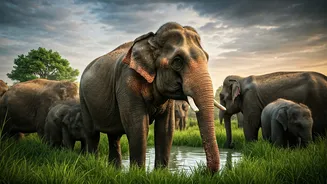
happens here. Hundreds, sometimes thousands, of Asiatic elephants begin a slow, deliberate pilgrimage from the adjoining forests of Bandipur, Nagarhole, Mudumalai, and Wayanad. They are all heading to one place: the lush, green banks of the Kabini. This is no random movement; it’s an ancient, instinct-driven gathering that transforms the landscape into a living, breathing panorama of elephantine life.
A Feast Before the Floods
The secret behind this massive congregation lies in the unique ecology of the Kabini reservoir. As the water level recedes during the dry season, it exposes a vast, fertile floodplain. Almost overnight, this exposed riverbed sprouts a carpet of short, sweet, and highly nutritious grass. For the elephants, who have been surviving on tougher, less palatable foliage in the dry forests, this is an irresistible buffet. It’s a critical period of feasting and fattening up, a natural strategy to build reserves before the drenching monsoon arrives and floods these plains, dispersing the herds once again into the dense jungle. This annual feast is, in essence, a crucial chapter in their survival cycle.
More Than Just a Meal
While the abundance of food is the primary draw, the gathering is also a profound social event for these highly intelligent creatures. The open plains of Kabini become a massive social club. Matriarchs lead their families, re-establishing bonds with other clans they may not have seen for a year. Young calves, born in the preceding months, get their first taste of a large social gathering, playing and mock-fighting under the watchful eyes of their mothers and aunts. Solitary bulls, or ‘tuskers’, patrol the periphery, seeking out receptive females. It’s a complex and dynamic society on full display: a mix of family reunions, courtship rituals, and nursery playdates on a grand scale. The air is filled with rumbles, trumpets, and the low frequency communications that hold their society together.
A Theatre of the Wild
The gathering doesn't just attract elephants. The congregation of so many large herbivores inevitably draws predators, turning the Kabini backwaters into a complete theatre of the wild. Tigers and leopards from the adjoining Nagarhole Tiger Reserve are known to stalk the fringes of the herds, looking for an opportunity to prey on a young or weak calf. Packs of dholes (wild dogs) can also be seen, adding another layer of drama to the scene. For wildlife enthusiasts and photographers, this period offers an unparalleled opportunity to witness the raw, unfiltered circle of life, where moments of tender care exist alongside the stark realities of predator-prey dynamics. It is this completeness of the ecosystem that makes the Kabini experience so powerful and authentic.
Witnessing the Spectacle
Experiencing this event is a lesson in humility. From the vantage point of a safari jeep or a boat on the reservoir, the sheer scale of the gathering is awe-inspiring. Dozens of herds, each a distinct family unit, dot the landscape as far as the eye can see. Watching them interact—spraying each other with dust, communicating with subtle gestures, and moving with a quiet grace that belies their size—is to witness a culture that has existed for millennia. It serves as a powerful reminder of the magnificent natural heritage that thrives in pockets of the country and the critical importance of protecting these corridors and habitats that allow for such ancient migrations to continue.