

What Exactly Is an Electric Air Taxi?
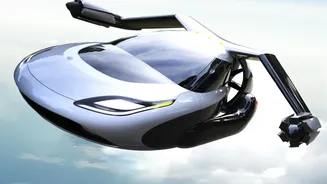
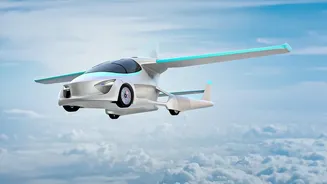
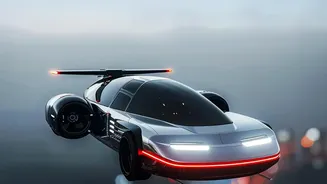
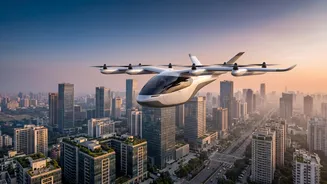
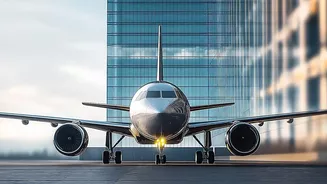
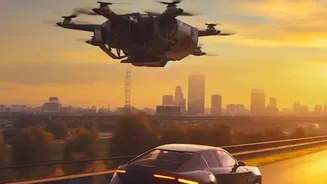
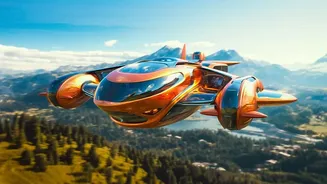
Think of a quieter, greener, and more advanced version of a helicopter. These vehicles are officially known as electric Vertical Takeoff and Landing (eVTOL) aircraft. They are powered by batteries, making them significantly less noisy and more environmentally
friendly than traditional helicopters. Designed for short urban trips, they can take off and land vertically from small, designated pads called vertiports, which can be located on rooftops or other compact spaces. Archer Aviation, a US-based firm partnering with Indian companies, has developed the 'Midnight' aircraft, a piloted, four-passenger vehicle designed for this exact purpose. These air taxis are engineered to perform quick back-to-back flights with minimal charging time in between, making them suitable for a high-frequency shuttle service.
The Vision for Delhi’s Skies
The plan to bring air taxis to India is being spearheaded by InterGlobe Enterprises, the parent company of IndiGo, in partnership with Archer Aviation. Their goal is to launch an all-electric air taxi service in India, with commercial operations potentially starting as early as 2026. The initial focus will be on some of India's most congested cities: Delhi, Mumbai, and Bengaluru. For Delhi, the flagship route proposed is a 27-km journey between Connaught Place and Gurugram. This trip, which currently takes a grueling 60 to 90 minutes by car during peak hours, could be completed in approximately 7 minutes by air. The partners plan to acquire up to 200 of Archer's Midnight aircraft to build a fleet for these operations.
The Twin Benefits: Speed and Sustainability
The most immediate and obvious advantage is the dramatic reduction in travel time. Bypassing Delhi's infamous road congestion would be a game-changer for daily commuters, saving hours each day. But the benefits extend beyond just speed. As fully electric vehicles, eVTOLs produce zero operating emissions, offering a cleaner alternative to the fossil fuel-powered cars, taxis, and buses that currently dominate the roads. This aligns with broader goals to reduce air pollution and improve the quality of life in the capital. Furthermore, the aircraft are designed to be significantly quieter than helicopters, which should help with public acceptance in a dense urban environment. The vision is not limited to just passenger travel; other potential uses include cargo transport, logistics, and emergency medical services.
Major Hurdles on the Horizon
While the vision is exciting, a 2026 launch is ambitious and depends on clearing several significant obstacles. First and foremost is regulation. The Directorate General of Civil Aviation (DGCA) is actively developing the necessary framework, having released guidelines for vertiports and the airworthiness certification of these new aircraft. Safety is paramount, and these vehicles must be certified in the US by the Federal Aviation Administration (FAA) before they can even begin the certification process in India. Beyond regulatory approvals, there is the massive challenge of infrastructure. The city would need a network of vertiports, complete with charging stations and passenger facilities, which requires significant investment and coordination between public and private entities. Managing this new layer of air traffic safely over a crowded city is another complex task that will require a robust air traffic management system.
Will It Be Affordable for the Average Person?
Perhaps the biggest question is cost. Will this be a luxury service for a select few, or a viable public transport alternative? Initial estimates for the 7-minute Connaught Place to Gurugram flight suggest a price range of ₹2,000 to ₹3,000 per passenger. This is more expensive than a regular cab, which might cost around ₹1,500 for the same 90-minute journey, but positions it as a premium service where the time saved has significant value. For context, other proposed routes in Bengaluru are being estimated at different price points, suggesting that costs will vary. Proponents believe that as the technology matures and operations scale up, prices could eventually come down, making it more accessible. However, for it to truly impact Delhi's traffic problem, affordability will be a key factor to watch.