




The Lithium Bottleneck
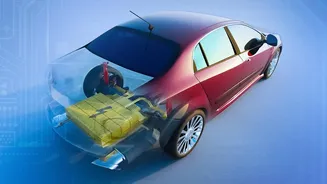
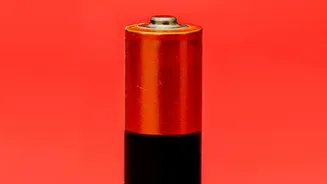
For years, the electric vehicle revolution has been powered by lithium-ion batteries. They are relatively lightweight, hold a lot of energy, and have become the gold standard. However, this dominance comes at a cost. Lithium, along with other key materials
like cobalt and nickel, can be expensive and their supply chains are often concentrated in a few regions. This reliance creates price volatility and a significant bottleneck for scaling up EV production to meet global demand. The battery pack is the single most expensive component of an EV, and its cost is directly tied to the fluctuating prices of these raw materials. As demand for EVs has soared, so has the pressure on these supply chains, making it clear that a more sustainable and cost-effective alternative is needed to make electric mobility truly mainstream.
The Promise of Salt
Enter sodium-ion batteries, a technology that swaps out expensive lithium for one of the most abundant and inexpensive materials on Earth: sodium, the same element found in table salt. This simple substitution has profound implications for cost. By using readily available materials, manufacturers can create batteries that are inherently cheaper, reducing the overall price of the vehicle. In 2026, this technology is moving from the laboratory to the showroom. Automakers are preparing to launch mass-produced EVs equipped with sodium-ion batteries. While these batteries currently offer slightly less energy density—meaning a shorter range compared to their premium lithium-ion counterparts—their performance is rapidly improving. Crucially, they also perform significantly better in extreme cold, a major advantage for drivers in colder climates.
Silicon's Supercharge
On the other end of the innovation spectrum is silicon. While salt-based batteries focus on reducing cost, silicon anodes are all about boosting performance. The anode is the part of the battery that stores lithium ions when charging. For decades, graphite has been the material of choice, but silicon can theoretically hold ten times more ions. The challenge has always been that silicon swells and cracks during charging and discharging, leading to rapid degradation. However, recent breakthroughs in structuring the silicon within the anode have largely solved this problem. Companies like Amprius are now developing silicon anode cells that dramatically increase energy density, which translates to longer range or lighter batteries. This technology is also enabling incredibly fast charging speeds; some new models featuring silicon-containing anodes can charge from 10% to 80% in just over 10 minutes.
How This Changes the Game
The combination of these two innovations creates a powerful one-two punch against high EV costs. Sodium-ion batteries provide a low-cost solution for entry-level and mid-range vehicles, making them competitive with traditional petrol and diesel cars without the need for subsidies. This is crucial for mass-market adoption, especially in price-sensitive markets like India. Meanwhile, silicon anode technology pushes the boundaries of performance for premium EVs and can be integrated into existing lithium-ion manufacturing processes. As silicon technology becomes more widespread and its costs decrease, its performance benefits will trickle down to more affordable models. This dual-track approach—one focused on radical cost reduction and the other on significant performance enhancement—is set to fundamentally reshape the automotive landscape.
The Road to the Showroom
These are not distant, futuristic concepts. The first mass-produced passenger EV running on a sodium-ion battery was unveiled in early 2026, with cell production scaling up through the year. Similarly, vehicles featuring advanced silicon anodes are also entering production in 2026. This means the impact on vehicle pricing is imminent. According to analysis from Goldman Sachs Research, these technological advancements, combined with falling prices for battery metals, are expected to slash battery pack costs significantly by 2026. The research suggests that by then, the total cost of owning an EV could reach parity with a comparable internal combustion engine car, marking a critical tipping point for consumer-led adoption. While China is currently leading the charge in sodium-ion deployment, efforts are underway globally to scale up production of these new chemistries.