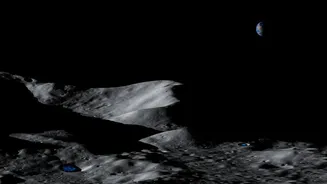








The Ultimate Souvenir: A Lunar Sample-Return
Chandrayaan-4 represents a monumental leap in complexity from its predecessors. While Chandrayaan-3 successfully delivered a lander and rover to the lunar surface to conduct experiments, its successor is designed for a round trip. The primary objective
is to land on the Moon, collect several kilograms of lunar soil (regolith) and potentially sub-surface water ice, and return these precious samples to laboratories on Earth. If successful, India will join an exclusive club of nations—the United States, the former Soviet Union, and China—that have accomplished this feat. Approved by the Union Cabinet in September 2024, the mission underscores India's rising ambitions in space exploration and is seen as a critical step towards a future crewed lunar landing, targeted for 2040.
Why Bring the Moon to India?
On-site experiments by rovers are invaluable, but they are limited by the size and sensitivity of the instruments that can be sent to space. Bringing lunar samples to Earth allows scientists to use state-of-the-art equipment that is far too large or delicate to launch. This includes advanced microscopes and spectrometers that can analyze the material's composition, age, and structure in minute detail. These studies can unlock secrets about the origin and evolution of the Moon, the Earth, and our solar system. Furthermore, samples from the Moon's south pole are particularly coveted. This region, where Chandrayaan-3 landed, is believed to contain water ice in its permanently shadowed craters. Analyzing this ice directly could confirm its presence, quantity, and composition, providing crucial information for future long-term lunar habitation and resource utilization.
A Symphony of Engineering in Two Launches
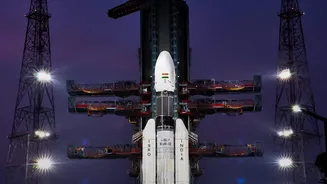
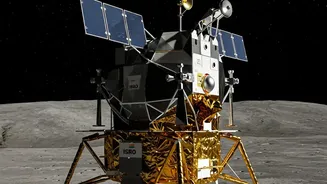
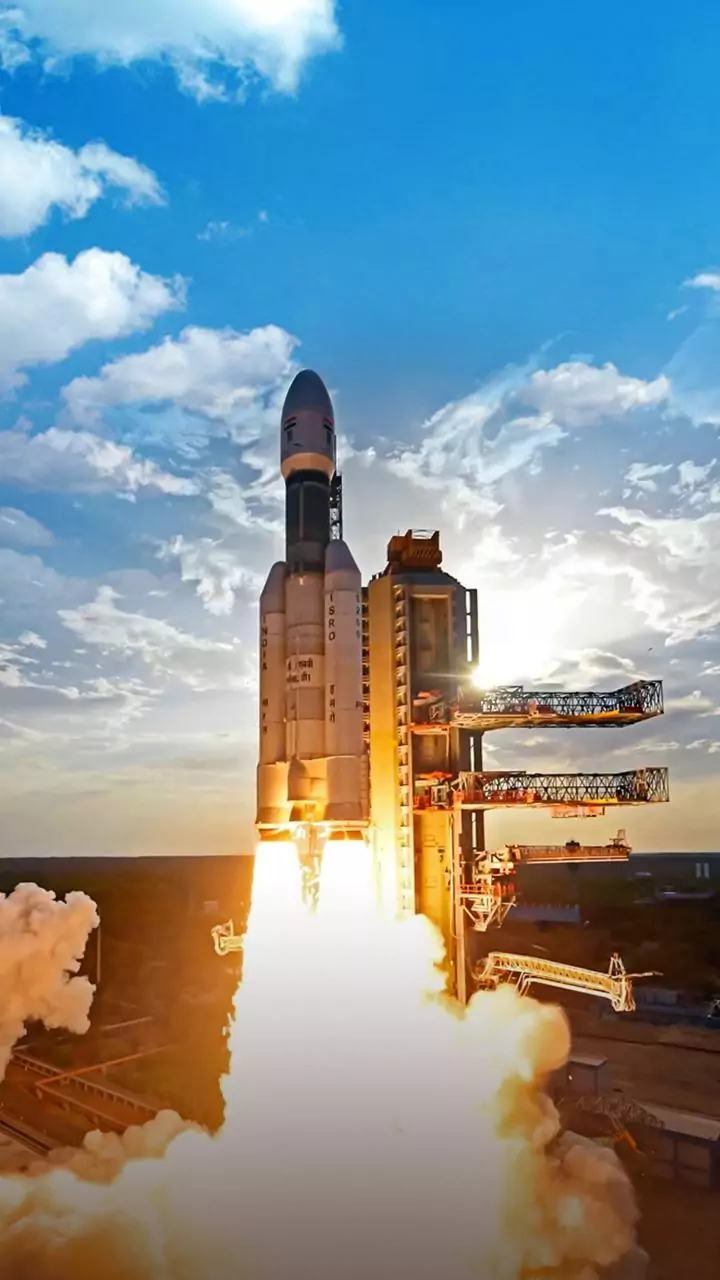
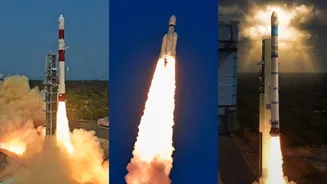
The sheer complexity of a sample-return mission means Chandrayaan-4 is too heavy to be launched by a single rocket. Instead, ISRO has devised an innovative dual-launch strategy using two of its powerful LVM3 rockets, the same type that launched Chandrayaan-3. The mission involves five separate modules: a Propulsion Module, a Descender Module (the lander), an Ascender Module, a Transfer Module, and a Re-entry Module. The first launch will carry the lander and ascender. The second will carry the other modules needed for the return journey. The two sets of spacecraft will then perform a crucial rendezvous and docking maneuver in Earth's orbit before heading to the Moon together. This in-orbit assembly is a first for ISRO and a critical technology that was tested with the SPADEX (Space Docking Experiment) mission.
The Intricate Dance of Landing and Liftoff
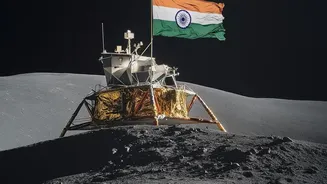
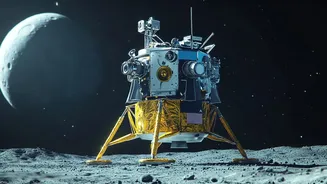
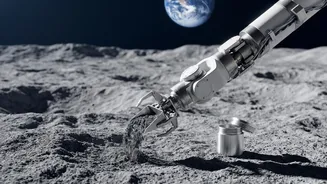
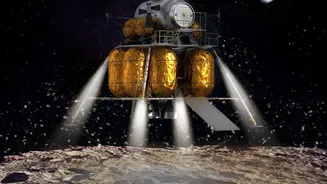
Once the integrated spacecraft reaches lunar orbit, the mission will enter its most critical phase. The lander and ascender will separate and perform a soft landing near the Moon's south pole. On the surface, a robotic arm will scoop up soil and a drill will collect sub-surface samples, placing up to three kilograms of material into a sealed container aboard the Ascender Module. Then comes another major first for India: launching a vehicle from the surface of another celestial body. The Ascender Module will lift off from the Moon, leaving the lander behind, and dock with the Transfer and Re-entry modules waiting in lunar orbit. The sample container will be robotically transferred to the Re-entry Module for the final leg of its journey. This automated rendezvous and sample transfer in lunar orbit is a feat only China has accomplished robotically.
The Fiery Return Home
After transferring its precious cargo, the Ascender is left in lunar orbit, and the Transfer Module fires its engine to propel the Re-entry Module back towards Earth. This final component is designed like a capsule, built to withstand the immense heat and pressure of entering Earth's atmosphere at extreme speeds. After its fiery descent, it will deploy parachutes to slow down for a safe landing on Indian soil, delivering the pristine lunar samples into the eager hands of scientists. While the mission was initially given a 36-month timeline, the technical challenges are immense, and ISRO is now targeting a launch around 2028. This timeline allows for the rigorous development and testing of all the new technologies required, from orbital docking to a lunar launch.