


Gaganyaan's First Uncrewed Flight
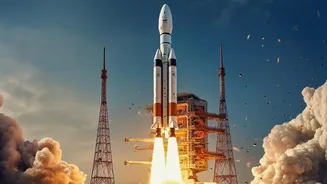
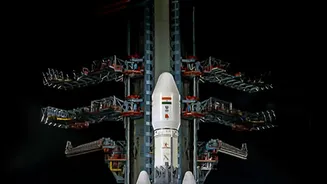
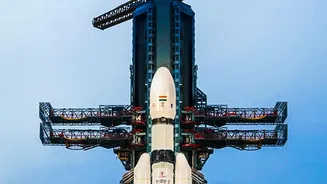
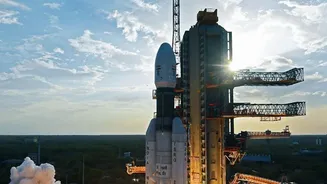
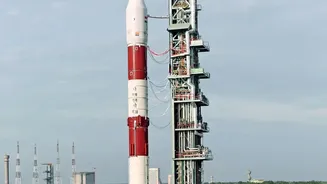
A top priority this year is the first uncrewed flight mission for the Gaganyaan programme, India's ambitious endeavor to send astronauts into space. This mission, designated G1, is a critical step to validate all the systems before a human crew is onboard.
The flight will test the human-rated LVM3 launch vehicle, the orbital module's propulsion systems, and the life support systems in space. It will carry Vyommitra, a humanoid robot, to simulate human functions and monitor the crew module's environment. While the exact date is subject to rigorous safety assessments, officials are targeting the latter half of 2026 for this landmark flight, which is crucial for the eventual crewed mission planned for 2027.
The Launch of NISAR
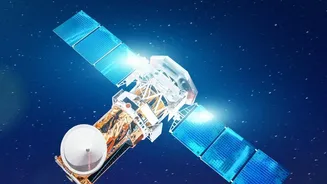
Another significant launch is the NASA-ISRO Synthetic Aperture Radar (NISAR) satellite. While originally slated for a mid-2025 launch, any potential shift would place it within this fiscal's busy calendar. NISAR is one of the most advanced and expensive Earth-observation satellites ever built. It is a joint project between NASA and ISRO and will be the first satellite to use two different radar frequencies (L-band and S-band) to measure changes in our planet's surface. It will scan the entire globe every 12 days, providing unprecedented data on everything from ice sheet collapses and earthquake-prone zones to agricultural biomass and groundwater levels, making it a vital tool for climate change monitoring and disaster management.
Advancing Reusable Launch Technology
This year will also see continued progress in ISRO's Reusable Launch Vehicle (RLV) program, which aims to drastically reduce the cost of launching satellites. Following successful autonomous landing tests (RLV-LEX), the next logical step is the RLV Orbital Re-entry Experiment (ORE). This experiment will involve launching a winged vehicle into orbit, letting it stay there for a period, and then having it de-orbit and land autonomously on a runway. While a specific date hasn't been announced, developments in this area are a key focus. This technology is essential for the Next Generation Launch Vehicle (NGLV), which will be partially reusable and is expected to become ISRO's future workhorse.
Bolstering Earth Observation and Navigation
A number of the seven planned launches will be dedicated to deploying more Earth Observation Satellites (EOS). These satellites are the backbone of many services we use daily, including weather forecasting, urban planning, resource management, and national security surveillance. Missions like the launch of EOS-05 and EOS-10 are anticipated to enhance India's imaging and monitoring capabilities. In addition, launches for the Navigation with Indian Constellation (NavIC) system are also on the cards, aimed at strengthening India's sovereign satellite navigation network and reducing reliance on foreign systems like GPS.
Expanding Satellite Communications
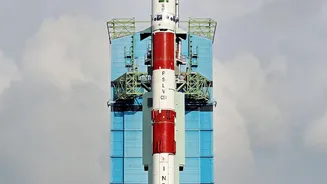
The manifest for the fiscal year also includes missions to launch communication satellites. Satellites like GSAT-32 are designed to boost India's telecommunications infrastructure, providing better broadband connectivity, especially in remote and hard-to-reach areas. These launches are critical for supporting the country's growing digital economy, broadcasting services, and secure communication networks for various governmental and commercial applications. Two satellites are reportedly already built, with several others in the final stages of integration, ready for this launch push.