



More Than Just Dirt
Lunar dust, or regolith, is a layer of fine particles covering the Moon's surface. Unlike dust on Earth, which is weathered by wind and water into rounded grains, lunar dust is fundamentally different. For billions of years, the Moon’s surface has been
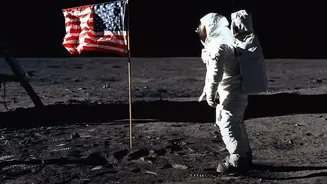
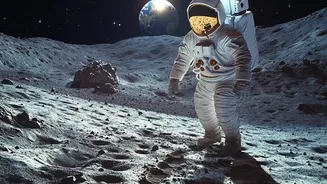
pulverised by micrometeorite impacts in a vacuum with no atmosphere to protect it. This process has created tiny, jagged, and sharp particles, similar to microscopic shards of glass. The dust is also electrostatically charged by solar radiation, which makes it incredibly sticky and prone to levitating above the surface. Apollo astronauts discovered this firsthand when the abrasive powder clung to everything, resisted being brushed off, and caused unexpected problems.
A Microscopic Menace
The unique properties of lunar dust pose a significant threat to both astronauts and equipment. During the Apollo missions, the dust caused what was dubbed 'lunar hay fever,' leading to sneezing, nasal congestion, and sore throats when inhaled. While these symptoms were short-lived, NASA is concerned about the long-term health risks of exposure, including potential lung damage from the silicate particles, similar to what miners on Earth experience. The dust is also incredibly destructive to hardware. Its sharp, abrasive nature wore away at the layers of astronauts' spacesuit boots and damaged the seals on sample containers. It can clog mechanisms, cause instruments to overheat by coating thermal radiators, obscure camera lenses, and reduce the power output of solar panels by covering their surfaces. For long-duration missions planned under the Artemis program, this cumulative damage could lead to critical system failures.
NASA's Toolkit of Solutions
Recognising that lunar dust is a critical hurdle for establishing a sustainable presence on the Moon, NASA is developing a multi-pronged strategy to combat it. This involves a combination of passive and active technologies. Passive solutions include developing dust-repellent coatings and materials. However, the main focus is on active systems designed to physically remove the clinging particles. One of the most promising technologies is the Electrodynamic Dust Shield (EDS). This system uses an electric field to actively lift and clear dust from surfaces. It can be applied as a transparent layer on camera lenses, solar panels, and helmet visors, or even be woven into the fabric of spacesuits. Other technologies in development include a handheld static ionizer tool for astronauts and advanced air filtration systems for habitats. NASA is also testing these technologies in simulated lunar environments on Earth to ensure they are ready for future missions.
The Next Steps for Artemis
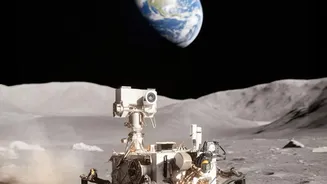
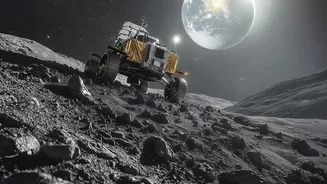
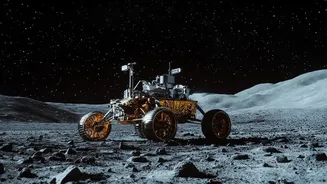
The success of NASA's Artemis program, which aims to land astronauts on the Moon again and eventually build a permanent base, hinges on solving the dust problem. Simply put, a long-term human presence is not feasible if equipment continuously fails and astronaut health is at risk. Therefore, dust mitigation is a top priority. The solutions being developed are not just for one-off missions but are designed to be integrated into the core architecture of a lunar settlement. This includes everything from the design of EVA suits and rovers to the procedures for entering and exiting habitats to minimise dust contamination. Some researchers are even exploring how the problematic dust itself could be used as a resource, potentially as a component in building materials for lunar structures, turning a hazard into an asset. This ongoing research is crucial for ensuring the safety and sustainability of future exploration on the Moon and, eventually, on Mars, where dust presents a similar challenge.