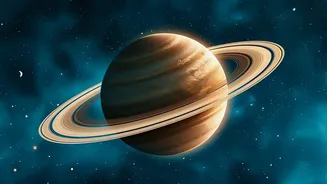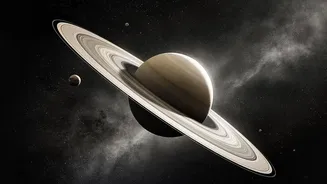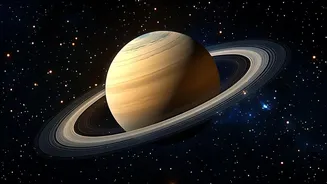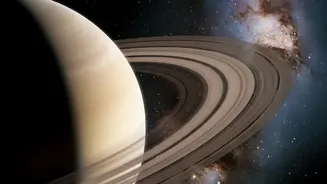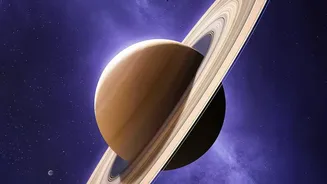






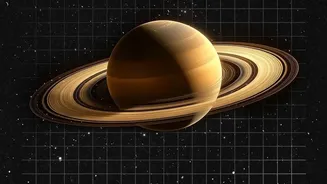
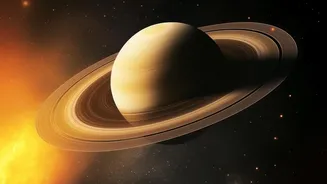
The Start of Prime Viewing Season
Think of August as the opening act for one of the sky’s biggest superstars. While Saturn will be at its absolute biggest and brightest in early October, August is when it truly enters the evening stage. Each night, the planet will rise a little earlier
and become easier to find, making this month an ideal training ground for new astronomers. By starting your search now, you'll be a seasoned observer by the time the main event arrives. Saturn is moving into a position that makes it visible for much of the night, rising in the east as the evening deepens.
What 'Opposition' Means for You
The reason Saturn gets so spectacular in the coming months is an event called "opposition." This year, opposition occurs on October 4th. At that moment, Earth will be positioned directly between the Sun and Saturn. Imagine the three bodies lined up: Sun, Earth, Saturn. From our perspective, this means Saturn rises in the east just as the sun sets in the west, remaining visible all night long. It’s also the point in its orbit when Saturn is closest to Earth for the year, making it appear larger and more brilliant than at any other time. The build-up to this event throughout August and September is what makes the viewing so good.
How to Find Saturn This Month
You don’t need to be a professional to locate the ringed planet. This August, look towards the eastern sky later in the evening. At the start of the month, it will rise around 10:30 PM, but by month's end, it will be appearing much earlier. Saturn will be situated in a relatively dim area of the sky, within the constellation Pisces. This actually helps it stand out. Look for a bright, steady point of light with a distinct yellowish hue. Unlike stars, which twinkle due to Earth's atmosphere, planets tend to shine with a more constant light. If you have a smartphone, a stargazing app can confirm its location in seconds.
Naked Eye, Binoculars, or Telescope?
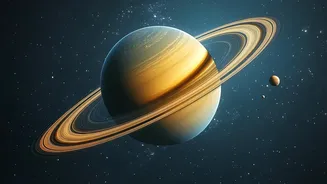
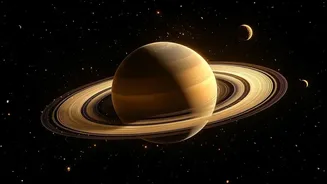
To the naked eye, Saturn will look like a particularly bright star, which is still a thrill to identify. However, to see its most famous feature—the rings—you will need some optical aid. While powerful, tripod-mounted binoculars might reveal the planet as a tiny, non-circular oval, a telescope is required to truly resolve the rings. The good news is that you don't need a massive observatory. A small beginner telescope with at least 60mm of aperture at a magnification of 50x or more will be able to show you that the bright 'star' is, in fact, a world with a breathtaking ring system.
Tips for the Best Viewing Experience
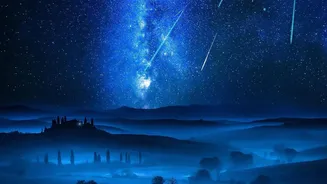
To make your first Saturn-sighting a success, a few simple tips go a long way. First, try to get away from bright city lights. The darker your sky, the more objects will be visible. Second, give your eyes at least 20 minutes to fully adapt to the darkness. Third, always check the weather forecast for a clear, cloudless night. As a bonus, August also hosts the peak of the Perseid meteor shower around August 12-13. While you are out searching for Saturn, you might be treated to the spectacle of shooting stars, making your night under the cosmos even more memorable.