


A Quick Guide to Meteor Showers
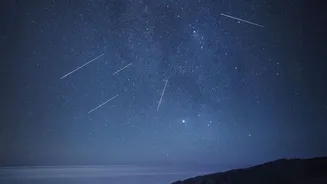
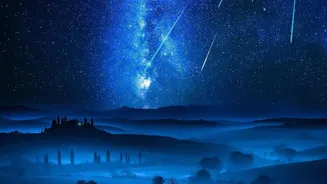
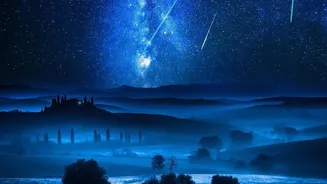
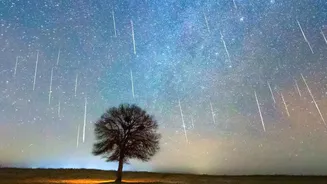
Often called “shooting stars,” meteors are not stars at all. They are tiny particles of space debris, usually left behind by comets, that burn up upon entering Earth's atmosphere at incredible speeds. This fiery entry creates the brilliant streaks of light
we see from the ground. Meteor showers occur when Earth passes through a dense trail of this debris. These events are named after the constellation from which they appear to radiate, but you don't need to stare at that specific point; meteors can appear anywhere in the sky.
The Perseids: A Dazzling August Show
The Perseid meteor shower, one of the year's most beloved celestial events, peaked on the night of August 12-13, 2026. This year was particularly special as the peak coincided with a new moon, creating perfectly dark skies for optimal viewing. Caused by debris from Comet Swift-Tuttle, the Perseids are known for producing bright, fast meteors. For those in India, the main challenge for the August peak is often the monsoon clouds. However, the shower remains active from mid-July to late August, so some lingering meteors might still be visible in early September during clear nights.
The Orionids: An October Spectacle
The main event for autumn stargazers is the Orionid meteor shower, which will peak on the night of October 21-22, 2026. These meteors are famous for being pieces of Halley's Comet, the most well-known comet in our solar system. The Orionids are known for their speed and brightness, often leaving glowing trails that linger for a few seconds. Observers can expect to see around 20 meteors per hour under perfect conditions. This year, a bright moon will interfere with viewing during the early part of the night. The best strategy is to watch in the pre-dawn hours, after the moon has set, which will provide a dark window for the show to unfold.
Why Leaving the City Is Essential
For city dwellers, the night sky is often a washed-out orange canvas where only the brightest stars are visible. This is due to light pollution, the excessive artificial light that floods the sky and obscures celestial objects. To truly experience a meteor shower, where you might see dozens of meteors per hour, you must get away from city lights. The darker the location, the more faint meteors you will be able to see. This is why the headline emphasizes non-metro cities; finding a spot with minimal light pollution is the single most important factor for a successful stargazing night.
Finding Your Perfect Stargazing Spot
India is blessed with numerous locations perfect for stargazing, far from urban glare. The key is to find a high-altitude, dry, and remote area. Places like Hanle in Ladakh, designated as India's first Dark Sky Reserve, offer world-class viewing. Other prime locations include Spiti Valley in Himachal Pradesh, the Rann of Kutch in Gujarat, and parts of the Western Ghats like Coorg. You don't necessarily need to travel to these remote destinations; even a short drive away from your city to a rural area, a state park, or a hilltop can dramatically improve your view of the night sky.
Tips for the Best Viewing Experience
You don't need a telescope or binoculars to watch a meteor shower; your eyes are the best tool for the job since they provide the widest field of view. Find a comfortable spot where you can lie back and look up. Give your eyes at least 20-30 minutes to adjust to the darkness; this will help you spot fainter meteors. Be sure to check the weather forecast for clouds before you head out. Pack warm clothes, a blanket or comfortable chair, and some snacks to make the experience enjoyable.