



More Than Just Dust
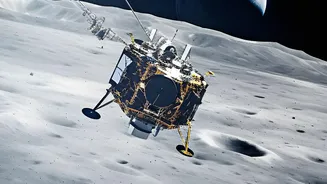
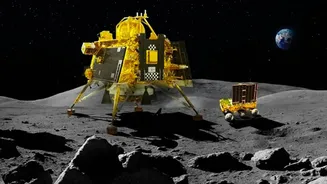
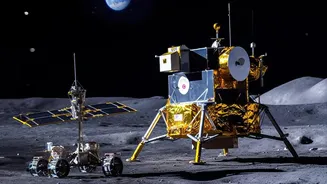
The Moon's surface may appear to be a uniform layer of fine dust, or regolith, but new findings from the Vikram lander show it is far more complex. Data from an instrument called the Chandra's Surface Thermophysical Experiment (ChaSTE) has revealed that
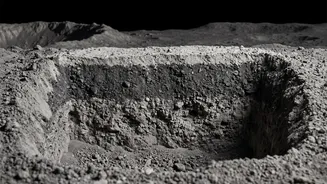
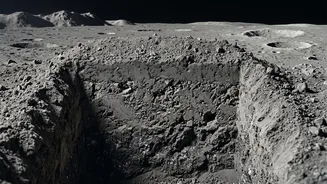
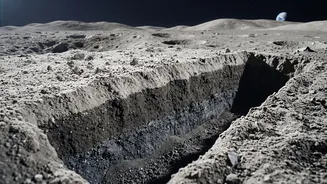
the top 10 centimetres of lunar soil at the Shiv Shakti Point landing site are not uniform. Instead, the soil is composed of at least three distinct layers, each with different properties. A study published in the journal 'npj Space Exploration' details these findings, which challenge previous assumptions about the lunar surface. Scientists from the Physical Research Laboratory (PRL) in Ahmedabad found that the uppermost layer, about 3 cm deep, is highly porous and not very dense. Beneath this lies a second, more compact layer, followed by a third, even denser layer extending down to 10 cm. This layered structure was not expected and provides the first-ever direct profile of the thermophysical properties of the soil at the Moon's southern high-latitudes.
A Surprise from a 'Hop'
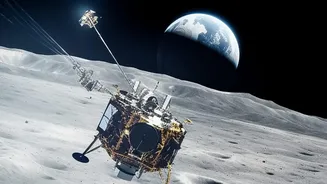
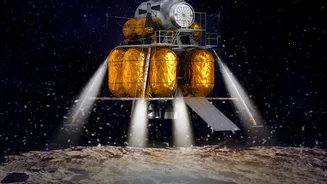
Part of this discovery was made possible by a unique manoeuvre performed by the Vikram lander. Towards the end of its mission, the lander fired its engines to perform a small 'hop', lifting itself off the surface and landing again a short distance away. This action blew away the top few centimetres of the fine, fluffy surface layer of regolith, giving the ChaSTE instrument a direct look at what was underneath. This exposed a different soil structure and allowed scientists to compare the disturbed site with the original, untouched landing spot. The analysis of the pre-hop location confirmed the three-layer profile, including the extremely porous topsoil which has an estimated density about half that of the layer just a few centimetres below it. Understanding this fine-scale layering is crucial, as the stability and thermal properties of the ground are non-negotiable factors for any structure intended to land or operate on the Moon.
Why Soil Structure Matters for Landings
The stability of the lunar surface is a critical factor for the safety of future missions, whether robotic or crewed. A lander needs solid, predictable ground to touch down on, and any long-term base would require stable foundations. The discovery that the soil's density and cohesion increase significantly just a few centimetres below the surface is vital information. The highly porous, 'fluffy' top layer could behave differently under the force of a landing engine's exhaust compared to the denser layers beneath. Knowing this allows engineers to better predict how the surface will react during a landing, helping to prevent the lander from sinking, tipping, or being damaged by kicked-up debris. This detailed understanding of the ground's geotechnical properties allows for more precise modelling and risk assessment, making it possible to select landing zones with greater confidence.
A Blueprint for Future Exploration
This discovery extends beyond just landing. Understanding the thermal properties of the soil—how it absorbs and retains heat—is essential for designing equipment that can survive the extreme temperature swings on the Moon. The ChaSTE data provides a new 'ground truth' that can refine models and improve the design of future rovers, habitats, and scientific instruments. Furthermore, other analyses from the Chandrayaan-3 landing site suggest the area contains primitive materials from the Moon's mantle, excavated by ancient impacts. These findings make the South Pole region not just a viable landing area, but a scientifically rich location for future sample collection missions that could unlock secrets about the Moon's early evolution. Each new piece of data from Chandrayaan-3 builds a more complete picture, creating a vital blueprint for the next generation of lunar exploration for India and the world.