


The Canadian Rockies offer some of the world's most stunning hikes, but choosing a trail can be daunting. A 'moderate' rating can mean many things. Understanding how distance and elevation gain combine is the key to a safe and enjoyable adventure.
Decoding Trail Difficulty Ratings
When
you look at a trail map or guide for the Canadian Rockies, you'll see ratings like 'easy', 'moderate', or 'difficult'. Parks Canada, for instance, provides these to give a general sense of a trail's character. An 'easy' trail usually means it's under 5 km with little elevation change, suitable for almost anyone. 'Moderate' trails might be longer, up to 15 km, with more noticeable hills and some short, steep sections. 'Difficult' trails often involve major elevation changes, long steep climbs, and may take over five hours to complete. However, these labels are subjective. A 'moderate' hike for a seasoned mountaineer is very different from one for a family on a casual outing. That’s why you must look beyond the single-word rating and examine the two most important objective numbers: distance and elevation gain.
The Impact of Distance
Distance is the most straightforward metric. It tells you the total length of the hike, whether it’s a one-way, return, or loop trail. A longer distance naturally requires more time and endurance. An average walking pace on a flat trail is about 3.5 to 4 kilometres per hour. So, a 10 km hike on flat ground would take roughly 2.5 to 3 hours, not including breaks. But in the mountains, flat ground is rare. Distance alone doesn't capture the full picture. A 10 km stroll along a valley floor is a vastly different experience from a 10 km trek that climbs a mountain pass. The former might feel like a pleasant walk, while the latter could be an exhausting, all-day effort. Distance sets the baseline for your time commitment, but elevation gain determines the intensity.
Understanding Elevation Gain
Elevation gain, sometimes called cumulative ascent, is the total amount you will climb over the course of the trail. This number is the true measure of a hike's vertical challenge. For example, a trail that starts at 1,500 metres and ends at a 2,000-metre summit has a net elevation gain of 500 metres. If the trail goes up and down along the way, the cumulative gain will be even higher. This figure directly relates to how much work your body has to do. A trail with an elevation gain of over 700-800 feet per mile (about 130-150 metres per kilometre) is generally considered difficult. A short, 3 km hike that gains 600 metres is significantly more strenuous than a 10 km hike that only gains 100 metres.
How Distance and Elevation Work Together
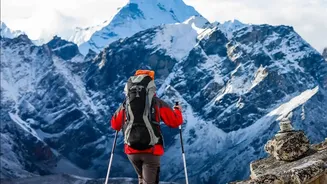
The magic of trail planning happens when you consider distance and elevation gain together. This combination reveals the true nature of a hike. A long hike with minimal elevation gain (e.g., 15 km and 200 metres of gain) is a test of endurance. A short hike with significant elevation gain (e.g., 4 km and 800 metres of gain) is a test of power and strength. Neither is inherently 'easier'; they just present different challenges. Some guides suggest a rule of thumb: for every 100 metres of elevation you climb, add about 15 minutes to your estimated hiking time, on top of the time calculated for the flat distance. This helps you realistically budget your time. A trail that looks short on the map could take hours if it goes straight up.
Don't Forget the 'Rockies Factor'
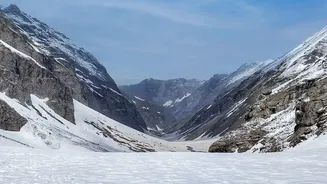
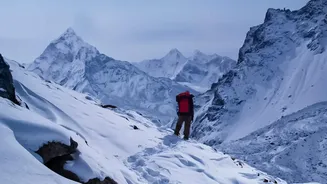
In the Canadian Rockies, there are other variables to consider. The first is altitude. Many trailheads start at high elevations where the air is thinner, which can make even moderate exertion feel more difficult. Secondly, the terrain is a huge factor. A trail's difficulty is amplified if it involves scrambling over loose rock (scree), navigating extensive tree roots, or crossing streams. A smooth, well-maintained path is much easier than a rugged, unmaintained route, even if the distance and elevation are identical. Finally, weather in the Rockies is notoriously unpredictable. A sunny day can turn into a cold, rainy, or even snowy one with little warning, dramatically increasing a trail's difficulty and risk. Always be prepared for changing conditions.