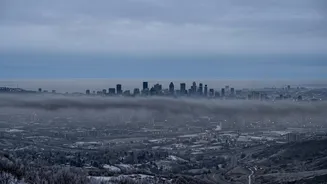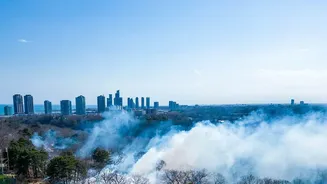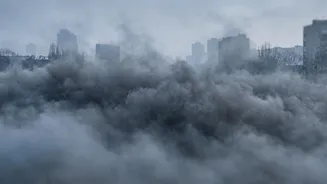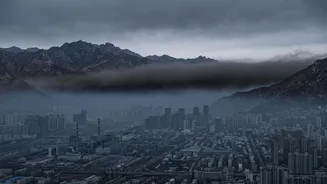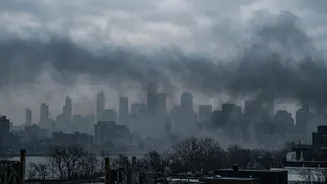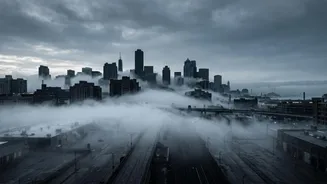




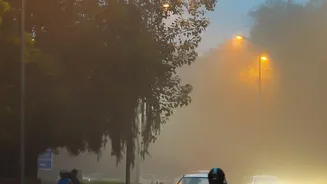
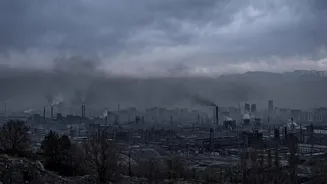
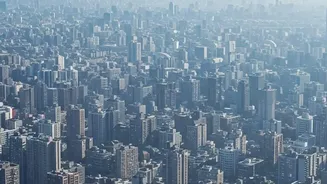
Every winter, a thick, soupy haze blankets Delhi, slashing visibility and making it hard to breathe. This isn't just harmless water vapour; it's a toxic phenomenon known as radiation fog, supercharged by the city's severe air pollution.
The Science of Radiation Fog
First, it's important
to understand that 'radiation' here doesn't mean radioactivity. It refers to a natural process of heat transfer. Radiation fog forms on calm, clear nights, a common feature of North Indian winters. During the day, the ground absorbs heat from the sun. At night, it radiates this heat back into space, causing the ground and the layer of air closest to it to cool down significantly. As this air cools, its ability to hold moisture decreases. When it cools to its dew point, the water vapour in it condenses into tiny liquid droplets, forming a layer of fog. Because this process is driven by the ground's radiative cooling, it’s called radiation fog. It typically stays close to the ground and can be very dense.
Adding Smog to the Mixture
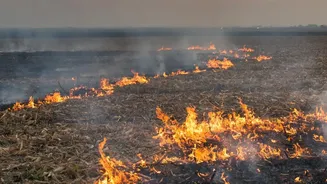
While radiation fog is a natural event, it becomes hazardous when it mixes with smog—a portmanteau of 'smoke' and 'fog'. Delhi's air is notoriously polluted, containing a cocktail of harmful particles and gases. Major sources include vehicle emissions, industrial output, construction dust, and smoke from stubble burning in neighbouring states. These pollutants include fine particulate matter (PM2.5 and PM10), black carbon, nitrogen oxides, and sulphur dioxide. Instead of forming around dust or pollen, the water droplets in radiation fog have an abundance of these pollution particles to act as condensation nuclei. This means the fog droplets themselves are infused with toxic chemicals from the very start.
A Trap for Toxic Air
The danger is amplified by another winter weather phenomenon: temperature inversion. Normally, air is warmer near the ground and gets cooler with altitude, allowing pollutants to rise and disperse. During a winter inversion, a layer of warmer air sits on top of a layer of cooler, denser air at the surface. This acts like a lid, trapping the newly formed polluted fog and preventing it from dissipating. Calm or low winds, also typical of Delhi winters, mean this toxic mixture remains stationary over the city for extended periods, often for days. This creates a feedback loop: the dense, polluted fog blocks sunlight, keeping the ground cool and preventing the inversion layer from breaking up, which in turn traps the smog for even longer.
The Amplified Health Risks
This combination of fog and smog is far more dangerous than either element alone. The water droplets act as a delivery system, carrying toxic pollutants like PM2.5 deep into the respiratory system. These tiny particles can penetrate the lungs and even enter the bloodstream, leading to a host of health problems. Short-term exposure causes coughing, eye irritation, sore throats, and exacerbates conditions like asthma and bronchitis. Authorities have warned that breathing this air can be equivalent to smoking dozens of cigarettes a day. Long-term exposure is linked to severe respiratory diseases, cardiovascular problems, reduced lung function, and other chronic illnesses, with children and the elderly being particularly vulnerable.
Why Delhi Is So Vulnerable
Delhi's geography and regional weather patterns make it a perfect hotspot for this phenomenon. The city is located in the landlocked Indo-Gangetic plains, which are prone to temperature inversions. During winter, prevailing winds often carry smoke from agricultural fires in Punjab and Haryana directly over the region. Furthermore, the Himalayas to the north can act as a barrier, preventing the trapped air mass from moving away. This unique combination of local pollution sources, regional emissions, and meteorological conditions that favour trapping pollutants creates the severe and persistent radiation fog events that have become an unwelcome but predictable part of every Delhi winter.