


The shimmering curtains of the aurora are one of nature's most breathtaking sights. But behind this beauty lies a powerful and complex process, a direct link between the Sun's activity and our planet, with tangible consequences for modern life.
More Than Just a Light Show
The northern
and southern lights are the visible manifestation of a much larger phenomenon known as space weather. They occur when energetic particles, mostly electrons and protons, are hurled from the Sun in a constant stream called the solar wind. When this solar wind reaches Earth, our planet's magnetic field, or magnetosphere, deflects most of it. However, some particles are funnelled towards the polar regions. There, they collide with oxygen and nitrogen atoms in the upper atmosphere, causing them to glow in the distinct colours we see as the aurora. The most common green is from oxygen at lower altitudes, while rare reds come from oxygen much higher up, and nitrogen produces blues and purples.
The Science of a Solar Storm
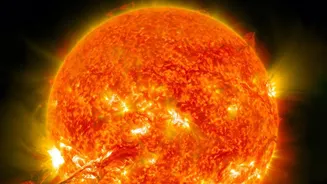
While a gentle solar wind creates a constant, mild aurora, the real power is unleashed during a solar storm. These events are often triggered by a coronal mass ejection (CME), a massive explosion on the Sun's surface that flings billions of tons of plasma into space. If a CME is aimed at Earth, it can cause a geomagnetic storm—a major disturbance of our magnetosphere. The intensity of these storms is rated on a scale, with stronger storms pushing the auroras to be brighter, more active, and visible at much lower latitudes than usual. During major storms in March 1989 and May 2024, auroras were seen as far south as Texas and Florida.
When Space Weather Hits Home
The same energy that creates a beautiful aurora can be a major threat to our technology-dependent society. Geomagnetic storms induce powerful electrical currents in long conductors on the ground, known as geomagnetically induced currents (GICs). Power grids are especially vulnerable. These currents can flow into high-voltage transformers, causing them to overheat, malfunction, or even suffer catastrophic failure. This isn't just a theoretical risk. In March 1989, a geomagnetic storm caused the complete collapse of the Hydro-Québec power grid, leaving millions of people without electricity for nine hours. Similar, though less severe, events have caused blackouts and stressed power grids in places like Sweden.
Beyond the Power Grid
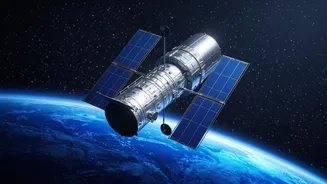
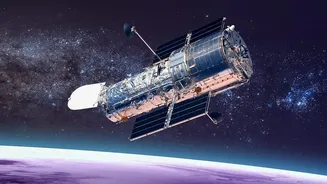
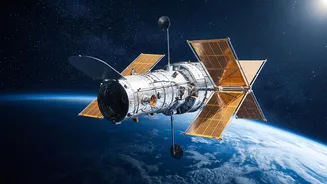
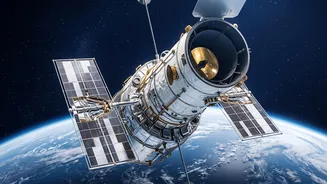
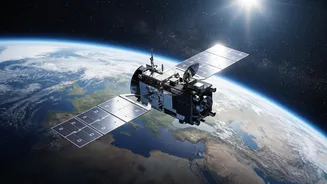
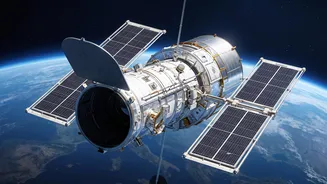
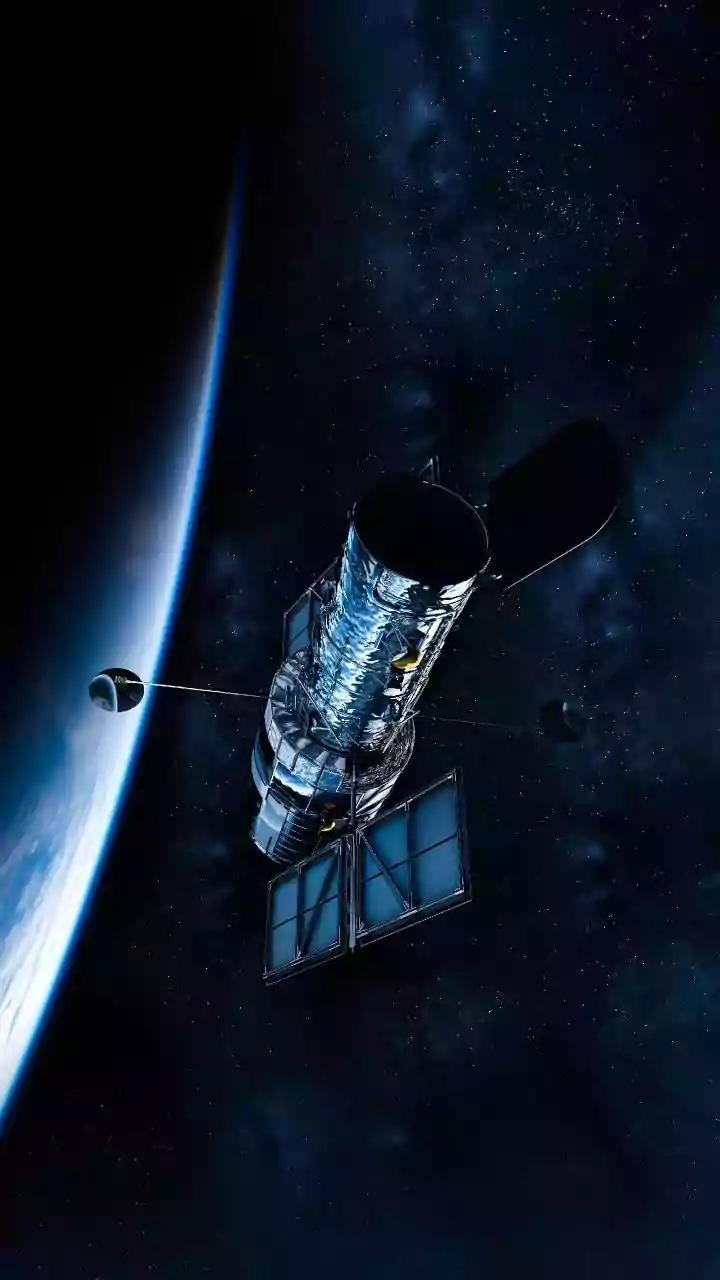
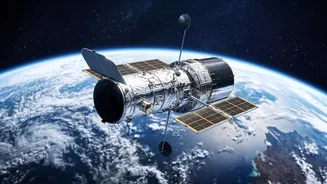
The impact isn't limited to electricity. The charged particles and atmospheric disturbances from a solar storm can disrupt satellites, affecting everything from communication networks to GPS. Increased atmospheric drag can alter satellite orbits, while charged particles can penetrate shielding and cause electronic malfunctions. This can introduce significant positioning errors for GPS systems, which has major implications for aviation, shipping, and even precision agriculture that relies on accurate location data. Even pipelines can be affected, as induced currents can accelerate corrosion.
Predicting the Unseen Threat
Because the stakes are so high, a great deal of research is focused on forecasting space weather. By monitoring the Sun for solar flares and CMEs, scientists can provide early warnings, often giving grid operators and satellite controllers hours or days to prepare. More advanced models, some now incorporating artificial intelligence, are being developed to improve the accuracy and lead time of these predictions. For example, NASA's DAGGER model aims to provide a 30 minute warning before a storm's impact. Research missions like ESA's Lagrange satellite are designed to watch the Sun from unique vantage points, allowing for earlier detection of potentially hazardous events.