


More Than a Light Show
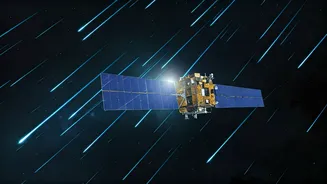
What we see as a meteor shower are actually streams of cosmic dust and debris, often no bigger than a grain of sand, left behind by a passing comet or asteroid. [5, 18] When Earth’s orbit intersects with one of these trails, these particles, called meteoroids,
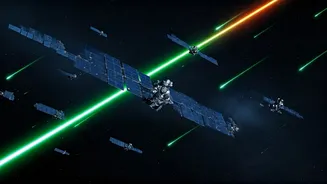
burn up in our atmosphere, creating the streaks of light we call meteors. [18] But above the protective blanket of the atmosphere, these same particles pose a significant threat. Thousands of active satellites, responsible for everything from your phone’s GPS signal to weather forecasting and global communications, are constantly exposed to this environment. The risk isn't just theoretical; micrometeoroid impacts are a regular occurrence for spacecraft in low Earth orbit. [4]
The Physics of a Tiny Bullet
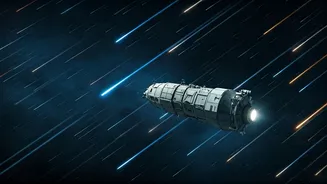
The primary danger from a meteoroid isn't its size, but its incredible speed. Meteoroids can travel at velocities up to 72 kilometres per second. [10] At these hypervelocity speeds, even a minuscule particle carries immense kinetic energy. An object the size of a fleck of paint can strike with the force of a bowling ball moving at over 150 km/h. [8] The impact doesn't just create a simple hole. It can vaporise the particle and a small part of the spacecraft's surface, creating a plasma cloud and sending a shockwave through the structure. [10] This can lead to a range of damage, from surface erosion and small craters to electrical shorts, damage to sensitive optics, and even the perforation of critical components like fuel tanks. [3]
Our Vulnerable Assets in Orbit
Modern satellites are complex machines with many vulnerable points. Their large solar arrays, essential for power, present a wide, fragile target. A single impact might only take out one solar cell, but a dense shower could degrade the power supply significantly. [5] Scientific instruments and camera lenses are also highly susceptible to damage from pitting and abrasion. While a catastrophic failure from a single meteoroid strike is rare, it has happened. In 1993, the European Space Agency's Olympus-1 communications satellite was sent into an uncontrollable spin by a particle from the Perseid meteor shower, ending its mission prematurely. [2, 7] More recently, the James Webb Space Telescope suffered a notable, though not mission-ending, impact from a micrometeoroid. [17]
Shields Up and Evasive Action
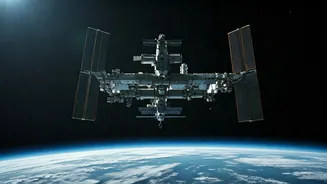
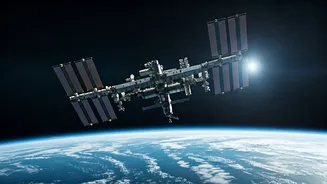
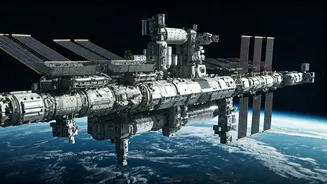
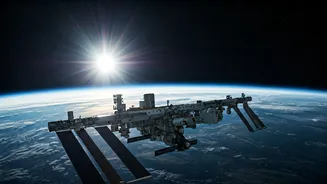
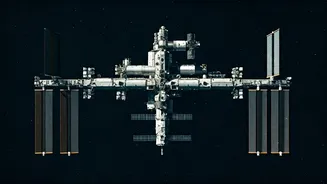
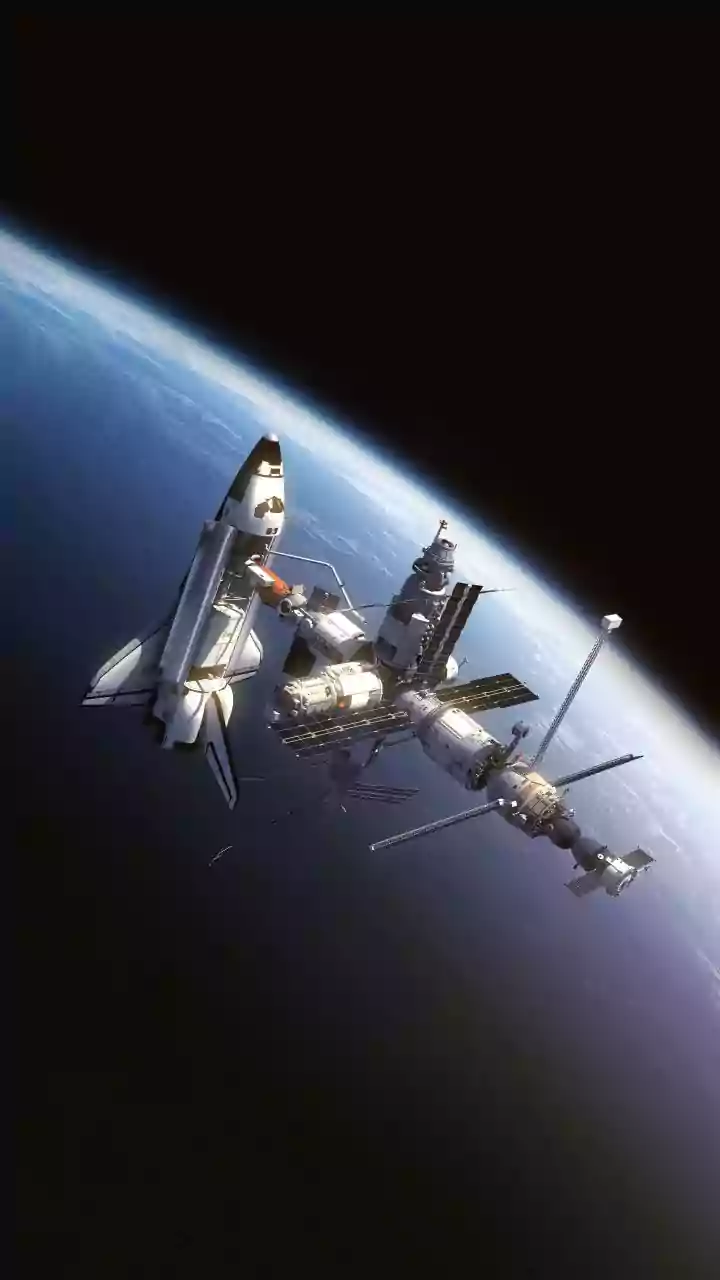
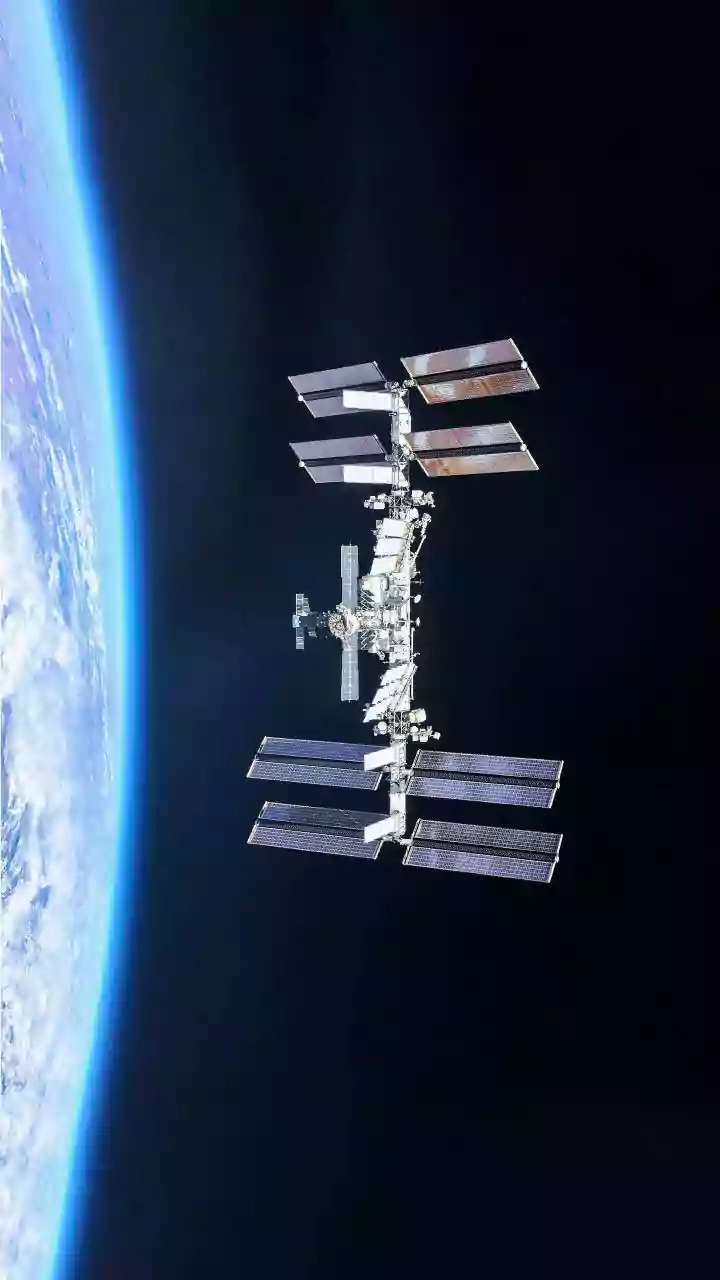
Fortunately, space agencies and satellite operators don't leave things to chance. Most spacecraft, including the International Space Station (ISS), are protected by a form of shielding. [9] The most common type is the Whipple shield, a deceptively simple design consisting of a thin outer sacrificial plate set at a distance from the main spacecraft wall. [4, 16] When a meteoroid hits this outer bumper, it shatters into a cloud of smaller, slower-moving particles, which spreads the impact energy over a wider area of the inner wall, preventing penetration. [4, 10] For predictable and intense meteor showers like the Leonids or Perseids, operators can take further precautions. [13] This includes reorienting the spacecraft to present its smallest possible profile to the incoming stream or turning sensitive instruments away from the radiant, the point in the sky where the meteors appear to originate. [2, 6] In rare cases of a predicted meteor storm, where thousands of meteors per hour are expected, missions have even been delayed. [6, 14]