







Embrace: Warm, Nourishing Soups
There’s nothing more comforting than a bowl of hot soup on a rainy day, and it’s also one of the healthiest choices you can make. Soups made with vegetables like pumpkin, bottle gourd (lauki), and carrots are light on the stomach and easy to digest. Adding
spices like ginger, garlic, and black pepper not only enhances the flavour but also provides antibacterial and anti-inflammatory properties that help fight off infections. A clear vegetable broth or a lentil-based soup like moong dal shorba provides essential nutrients and keeps you hydrated and warm from the inside out.
Embrace: Immunity-Boosting Spices
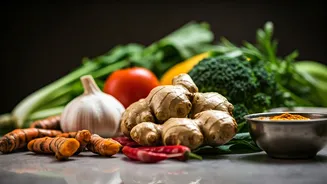
Indian kitchens are a treasure trove of medicinal spices, and the monsoon is the perfect time to use them generously. Turmeric (haldi) is a powerful antiseptic and anti-inflammatory agent; add a pinch to your milk or curries. Ginger (adrak), whether in your tea or food, aids digestion and helps combat colds and flu. Fenugreek (methi), cumin (jeera), and coriander (dhania) also have properties that aid digestion and boost immunity. These spices help stoke the 'digestive fire' (agni), which, according to Ayurveda, tends to be weaker during the damp monsoon months.
Embrace: Probiotics Like Buttermilk
A healthy gut is your first line of defence against illness. While heavy dairy products are best avoided, fermented foods are excellent for gut health. Buttermilk (chaas) and homemade curd are packed with probiotics, the 'good' bacteria that help maintain a healthy digestive tract and prevent issues like bloating and indigestion. A glass of buttermilk seasoned with roasted cumin powder and rock salt after your meal can work wonders for digestion. It helps restore healthy gut flora, which can be disrupted by infections common during this season.
Skip: Leafy Greens and Raw Salads
This might sound counterintuitive, but it's wise to be cautious with raw leafy vegetables like spinach, cabbage, and lettuce during the monsoon. The high humidity and dampness create a breeding ground for germs, and these vegetables, with their many crevices, can harbour dirt, larvae, and bacteria that are difficult to wash off completely. If you must have them, ensure they are blanched or thoroughly cooked to kill any potential pathogens. Opt for well-cooked or steamed vegetables instead of raw salads to minimise the risk of stomach infections.
Skip: Street Food and Fried Snacks
The craving for hot pakoras and chaat is almost synonymous with rainy weather, but this is the season to exercise restraint. Street food is often prepared in unhygienic conditions, and the water used can be contaminated, posing a high risk of water-borne diseases like typhoid, cholera, and diarrhoea. Furthermore, oily and fried foods are heavy on the digestive system, which is already sluggish during the monsoon. This can lead to indigestion, bloating, and acidity. If you're craving a snack, try making a healthier version at home where you can control the oil and hygiene.
Skip: Seafood and Stale Food
The monsoon is the breeding season for many types of fish, which can affect their quality and increase the risk of contamination. It's best to limit or avoid fish and other seafood during these months. If you do eat fish, ensure it is extremely fresh and cooked thoroughly. Similarly, avoid consuming stale food or pre-cut fruits and vegetables from vendors. The high moisture content in the air makes food spoil faster, encouraging bacterial and fungal growth. Always prioritise fresh, home-cooked meals.