


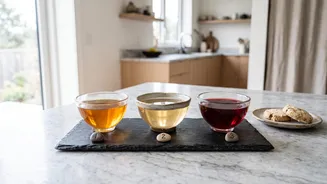
Choose Your Tea Adventure
The heart of your tasting is the tea itself. Aim for a flight of three to five different types to showcase a range of flavours and processing methods. A great starting lineup includes a white tea, a green tea, an oolong, and a black tea. This allows you to travel
from the most delicate and minimally processed leaves to the most robust and fully oxidized. You can choose a theme, such as teas from a specific country like China or India, or focus on a single type, like exploring different Japanese green teas. For a well-rounded experience, select high-quality, loose-leaf teas, as they offer more complex aromas and flavours than most standard tea bags.
Setting the Stage for Sipping
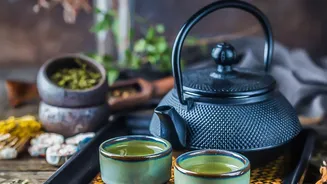
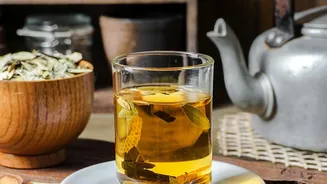
You don’t need much to create the right atmosphere. Gather small, light-coloured cups—white or glass is ideal so guests can appreciate the colour of the brewed tea. You’ll need a kettle for hot water, an infuser or teapot, and a timer. Providing note cards and pens is a thoughtful touch, allowing guests to jot down their impressions of each tea's aroma and flavour. To ensure everyone's palate stays fresh, serve plain water for rinsing and simple, unsalted crackers or water biscuits as a neutral palate cleanser between tastings. Avoid strongly flavoured foods that could interfere with the subtle notes of the tea.
Brewing Delicate Green and White Teas
Green and white teas are the most delicate and require a gentle touch. Using water that is too hot will scorch the leaves, resulting in a bitter, unpleasant taste. For these teas, heat your water to about 70-80°C. If your kettle doesn’t have temperature control, simply boil the water and let it cool for a few minutes before pouring. Steep white tea for 3 to 7 minutes to draw out its subtle sweetness. Green tea requires a shorter steep time, typically 2 to 3 minutes is perfect. These teas, originally from China, are minimally processed to preserve their fresh, vegetal character.
Unlocking Richer Oolong and Black Teas
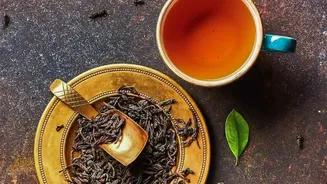
Oolong and black teas can handle higher temperatures. Oolong tea, which originates from China, is partially oxidized, placing it between green and black tea in terms of flavour profile. Depending on its oxidation level, it can be brewed at temperatures from 85-95°C for 2 to 4 minutes. Black tea, which is fully oxidized, develops its deep colour and robust, malty flavours through this process. For a strong, full-bodied cup, use water that is just off the boil (95-100°C) and steep for 3 to 5 minutes. Teas from Assam, India, are known for their strength, while those from China can be lighter and even smoky.
How to Taste Like a Pro
Tasting tea is a multi-sensory experience. First, encourage your guests to observe the dry leaves, noting their shape and aroma. After brewing, look at the colour of the liquor in the cup. Before the first sip, take a moment to inhale the steam and identify the aromas. When you finally taste, slurp the tea lightly; this aerates the liquid and spreads it across your entire palate, helping you detect more nuanced flavours. Talk about what you're experiencing—are the notes floral, fruity, nutty, or earthy? There are no wrong answers, as taste is deeply personal.
Complementary Food Pairings
While you should avoid strong flavours during the tasting itself, you can offer more substantial snacks afterwards. The key is harmony. Delicate white and green teas pair beautifully with light foods like fresh fruit, salads, seafood, or light pastries like madeleines. Robust black teas can stand up to richer foods, making them a great match for chocolate, roasted meats, or spicy dishes. Oolong teas, with their wide range of flavours, are versatile and can complement everything from grilled vegetables to fruity desserts.