





The No-Equipment, Small-Space Setup
The key to an effective workout in a tiny room is using compound bodyweight exercises. These movements work multiple muscle groups at once, giving you the most benefit in the shortest time. This routine is designed as a form of High-Intensity Interval
Training (HIIT), where you'll work hard for a short period, rest briefly, and then repeat. This method is incredibly efficient for improving cardiovascular health and building muscle. All you need is a space roughly the size of a yoga mat. If you're on a hard floor, a towel can provide a bit of cushioning for floor-based exercises. Make sure your small area is clear of luggage, shoes, or any other obstacles before you begin.
The 5-Minute Dynamic Warm-Up
Never skip your warm-up. A dynamic warm-up prepares your body for movement, waking up your muscles and getting your joints ready for the work ahead. This helps prevent injury and improves your performance. Spend about 30 seconds on each of these movements, and repeat the sequence twice. 1. Jumping Jacks: A classic way to get your heart rate up. 2. High Knees: March or jog in place, bringing your knees up towards your chest. 3. Arm Circles: Stand with your arms out to the sides and make small circles, gradually making them larger, then reverse direction. 4. Leg Swings: Holding onto a wall or bunk bed for support, swing one leg forward and backward, then side to side. Repeat on the other leg.
The 12-Minute Workout Circuit
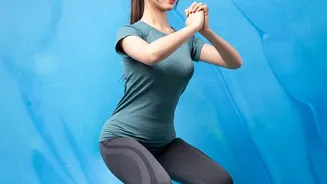
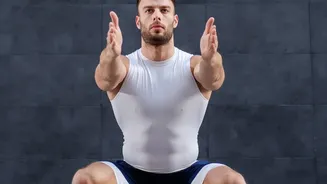
This circuit is the core of your workout. The structure is simple: perform each exercise for 45 seconds, followed by 15 seconds of rest before moving to the next one. Once you complete all four exercises, that's one round. Rest for 60 seconds, then repeat the entire circuit two more times for a total of three rounds. 1. Bodyweight Squats: Stand with your feet shoulder-width apart. Hinge at your hips and bend your knees as if you're sitting in a chair, keeping your chest up and your back straight. Lower until your thighs are parallel to the floor, then push through your heels to return to the start. 2. Push-Ups: Start in a plank position with your hands slightly wider than your shoulders. Lower your body until your chest is close to the floor, keeping your back flat. Push back up to the starting position. If this is too difficult, perform them with your knees on the floor or with your hands on the edge of your bed for an incline push-up. 3. Alternating Reverse Lunges: From a standing position, step one foot straight back, lowering both knees to 90-degree angles. Your front knee should be above your ankle, and your back knee should hover just above the floor. Push off your back foot to return to standing, and then switch legs. 4. Plank: Hold a straight line from your head to your heels, either on your forearms or hands. Engage your core and glutes to prevent your hips from sagging.
The 3-Minute Cool-Down
After your final round, don't just collapse onto your bed. A cool-down helps your body gradually return to a resting state and can improve flexibility. It involves light movement and static stretching, where you hold a position for a period of time. Hold each of the following stretches for 30 seconds. 1. Standing Quad Stretch: Stand and hold onto something for balance. Grab your right foot and gently pull your heel towards your glute, feeling a stretch in the front of your thigh. Switch legs. 2. Kneeling Hip Flexor Stretch: Kneel on your right knee, with your left foot flat on the floor in front of you. Gently push your hips forward until you feel a stretch in the front of your right hip. Switch sides. 3. Child's Pose: Kneel on the floor, sit back on your heels, and fold forward, resting your forehead on the floor and extending your arms in front of you or resting them alongside your body.