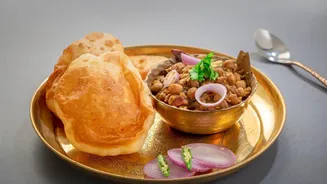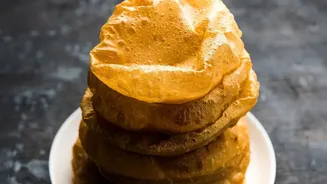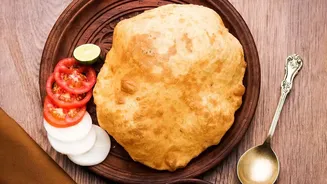

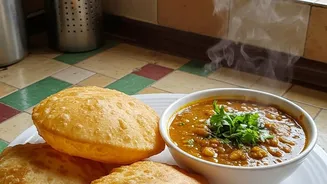
One is a rustic, hearty staple; the other a fluffy, indulgent treat. Both are deep-fried delights, yet whole wheat puris and maida bhaturas feel completely different to eat. The reason goes deeper than taste—it’s a story of grain, gluten, and science.
A Tale of Two Flours
The fundamental difference between a puri and a bhatura begins with the flour. Puris are traditionally made with atta, or whole wheat flour. Bhaturas are made with maida, or refined all-purpose flour. Though both come from wheat, their processing creates entirely different ingredients. A whole wheat kernel has three parts: the fibrous outer bran, the nutrient-rich germ, and the starchy endosperm. Atta is made by grinding the entire kernel, so it contains all three parts. This is what gives it a brownish colour, a coarser texture, and a nutty flavour. Maida, on the other hand, is made by stripping away the bran and germ, leaving only the starchy endosperm. This process results in a fine, silky white flour that behaves very differently in a dough.
The Power of Fibre
The 'chew' in a whole wheat puri comes largely from the bran and germ retained in the atta. The bran is mostly insoluble fibre, and these tiny, sharp particles do two things in a dough. First, they absorb a lot of water, which makes the dough denser. Second, they physically get in the way of gluten formation. Think of them as tiny roadblocks that prevent long, stretchy gluten strands from developing. This results in a dough that is pliable and strong but not particularly elastic. When this dense, sturdy dough is fried quickly to make a puri, the result is a satisfyingly firm and chewy bread that has substance. It’s a texture designed for everyday meals, robust enough to scoop up dals and sabzis without falling apart.
Gluten's Delicate Dance in Bhaturas
Maida, lacking the disruptive bran particles, is a perfect canvas for developing gluten. Gluten is the protein network that gives dough its elasticity and stretch. In bhatura dough, the maida is often mixed with yogurt and a leavening agent like baking powder or soda, and then left to rest or ferment. This fermentation process, combined with thorough kneading, allows an extensive and powerful gluten network to form. This creates a soft, elastic, and almost billowy dough that can be stretched thin without tearing. When this airy, relaxed dough hits hot oil, the trapped gases expand rapidly, causing the bhatura to puff up dramatically into a large, hollow ball. The resulting texture is soft, light, and slightly chewy in a way that is stretchy, not dense—perfect for a richer, more indulgent meal like chole bhature.
Texture Is a Choice
Ultimately, the choice between atta and maida is a functional one, dictated by the desired outcome. The whole grain nature of atta, with its fibre and density, is what makes puris substantial and toothsome. The bran interferes with gluten, leading to a shorter, chewier bite. Conversely, the refined purity of maida allows for an uninterrupted gluten network to develop, which is essential for the soft, stretchy, and fluffy texture of a classic bhatura. While one offers wholesome sturdiness, the other delivers pillowy softness. Each flour is perfectly engineered for its role, giving us two distinct but equally beloved fried breads that showcase the remarkable versatility of a single grain.