


The Cosmic Dark Ages
Shortly after the Big Bang, the universe was a hot, dense soup of particles. As it expanded and cooled, protons and electrons combined to form neutral hydrogen atoms. While this might sound like a clearing event, it had the opposite effect. This vast
sea of neutral hydrogen gas was opaque to most forms of light, effectively acting like a cosmic fog that absorbed energetic photons. This period, before the first stars ignited, is known as the cosmic 'dark ages'—not because there was no light, but because light couldn't travel freely across space. The universe was essentially dark and unknowable during this time.
The First Lights Turn On
The end of the dark ages began gradually, a few hundred million years after the Big Bang. In the densest regions of the cosmic web, gravity began pulling the primordial hydrogen and helium gas into clumps, eventually triggering the birth of the very first stars and galaxies. These first-generation stars, known as Population III stars, were thought to be incredibly massive, hot, and bright—composed almost entirely of the hydrogen and helium forged in the Big Bang itself. They were the first sources of significant light in the universe since its initial expansion, acting like cosmic lighthouses switching on in the darkness.
The Great Clearing Event
These first stars and early galaxies were the engines of a dramatic transformation. They unleashed a torrent of high-energy ultraviolet radiation into the surrounding fog of neutral hydrogen. This intense light was powerful enough to strip the electrons from the hydrogen atoms, a process called reionization. This transformed the gas from neutral and opaque to ionized and transparent. It didn't happen all at once. Instead, these galaxies created 'bubbles' of clear, ionized gas around them. Over hundreds of millions of years, these bubbles grew larger and eventually merged, until the entire intergalactic medium was transparent. By about a billion years after the Big Bang, the fog had completely lifted.
How Scientists Read the Clues
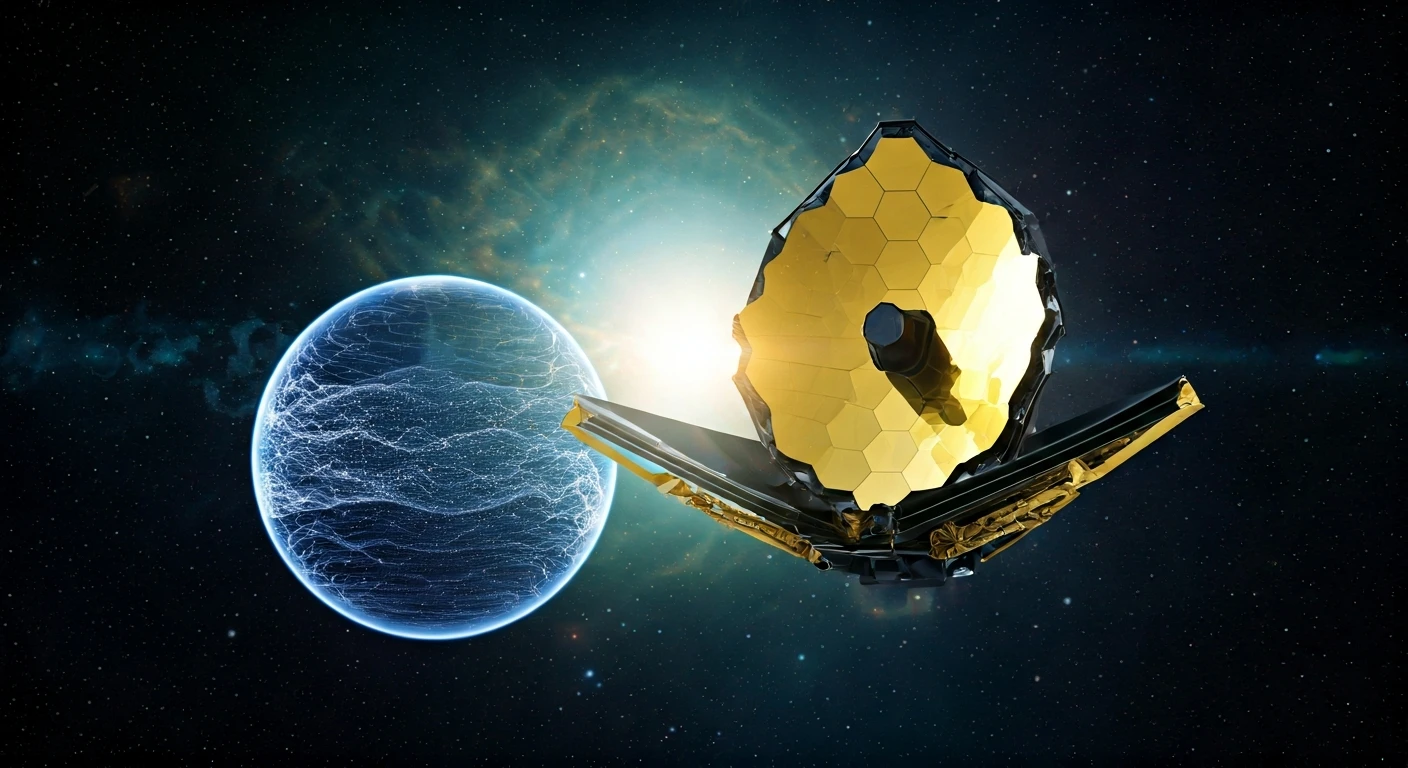
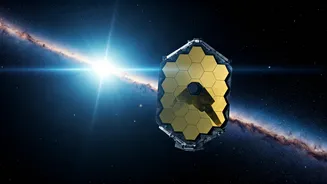
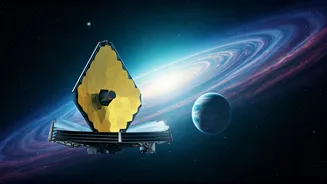
Astronomers act like cosmic detectives, piecing together this ancient story using light that has traveled for over 13 billion years. A key technique is to use the light from extremely distant and bright objects, like quasars, as backlights. By analyzing how this light is absorbed as it passes through the intervening space, they can map out the remaining pockets of neutral hydrogen fog. But the real game-changer is the James Webb Space Telescope (JWST). Its powerful infrared vision allows astronomers to see the faint light from the very first galaxies themselves, directly observing them in the act of clearing the space around them. Because the universe's expansion stretches light, the ultraviolet light emitted by these early galaxies reaches us today as infrared light, which Webb is perfectly designed to capture.
Why This Ancient History Matters
Understanding the Epoch of Reionization is about more than just satisfying cosmic curiosity. It's a crucial chapter in our own origin story. The clearing of the universe was a necessary step for the cosmos to evolve into the complex, structured state we see today. It allowed light to travel freely, enabling the formation and observation of the galaxies, star clusters, and planetary systems that followed. Recent JWST discoveries have pushed back the timeline, suggesting the process may have started earlier than previously thought and revealing a surprising diversity in early galaxies. By studying this ancient light, we are directly witnessing the moment the universe set the stage for everything that came after, including our own galaxy, our Sun, and ourselves.