








The Monsoon's Double Jeopardy
Navigating travel during the monsoon in Eastern India is a unique test of patience and planning. The challenge isn't just a delayed flight; it's the compounded problem of getting to the airport in the first place. Intense monsoon showers, which are common
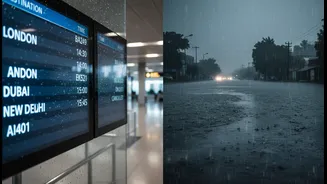
in July, create a dual crisis. Airlines issue advisories for potential delays due to bad weather, but these warnings only cover the air part of your journey. The land part is often a bigger, more unpredictable hurdle. As heavy rains lash cities like Kolkata, major arterial roads leading to the airport can become submerged, leading to gridlock that even the most generous travel buffer can't overcome. Recent weather reports confirm that an active monsoon trough is bringing widespread, heavy rainfall to the region, a situation expected to continue. This means travellers are caught in a pincer movement: the risk of their flight being delayed by weather, and the simultaneous risk of missing it entirely because the journey to the airport takes three or four times longer than usual.
Why Your Road Travel Plan Needs Its Own Buffer
Thinking you can leave two hours early to cover traffic is a miscalculation during a Kolkata downpour. The reality on the ground is far more complex. Key routes like the EM Bypass, VIP Road, and Central Avenue are notoriously prone to severe waterlogging, which can bring traffic to a complete standstill for hours. This isn't just slow-moving traffic; it's often a total shutdown of routes. App-based cab services become unreliable, with frequent cancellations and surge pricing that reflects the chaos. Many drivers may simply refuse to navigate the waterlogged streets. Even the city's metro system, while a resilient alternative, can't solve the last-mile connectivity problem if the streets around your home and the station are flooded. Recent reports from this monsoon season already highlight these exact issues, with commuters and air passengers left stranded. Therefore, the journey to the airport must be treated as a mission in itself, requiring a dedicated strategy and its own substantial time allowance, completely separate from any buffer you've allocated for the airport check-in process.
The Airport: A Game of Ripples and Delays
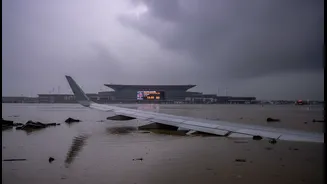
Bad weather's impact on airport operations extends far beyond just the take-off of your specific flight. Heavy rain and low visibility can slow down the entire operational chain. Inbound flights may be delayed or diverted, which has a direct knock-on effect on outbound departures, as the aircraft for your flight may be stuck elsewhere. Waterlogging can also affect airport aprons and ground handling services, further slowing down the process of preparing planes for departure. Airlines are transparent about this, with carriers like SpiceJet and Air India issuing advisories that all departures and arrivals may be affected during heavy rain. This means even if the weather in Kolkata seems to be clearing up, your flight could still be delayed due to a cascade of disruptions that began hours earlier. Continuously checking your flight status is crucial, but it only solves half the problem if you're stuck in traffic miles away from the terminal.
A Two-Part Strategy for a Smoother Journey
To successfully navigate this, you need to decouple your travel plan into two distinct parts. First, the journey to the airport. Start monitoring real-time traffic on maps hours before you plan to leave. Have multiple route options in mind. If possible, consider using the metro for the longest possible leg of your journey, but plan how you will get to and from the stations. Leaving four or five hours before you need to be at the airport might seem excessive, but it's a realistic defence against monsoon gridlock. The second part is managing the flight itself. Check your flight status before you leave home, when you are on your way, and once you arrive at the airport. Have your airline's app and customer service number ready. If possible, when booking during monsoon season, consider flexible fares that allow for easier changes. This two-pronged approach acknowledges that you're tackling two separate logistical challenges, not one.