



Visas: Your First Step
For Indian passport holders, securing visas for both countries is a straightforward online process. Both Vietnam and Cambodia offer an e-visa service. For Vietnam, Indian citizens need to apply for a 90-day e-visa, which can be used for single or multiple
entries. The process typically takes 3-7 working days, so it's wise to apply at least two weeks before your departure. The government fee is around $25 USD. Similarly, Cambodia requires Indian travellers to obtain a visa, and the e-visa is the most convenient option for tourists. The process requires a valid passport, a digital photograph, and an application form. It’s also important to note that visitors may need to obtain a Cambodia e-Arrival card within seven days of arrival.
Flights from Chennai
While there may not be many direct flights, Chennai offers excellent connectivity to both Vietnam and Cambodia via one-stop routes. Popular layover cities include Singapore, Kuala Lumpur, and Bangkok. Airlines like Scoot, AirAsia, Singapore Airlines, and Malaysia Airlines operate these routes frequently. You can fly into major Vietnamese hubs like Hanoi (HAN) in the north or Ho Chi Minh City (SGN) in the south. For Cambodia, the primary international airports are in Siem Reap (REP), the gateway to Angkor Wat, and the capital, Phnom Penh (PNH). A common strategy is to book a multi-city ticket, flying into Hanoi and out of Phnom Penh, or vice versa, to avoid backtracking.
When to Plan Your Trip
The best time to visit both Vietnam and Cambodia is during the dry season, which generally runs from November to April. During this period, you can expect pleasant temperatures, lower humidity, and clear skies, making it ideal for exploring ancient temples and enjoying outdoor activities. The peak tourist season is from December to January, so booking flights and accommodation in advance is recommended. If you prefer fewer crowds, consider the shoulder months of November or February and March, which still offer excellent weather.
Crafting the Perfect Itinerary
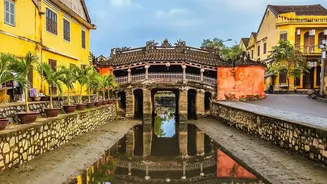
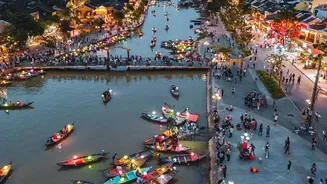
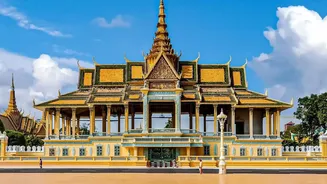
A popular route for a two-week trip starts in northern Vietnam and ends in Cambodia. You could begin in Hanoi, exploring the Old Quarter, and then take an overnight cruise in the stunning Ha Long Bay. From there, fly to central Vietnam to see the charming ancient town of Hoi An. Next, head south to the bustling Ho Chi Minh City to explore its history and the nearby Mekong Delta. From Ho Chi Minh City, you can take a short flight or a bus to Cambodia. Start in Siem Reap to spend a few days exploring the magnificent Angkor Wat temple complex before moving on to the capital, Phnom Penh, to learn about its history at the Royal Palace and the Killing Fields.
Managing Your Money
Vietnam's currency is the Vietnamese Dong (VND), and you'll find yourself dealing in thousands and millions of dong for everyday purchases. As of recent rates, 1 INR is approximately 300 VND. In Cambodia, the official currency is the Cambodian Riel (KHR), but the US Dollar is widely used and accepted almost everywhere, especially in tourist areas. It's advisable to carry a mix of currencies. Carrying some USD from India is a good idea, which you can easily exchange for VND upon arrival in Vietnam. ATMs are widely available in cities in both countries, but they often charge a withdrawal fee. Credit cards are accepted in larger hotels and restaurants, but cash is essential for street food, local markets, and smaller vendors.
Cultural Etiquette and What to Pack
Both Vietnam and Cambodia are conservative societies where modesty is appreciated. When visiting temples and pagodas, it is essential to dress respectfully by covering your shoulders and knees. It's a good practice to carry a scarf for this purpose. Removing your shoes before entering someone's home or a temple is also a common custom. When packing, opt for lightweight, loose-fitting clothing made of breathable fabrics to stay cool in the tropical climate. Comfortable walking shoes are a must, as you'll be doing a lot of exploring. Don't forget essentials like sunscreen, a hat, and insect repellent.