


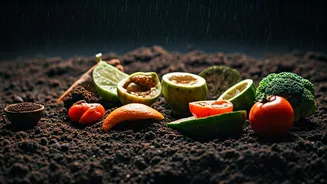



What Exactly Is Composting?
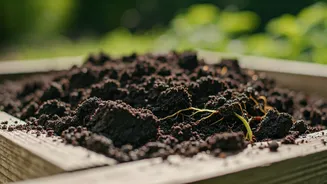
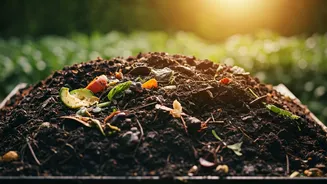
At its core, composting is nature's recycling program. It's the process of breaking down organic materials—like your leftover sabzi prep and fruit peels—into a rich, dark, soil-like substance. This end product, called compost, is packed with nutrients.
Instead of sending your wet waste to an already overflowing landfill where it produces harmful methane gas, you can manage it right at home. It’s a small step that significantly reduces your household's environmental footprint and reconnects you to the natural cycle of decay and growth.
Why Bother? The Big Benefits
The most immediate benefit is a cleaner, less smelly kitchen bin. Segregating wet waste for composting means your dry waste bin stays dry and odour-free. Beyond your home, the impact is massive. A large percentage of municipal waste in Indian cities is organic. By composting, you divert this waste from landfills, reducing soil and water pollution. For plant lovers, the reward is tangible: compost is a free, all-natural fertilizer. It improves soil structure, helps it retain moisture (meaning you water less), and provides a slow release of essential nutrients, leading to healthier, happier plants in your balcony or garden.
Choosing Your Composting Method
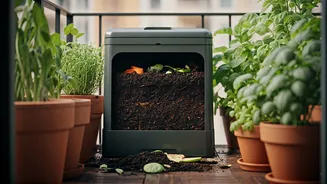
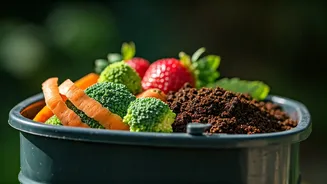
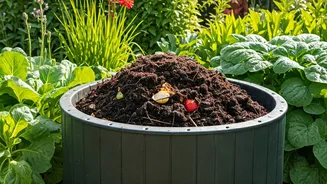
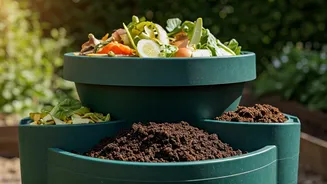
You don't need a large garden to compost. There are several methods perfect for Indian apartments and homes: **1. Terracotta Pot/Bin Composting:** This is the simplest way to start. You'll need two or three medium-sized terracotta pots (or stackable compost bins available online) with drainage holes. You fill one with your kitchen waste and dry materials, and once it's full, you let it sit and 'cook' while you start filling the next one. **2. Vermicomposting:** This method uses earthworms to speed up the process. It's fast, efficient, and produces some of the most nutrient-dense compost. It requires a special worm bin and a bit more care, but it's completely odourless and ideal for balconies. **3. Bokashi:** An anaerobic (oxygen-free) method from Japan, Bokashi uses a special bran inoculated with microbes to pickle your kitchen waste in a sealed bucket. It's very quick (taking just a few weeks) and can handle items like meat and dairy. The pickled waste then needs to be buried in soil or a larger compost pile to finish decomposing.
The Golden Rule: Greens and Browns
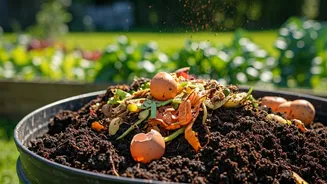
A healthy compost pile needs a balance of 'Greens' and 'Browns'. This isn't about colour, but about chemistry. **Greens (Nitrogen-rich):** These are your wet, fresh materials. Think vegetable and fruit peels, leftover food (avoiding oil and meat), coffee grounds, tea leaves, and puja flowers. **Browns (Carbon-rich):** These are your dry materials. Think dried leaves, sawdust, crushed eggshells, newspaper strips, cardboard bits, and coconut husks. The ideal ratio is roughly two parts Browns to one part Greens. This balance ensures your compost doesn't get too slimy or smelly. A simple habit is to keep a small bag of dried leaves or torn-up cardboard next to your compost bin and add a handful every time you add kitchen scraps.
What to Compost (and What to Avoid)
**YES, please compost:** - Vegetable and fruit scraps - Crushed eggshells - Tea leaves and coffee grounds - Old flowers - Cooked rice and dal (in small amounts) - Dry leaves, twigs, and wood ash - Shredded newspaper and cardboard **NO, keep these out:** - Meat, fish, and bones (they attract pests and smell) - Dairy products (cheese, paneer, milk) - Oily or greasy foods - Pet waste - Diseased plants - Plastic, glass, or metal
Troubleshooting Common Issues
Don't be discouraged if you hit a snag. Most composting problems are easy to fix. **Is it smelly?** Your pile is likely too wet or has too many 'Greens'. Add more 'Browns' like dry leaves or cardboard and give it a good mix to aerate it. **Are there pests?** If you see fruit flies, make sure your kitchen scraps are always covered with a layer of 'Browns'. For larger pests, ensure your bin has a secure lid. **Is it not breaking down?** The pile might be too dry. Sprinkle a little water (it should feel like a damp sponge, not soaking wet) and mix it up. Breaking down larger scraps into smaller pieces will also speed things up.