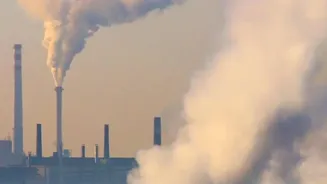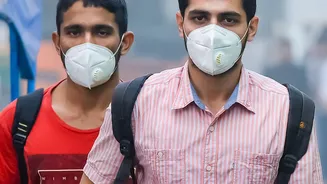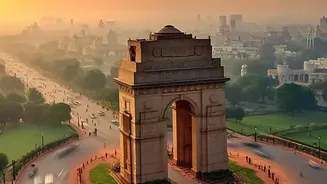







As winter smog blankets Indian cities, the focus is often on health. But the toxic air carries a hidden, staggering economic cost, disrupting businesses, stalling projects, and hitting the nation's bottom line where it hurts.
The Staggering National Cost
The haze that chokes India's
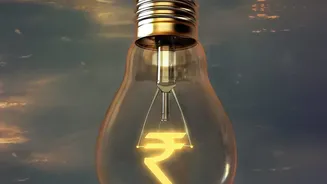
cities is more than an environmental issue; it is a recurring tax on the entire economy. A joint report by FICCI and EY estimated that air pollution could be costing India up to 9.5% of its GDP annually when factoring in healthcare expenses, premature deaths, and lost productivity. Another analysis by Dalberg Advisors, in partnership with the Clean Air Fund and CII, calculated that Indian businesses lose around $95 billion every year, which is roughly 3% of the country's GDP. This economic drag comes from a combination of factors that strike at the heart of commercial activity, turning a public health emergency into a severe business continuity risk that is becoming too large for companies and investors to ignore.
Lost Productivity and Human Capital
One of the most direct economic impacts is on the workforce. Studies have consistently shown that employee productivity drops on high-pollution days, with estimates suggesting an 8-10% decline in efficiency. This happens through both 'absenteeism', where employees take sick days, and 'presenteeism', a hidden cost where employees are at work but function at reduced capacity due to illness or cognitive fatigue. Together, these phenomena result in an estimated 1.3 billion lost working days annually. The problem is particularly acute in sectors requiring high cognitive function, such as the IT industry, where productivity in polluted cities can be significantly lower. For many workers, especially in the informal sector, taking a day off is not an option, forcing them to work through illness and further impacting their long-term health and output.
Supply Chain and Operational Disruptions
Smog creates logistical nightmares that ripple through the economy. During periods of severe pollution, authorities often implement emergency measures under the Graded Response Action Plan (GRAP), which can include halting construction work and restricting the movement of commercial vehicles. These bans cause a chain reaction, delaying the delivery of raw materials and finished goods, which in turn increases transportation and operational costs for businesses. Delhi alone handles a massive volume of freight daily, and transport restrictions throw much of this into disarray every year. The construction sector, a major employer, faces project delays that affect not only real estate developers but also orders for materials like cement and steel, impacting millions of workers.
Changing Consumer Behaviour
When the air is toxic, people stay indoors. This behavioural shift directly hits consumer-facing businesses like retail and hospitality. Major retailers have reported weaker footfall and flat sales in northern India during peak pollution season. Restaurants see a drop in dine-in customers, and while delivery orders may increase, they often don't fully compensate for the loss of in-person traffic. One analysis estimated that consumer-facing businesses could have gained $22 billion in revenue in a single year if pollution levels were lower, with discretionary spending on items like clothing and restaurant outings taking the biggest hit. Even tourism suffers, as international visitors are discouraged from visiting during the smog season, affecting hotels, airlines, and allied businesses.
A Hurdle for Investment and Talent
The persistent pollution crisis is also becoming a factor in long-term business and investment decisions. For companies, it complicates talent retention, as highly skilled workers may choose to relocate to cleaner cities, a trend that could reshape the geography of employment. Some industry analysts now explicitly advise investors to factor in the 'smog season' when evaluating companies operating in North India. Furthermore, the pollution can diminish the productivity of assets; for instance, thick smog can reduce the power generation of solar panels by blocking sunlight, impacting the economic viability of clean energy projects. Ultimately, what was once seen as a seasonal nuisance is now being recognised as a fundamental risk to India's economic growth and competitiveness.