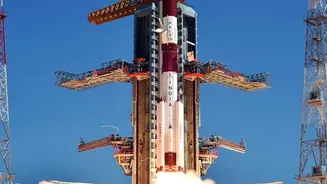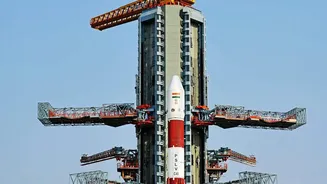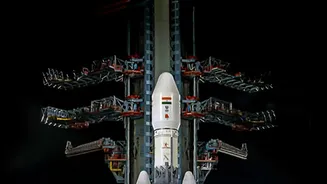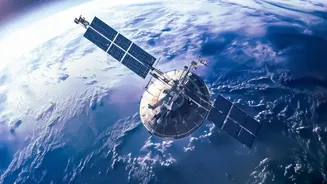

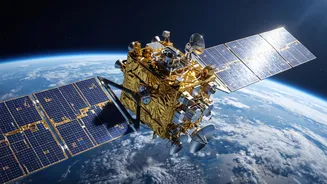
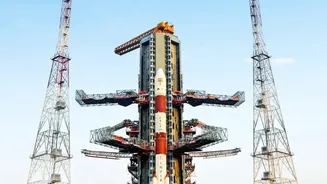
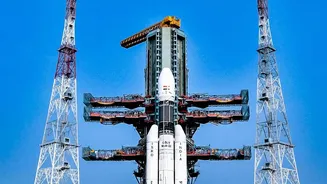
India's self-reliant navigation system, NavIC, has received a crucial upgrade. The recent launch of the NVS-03 satellite is a major step in not just maintaining but significantly enhancing this homegrown alternative to GPS.
What is NavIC and Why Does It Matter?
NavIC, which stands for Navigation
with Indian Constellation, is India's indigenous regional satellite navigation system, developed by the Indian Space Research Organisation (ISRO). Conceived after the Kargil War, when access to the US-owned GPS was not guaranteed, NavIC provides crucial positioning, navigation, and timing services. It covers the entire Indian subcontinent and an area extending approximately 1,500 kilometres beyond its borders. This independent system is vital for national security, providing encrypted services for military and strategic operations, and also serves a wide range of civilian applications, including transportation, disaster management, and fleet tracking. Already, thousands of railway locomotives and fishing vessels rely on it for real-time tracking.
The Challenge of Keeping Time
The original constellation of NavIC satellites, known as the IRNSS series, faced a significant hurdle: the failure of their onboard atomic clocks. These ultra-precise clocks are the heart of any navigation system, as they measure the tiny differences in signal travel time needed to calculate a precise location. Failures in the imported rubidium atomic clocks on several first-generation satellites reduced the constellation's effectiveness, creating an urgent need for replacements to ensure the system's continuity and reliability. This challenge prompted ISRO to not only replace the ageing satellites but also to develop its own atomic clock technology, a major step towards complete self-reliance.
Enter the Next-Generation NVS Satellites
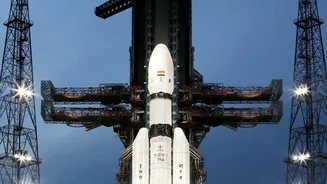
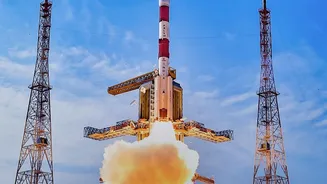
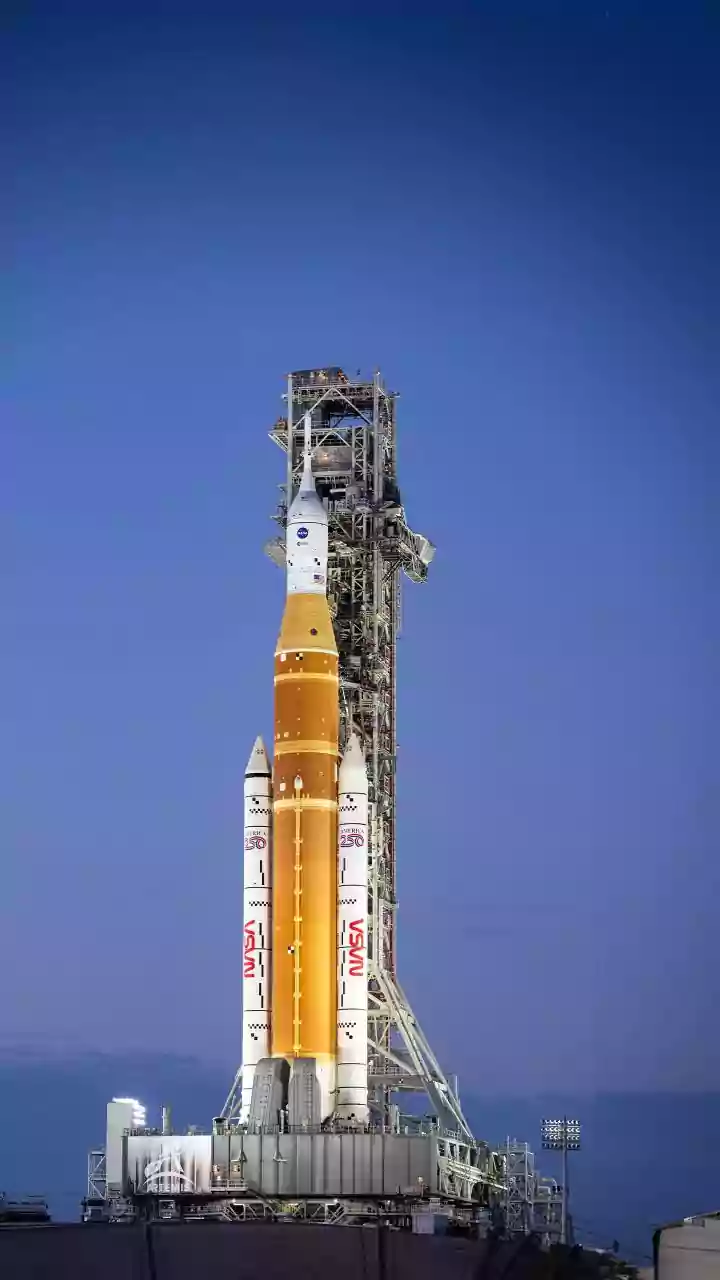
To address the issues and modernise the system, ISRO began launching the second-generation NVS series of satellites. NVS-01 was the first, successfully launched in May 2023. It was followed by the launch of NVS-03 on October 30, 2026, a critical mission that helped restore the NavIC constellation to its minimum operational requirement of four satellites. The NVS-02 mission in January 2025 unfortunately failed to reach its intended orbit. The successful deployment of NVS-03 was therefore a major milestone, demonstrating ISRO's ability to learn from setbacks and ensure the programme's future. These new satellites are heavier, more powerful, and have a longer designed mission life of over 12 years compared to the 10-year lifespan of their predecessors.
The Game Changer: Adding the L1 Band
Perhaps the most significant upgrade in the NVS series, including NVS_03, is the introduction of the L1 frequency band, in addition to the existing L5 and S bands. The L1 band is the most common frequency used for civilian navigation services globally, including by the US GPS system. By adding an L1 signal, NavIC becomes far more compatible with commercial devices like smartphones, wearables, and in_car navigation systems without requiring special hardware. This move is expected to dramatically accelerate the adoption of NavIC among the general public and commercial users, integrating India's navigation system seamlessly into everyday life.
A Leap in Precision and Self Reliance
The NVS satellites are equipped with indigenously developed rubidium atomic clocks. NVS_01 was the first to fly one, and NVS_03 carried the third such Indian_made clock into orbit. This homegrown technology is a massive achievement for ISRO’s Space Applications Centre, which developed it. It not only enhances the accuracy and stability of the NavIC system but also ends the reliance on foreign suppliers for this critical component. These satellites also feature advanced encryption and anti_jamming capabilities, bolstering the security of the restricted service used for defence purposes.
What is Next for the NavIC Constellation?
The launch of NVS_03 is part of a broader plan to strengthen and expand the NavIC constellation. ISRO has sanctioned a total of five second generation satellites (NVS_01 to NVS_05) to ensure the system remains robust and fully operational. Following the success of NVS_03, ISRO has announced plans to launch NVS_04 and NVS_05 in the coming months to further bolster the constellation. The ultimate goal is to have a full, healthy seven satellite constellation of these more capable, longer lasting satellites. This continuous deployment will ensure NavIC not only serves India's current strategic and civilian needs but also evolves to offer even more advanced services in the future.