
A New Window to the Dawn of Time
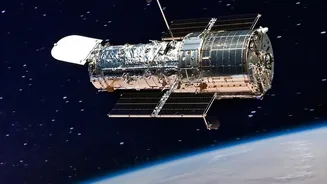
The instrument behind these revelations is the James Webb Space Telescope (JWST), a marvel of engineering designed to capture light from the universe's infancy. Unlike its predecessor, the Hubble Space Telescope, JWST is optimized to see in the infrared
spectrum. This allows it to peer through cosmic dust and detect the faint, stretched-out light from the first stars and galaxies that formed just a few hundred million years after the Big Bang. For years, our models of the early universe were based on theories of gradual growth. Astronomers expected JWST to find small, faint, and primitive galactic precursors. Instead, what it's finding is forcing a major rethink of cosmic history.
Galaxies Too Mature, Too Soon
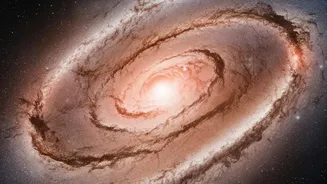
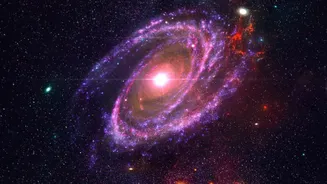
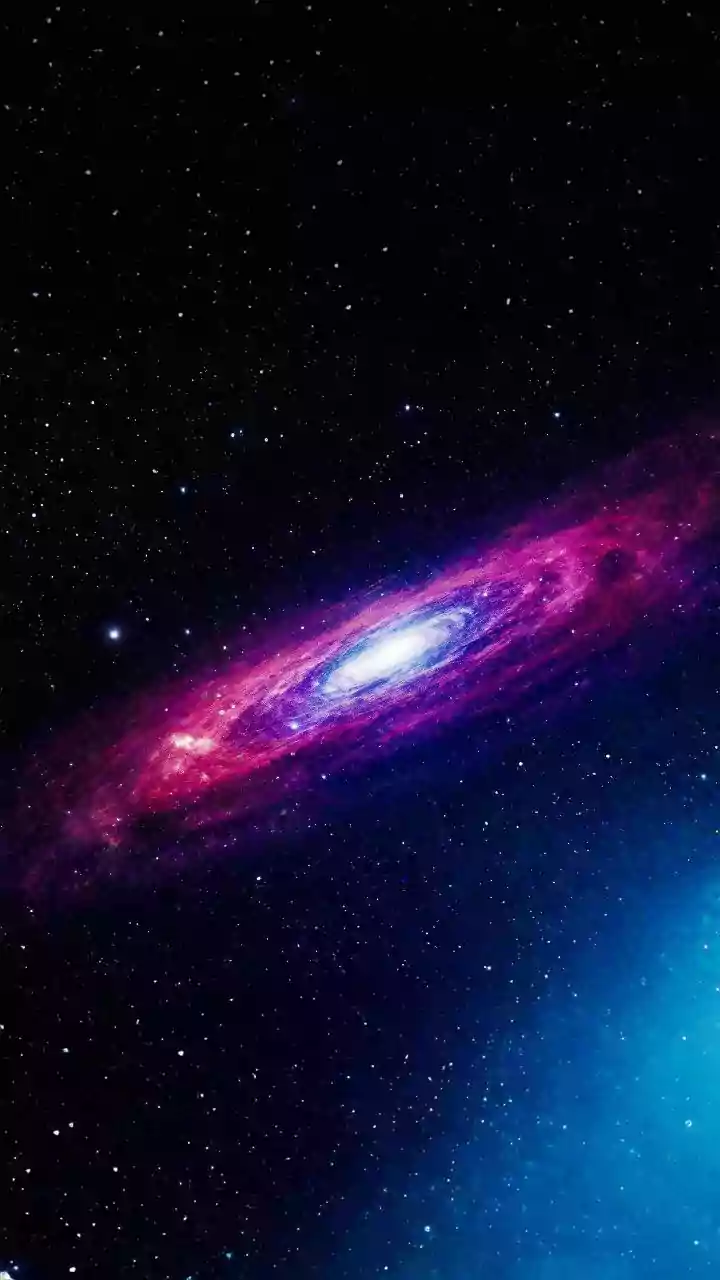
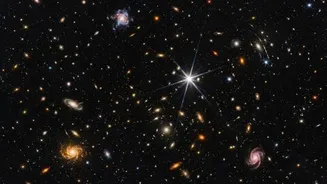
One of the most startling discoveries is the presence of surprisingly large, bright, and well-structured galaxies in the very early universe. Some galaxies, seen as they were when the universe was only 2% of its current age, appear far more mature than predicted. Standard cosmological models suggested that galaxies should grow slowly, assembling from smaller pieces over billions of years. Yet JWST has found 'big honking red disks'—massive galaxies that were already forming stars at a rapid rate—within the first 700 million years of cosmic history. This has led scientists to consider that the process of galaxy formation was far more efficient and rapid at the dawn of time than anyone had anticipated.
The Chicken-or-Egg Problem of Black Holes
At the heart of most large galaxies, including our own Milky Way, lies a supermassive black hole. A long-standing question has been which came first: the galaxy or its central black hole? Recent discoveries are providing paradigm-shifting clues. JWST has found enormous black holes, millions of times the mass of our sun, that are wildly oversized for their host galaxies in the early universe. In the modern universe, a black hole's mass is typically a tiny fraction of its galaxy's mass, suggesting they grew together. But these ancient black holes are so massive—sometimes accounting for 10% or more of the galaxy's mass—that they challenge the co-evolution theory. Some evidence even suggests certain black holes formed first, acting as seeds around which the galaxy later grew.
The Universe's First Chemical Fingerprints
The early universe was chemically simple, consisting almost entirely of hydrogen and helium. All heavier elements, which astronomers call 'metals', are forged inside stars and spread through space when those stars die. Finding these elements is like finding a chemical footprint of previous stellar generations. JWST has shocked scientists by detecting elements like carbon and oxygen in galaxies just 350 million years after the Big Bang. This is far earlier than expected and suggests that the first generations of stars formed, lived, and died very quickly, seeding the universe with the building blocks for future stars, planets, and perhaps life itself. The discovery of this chemical complexity so early on provides a crucial timeline for the cosmic path that eventually led to us.