
Seeing the Invisible with Infrared
The biggest challenge in observing star birth is that it happens inside vast, dense clouds of gas and dust. These 'stellar nurseries' are opaque to telescopes that see in visible light, like the Hubble. It’s like trying to watch a play from behind a thick,
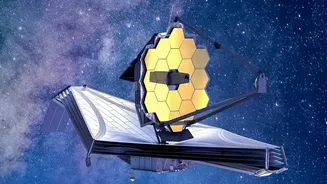
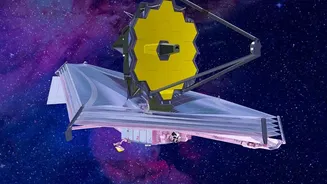
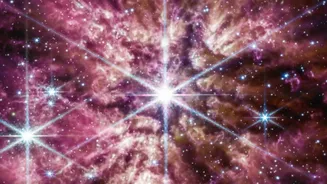
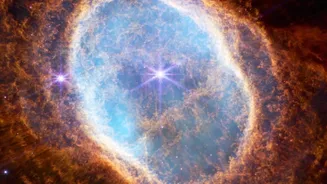
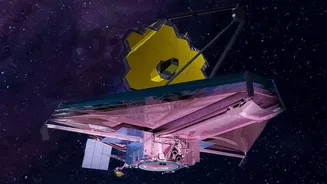
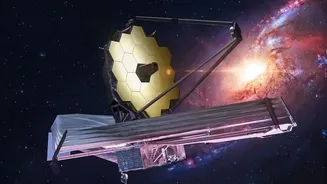
dark curtain. The James Webb Space Telescope, however, is designed to see in infrared light. This longer wavelength of light can pass through the dense dust clouds, much like how radio waves pass through walls. This fundamental capability allows JWST to peer deep inside these cosmic clouds and capture the previously invisible, earliest stages of star and planet formation, giving scientists a front-row seat to creation.
A Detailed Look at Baby Stars
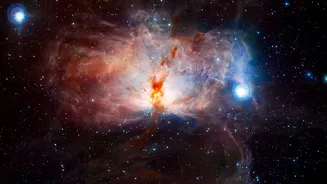
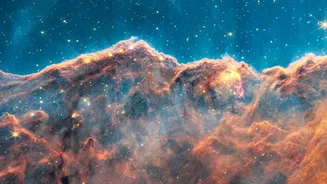
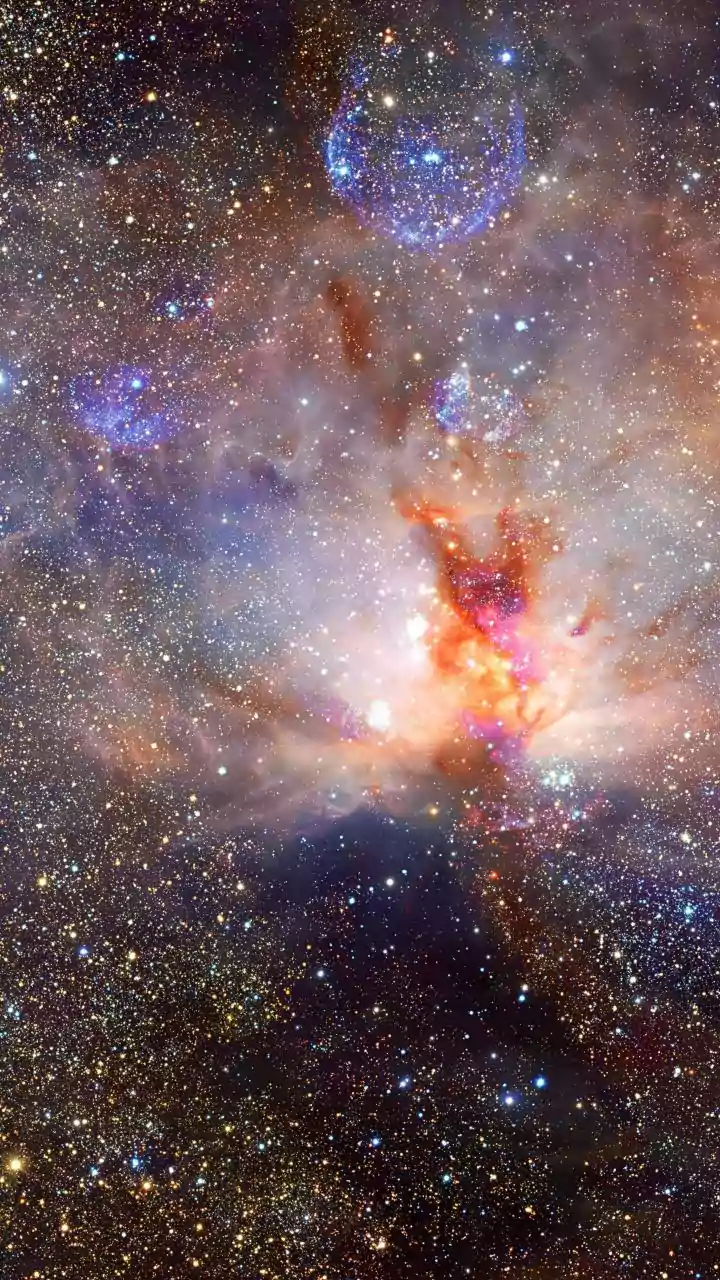
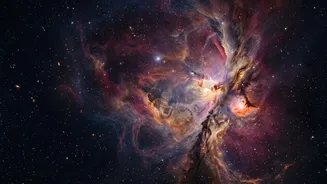
Once inside the nursery, JWST is revealing a universe of activity. The telescope has captured stunningly detailed images of protostars—infant stars that are still gathering mass from their parent cloud. These are not yet true stars, as they haven't begun fusing hydrogen in their cores. In regions like the Carina Nebula and the Perseus stellar nursery, JWST has unveiled hundreds of these objects, some with masses only a few times that of Jupiter. By taking a census of these fledgling stars, from massive to small, astronomers can build a more complete picture of the entire star formation process, something that was impossible before.
The Energetic Outbursts of Youth
Young stars are not born quietly. JWST's images show that as protostars accrete matter, they also violently eject powerful jets of gas and energy. These outflows, known as Herbig-Haro objects, slam into the surrounding gas and dust at high speeds, creating spectacular shock waves that glow brightly in infrared light. Webb’s high-resolution images of systems like Herbig-Haro 46/47 show these jets with unprecedented clarity, revealing how they sculpt their environment. These observations help scientists understand how a star’s chaotic birth can either trigger or inhibit the formation of other stars nearby.
Finding the Ingredients for New Worlds
Perhaps most excitingly, JWST isn't just seeing stars being born; it's seeing the birth of future solar systems. The telescope can analyze the chemical makeup of the dusty disks that swirl around protostars. In these protoplanetary disks, scientists have identified a treasure trove of molecules crucial for life as we know it. Webb has confirmed the presence of water ice, methane, and complex organic molecules like ethanol (alcohol) and acetic acid (the main component of vinegar) within these stellar cradles. This suggests that the basic chemical ingredients for potentially habitable worlds are present from the very beginning, long before planets themselves have even formed.
Rewriting the Star Formation Playbook
Every new image and data set from JWST is helping to refine, and sometimes challenge, existing theories of star formation. For example, in one star-birthing region, astronomers detected unexpected high-energy ultraviolet radiation that young stars shouldn't be capable of producing on their own. The source of this radiation remains a puzzle that could force a change in star formation models. From the chaotic heart of our own Milky Way to nearby nebulae, the telescope is providing a firehose of information. By observing nurseries with different characteristics, like the Tarantula Nebula, which resembles the star-forming regions of the early universe, scientists can test their theories under the most rigorous conditions.