




A Tale of Two Coastlines
India's extensive coastline, stretching over 7,500 kilometres, is home to some of its most diverse and flavorful cuisines. For decades, these regional specialities remained distinct chapters in India's vast culinary story. On one side, you have the Konkan
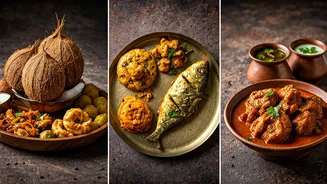
coast, a region spanning parts of Maharashtra, Goa, and Karnataka. Its food is known for bold, fiery flavours, with a heavy use of coconut, tangy kokum, and a symphony of spices influenced by centuries of trade, including Portuguese introductions like chilli and vinegar. Think of the robust Goan fish curry or a spicy Mangalorean prawn ghee roast. On the other side of the subcontinent lies the coast of West Bengal. Here, the cuisine is celebrated for its subtlety and reverence for the main ingredient, especially freshwater fish like Hilsa. Bengali food champions the delicate balance of sweet and spicy, often using mustard oil, poppy seed paste (posto), and a unique five-spice blend called 'panch phoron' that creates a completely different, yet equally compelling, flavour profile.
The Unifying Thread of Rice and Fish
At first glance, the two cuisines seem worlds apart—one fiery and bold, the other subtle and nuanced. So, what makes this journey from Konkan to Kolkata possible on a single menu? The answer lies in their shared foundations. Both cuisines are deeply rooted in a culture of rice and fish. For communities along both coasts, a meal is often incomplete without a serving of steamed rice and a freshly prepared seafood dish, be it a prawn curry, a steamed fish, or a simple fried catch of the day. This common love for seafood and rice provides a canvas for chefs to paint a picture of contrasts and complements. The use of coconut is another commonality, although its application differs—it forms the rich, thick base of many Konkani curries, while in Bengal, it might be used more sparingly or in desserts. These shared building blocks allow for a menu that feels cohesive, telling a story of two different expressions of the same coastal identity.
The Chef's Vision: From Bazaar to Table
This emerging trend isn't happening by accident. It's driven by a new generation of Indian chefs who are looking inward, exploring the subcontinent's incredible diversity with fresh eyes. Chefs like Auroni Mookerjee, known for his work in Kolkata, have championed a 'bazaar-to-table' philosophy, where the menu is dictated by the freshest local and seasonal produce. This approach encourages a fluid and creative style of cooking that moves beyond rigid regional boundaries. While not explicitly a 'Konkan to Kolkata' concept, Mookerjee’s past ventures, such as The Curry Brothers in Mumbai, which offered both Goan and Bengali food, show an early interest in presenting these cuisines side-by-side. This ethos celebrates adaptability—a trait inherent in coastal cuisines which have absorbed influences from traders and colonisers for centuries. The idea is to tell a story, connecting diners to the land, migration, and history behind every dish.
What the Journey Tastes Like
So, what might you find on a menu that travels from the Arabian Sea to the Bay of Bengal? It's a study in delicious contrasts. A plate could feature a fiery Goan Prawn Curry, with its signature tang from vinegar, sitting alongside a delicate Bengali Chingri Malai Curry, where prawns are cooked in a creamy, sweet coconut milk sauce. You might find a Konkani-style fried fish, coated in semolina for a crispy finish, served with a side of Kasundi, the pungent Bengali mustard sauce. It could be a Goan Pork Vindaloo challenging the palate with its heat, followed by a soothing Machher Jhol, a light Bengali fish stew. The journey is about highlighting these differences while celebrating the shared soul of coastal cooking. It’s an invitation to appreciate the incredible range of textures and flavours that exist along India's shores, often in one sitting.