


More Than a Rover, A Mobile Home
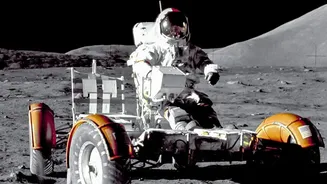
Forget the open-top 'moon buggies' of the 1970s. The next generation of lunar transport is the pressurised rover, essentially a mobile habitat on wheels. NASA refers to this concept as a 'habitable mobility platform'. These vehicles are designed to allow
two astronauts to live and work inside for weeks at a time, driving for hundreds of miles without ever needing to put on a spacesuit. Inside this 'shirt-sleeve' environment, they can conduct experiments, analyse samples, eat, and sleep while traversing the harsh lunar landscape. This transforms exploration from short jaunts near a lander into long-term scientific road trips, enabling missions that could last up to 45 days.
The Key Players: An International Effort
Developing this groundbreaking technology is a global enterprise. Japan's Aerospace Exploration Agency (JAXA), in partnership with automotive giant Toyota, is developing a high-profile pressurised rover nicknamed the 'Lunar Cruiser'. Drawing on Toyota's Land Cruiser heritage and its hydrogen fuel cell technology, the vehicle aims to be a durable and reliable home for astronauts on the Moon. As part of a formal agreement, NASA will provide the launch and delivery of the Japanese-built rover to the Moon in exchange for two spots for Japanese astronauts on future lunar surface missions. The Lunar Cruiser is expected to be about the size of two small buses, offering a living space of 13 cubic metres for its crew. This collaboration underscores the commercial and international partnerships driving the Artemis program forward.
What Will These Rovers Actually Do?
Pressurised rovers are the key to unlocking the full scientific potential of the Moon, particularly at the targeted South Pole region. Their extended range allows astronauts to reach geographically diverse and interesting sites far from the Artemis Base Camp. They can investigate craters that may hold water ice, collect a wider variety of geological samples, and deploy scientific instruments over a vast area. Because astronauts can operate for long periods without the physical strain of wearing a spacesuit, they can perform more complex and delicate tasks inside the rover's mobile lab. The rovers will also be equipped with advanced robotics and can even be operated remotely from Earth between crewed missions, allowing them to transport cargo or continue scientific work autonomously.
The Road Ahead on the Moon
While these advanced mobile habitats are a critical part of the long-term vision, they won't be the first vehicles on the scene. For earlier Artemis missions, NASA is prioritising the development of unpressurised Lunar Terrain Vehicles (LTVs), which are more like the Apollo rovers but with modern upgrades. Companies like Astrolab and Lunar Outpost are developing these open-air vehicles to provide essential mobility for astronauts near their landing sites. The more complex pressurised rover, like the Lunar Cruiser, is slated for later missions. JAXA and Toyota are targeting a launch in the early 2030s to support missions like Artemis VII. This phased approach allows NASA and its partners to establish a foothold with simpler vehicles before deploying the 'camper van' style rovers that will enable a truly sustainable human presence.