



The Significance of Marigolds
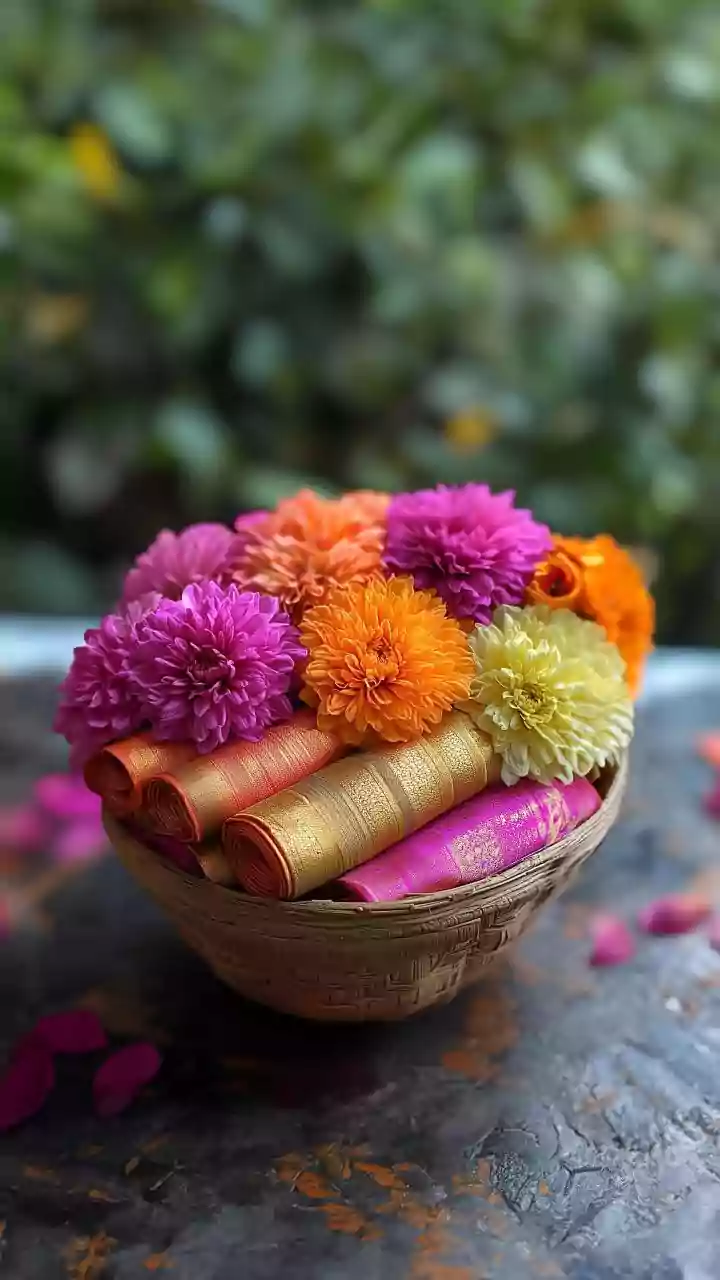
Marigolds hold a deep cultural and spiritual significance in India. Their bright saffron and yellow colours are considered auspicious, representing the sun's energy, new beginnings, and prosperity. Often woven into garlands called 'torans', they are used
to adorn doorways and home temples to welcome guests and deities alike. Beyond their visual appeal, their strong fragrance is believed to purify the air and create a serene, positive atmosphere, making them an essential part of festivals like Diwali, Dussehra, Navratri, and wedding ceremonies. This tradition of using fresh flowers connects us to nature and our cultural roots, turning a simple act of decorating into a meaningful ritual.
The Classic Floral Curtain
The most timeless and impactful way to create a marigold backdrop is the floral curtain. This involves hanging numerous long strands of marigold garlands vertically, side-by-side, against a plain wall. The effect is a dense, breathtaking wall of colour that instantly transforms any space. For a classic look, alternate between bright orange and sunny yellow garlands. To execute this, you can install a temporary rod or use a sturdy string stretched across the wall from which to hang the individual garlands. Ensure the lengths are uniform for a clean, professional look. This style works exceptionally well behind a sofa or as a backdrop for a home mandir or idol during a puja.
Geometric Patterns and Shapes
For a more modern twist on the traditional garland, consider creating geometric patterns. Think squares, diamonds, or a chevron design. This requires more planning but results in a unique and contemporary look. Use nails or adhesive hooks to mark the corners of your desired shape on the wall. Then, string or drape the garlands between these points. You can create a single large shape or a repeating pattern. Another popular idea is a circular or semi-circular arrangement, creating a mandala-like effect behind a central deity or seating area. Combining different colours within the pattern can add depth and complexity to your design.
Mix with Other Elements
Marigolds pair beautifully with a variety of other decorative elements. Intertwining them with fairy lights is a popular choice, especially for evening festivities, as the warm light makes the flowers glow. For a more traditional and fragrant combination, weave in strands of white jasmine or tuberose (rajnigandha) for a lovely colour and scent contrast. Mango leaves are another traditional element that can be incorporated, often at the top of a door hanging or interspersed within the garlands for a touch of green. Small brass bells or decorative tassels can also be tied to the ends of the garlands, adding a subtle sound and a touch of elegance.
The Elegant Archway
Frame a doorway, a window, or a mirror with a lush marigold arch. This not only creates a beautiful focal point but also serves as a grand entrance or a decorative frame. You can buy a pre-made arch form or create your own using a flexible wire or a thin piece of wood. Wrap the garlands thickly around the form to create a full, luxurious look. An archway made of marigolds is particularly popular for housewarming ceremonies (Griha Pravesh) and engagement or Haldi functions held at home, creating a perfect photo opportunity for guests.
Simple, Scattered Strands
You don't always need a dense wall of flowers to make an impact. For a more minimalist and understated look, hanging just a few, well-spaced strands can be equally beautiful. Hang single garlands at varying heights to create a delicate, floating effect. This works well in smaller living rooms where a full floral curtain might feel overwhelming. You can also drape single garlands over the backs of chairs, across a mantelpiece, or have them spill out of a decorative vase or pot on a side table for a simple yet festive touch. This approach is quick, budget-friendly, and adds a cheerful pop of colour without dominating the space.