





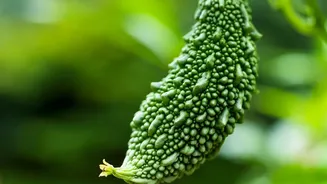

The Tradition of ‘Bitter is Better’
In kitchens and households across India, it’s a piece of wisdom passed down through generations: what tastes bitter is often good for you. This belief isn't just folklore; it's a cornerstone of traditional medicine and daily diet. Foods like bitter gourd
(karela), fenugreek (methi), and even the potent neem are consumed not for their pleasant taste, but for their purported health benefits, from controlling blood sugar to purifying the blood. Many compounds that give these foods their characteristic sharp taste, like polyphenols and flavonoids, are indeed known to have antioxidant and anti-inflammatory properties. Studies over the years have linked these compounds to a lower risk of chronic illnesses such as heart disease and diabetes, seemingly confirming what our elders always told us.
A Large Study Questions the Connection
But what if the bitterness itself isn't the magic ingredient? A notable Australian study involving 9,118 adults has provided a more complex picture. Researchers didn't look at a single bitter food, but rather analysed the overall 'bitterness score' of participants' entire diets based on 24-hour dietary recalls. They found that while people consuming the 'most bitter' diets did have slightly higher quality diets overall—consuming more vegetables and water—the health link was not as direct as expected. The study suggests that while many healthy foods happen to be bitter, the sensation of bitterness alone is not a reliable guarantee of a food's health value. This challenges the simple equation that if it makes you grimace, it must be healthy.
The Science of Tasting Bitter
The way we perceive bitterness is a fascinating story of human evolution and genetics. Our ability to taste bitter flavours is controlled by a family of about 25 genes, known as TAS2Rs. Historically, this was a survival mechanism; a strong bitter taste often signalled the presence of poison in a plant, warning our ancestors to spit it out. Because of variations in these genes, our sensitivity to bitterness varies dramatically. Some people are 'supertasters' who find foods like broccoli and grapefruit intensely bitter. Others are 'non-tasters' who barely notice it. This genetic lottery influences our food choices. For instance, some research shows that people highly sensitive to bitterness may eat fewer vegetables, potentially missing out on their nutrients. This genetic diversity means that what one person experiences as a healthy, bitter food, another might experience as an intolerably foul taste, influencing their dietary habits in profound ways.
So, Should You Stop Eating Bitter Foods?
Absolutely not. The key takeaway from this research is not that bitter foods are unhealthy, but that we should be more nuanced in our thinking. The health benefits come from the rich array of vitamins, minerals, and bioactive compounds within the foods, not from the taste of bitterness itself. For example, bitter melon contains phytochemicals that have been studied for their potential to help lower blood sugar levels. Dark, leafy greens are packed with nutrients. The problem arises when we assume anything bitter is healthy or that the more bitter something is, the better it is for us. In reality, some highly toxic substances are also intensely bitter. The focus should shift from seeking out a specific taste to embracing a diversity of whole foods.
A New Perspective on Your Plate
Instead of chasing bitterness, a better approach is to build a diet rich in a variety of tastes and colours. The Australian study noted that those with the most bitter diets also ate more vegetables and fruits in general. This suggests that a willingness to tolerate bitter tastes might lead to a more varied and nutrient-dense diet overall. Don't force yourself to drink a gallon of karela juice if you detest it. Instead, find ways to incorporate a wide range of vegetables into your meals. The goal is balance. While the compounds in bitter foods can stimulate digestion and offer metabolic benefits, they are just one part of a healthy eating pattern. The true guarantee of health comes not from one single taste, but from the symphony of nutrients provided by a diverse and balanced diet.